The Golden Patches: Embracing Intergenerational Wisdom

In the Department of Cauca, south of Popayán, the Estrella Roja Humanitarian Camp, established during the 2021 Social Outbreak, has emerged as an organizational experience sustained by community self-management and the leadership of women, youth, and diverse families who defend life, territory, and dignity.

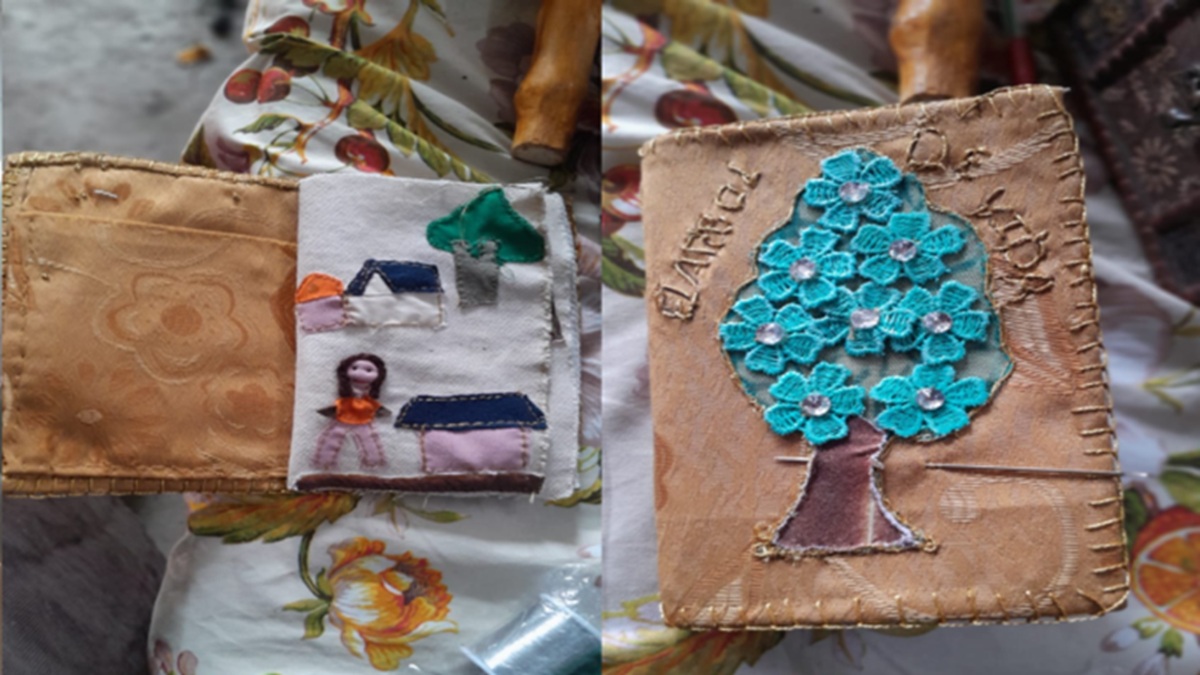
As part of the implementation of the Collective Healing Circles Program, an artistic project called “Golden Patches” has been developed, which constitutes a strategy of memory, expression, and collective care.

The activity brings together adult and older women, along with young women and girls, who, gathered in simple community spaces, work with needles, fabrics, and golden threads. Each participant uses a scrap of fabric from personal items that have accompanied their lives, on which they embroider simple and deeply meaningful symbols.  These embroideries express their resistance to displacement, gender violence, social exclusion, and urban precariousness, as well as the inner treasures cultivated amidst these experiences.

The images that result from this exercise—trees, roots, flowers, and hearts—reflect the community’s resilience and spiritual strength. Each golden stitch becomes an act of healing and a recognition of the inner strength that has allowed them to resist and transform pain.

The embroidered fragments will be compiled in a collective golden book, presented on community altars as a tribute to shared struggles, living memories, and the hope built collectively.

The Mendiendos Dorados process is more than a craft practice: it constitutes a living heritage, a way of narrating memory and affirming dignity through symbolic and spiritual languages that strengthen community bonds.

Apply now! 2025 Young Changemakers Programme in Rome

Global Humanity for Peace Institute, is delighted to invite applications for the 2025 Young Changemakers Programme (YCP), a unique international opportunity for young people aged 19–27 to develop their potential as changemakers.

2025 marks the Catholic Jubilee. It invites us to embrace forgiveness, share hope, and aspire towards renewal. In this spirit, this year’s Young Changemakers Programme (YCP) will be held in Rome, offering young participants an inspiring and transformative learning journey. Through a circular itinerary that weaves together encounter, experience, inquiry, and action, the YCP seeks to foster participants’ self-awareness, mutual appreciation, and a deeper understanding of both local and global challenges.

Building on the innovative pedagogies of the Pontifical Foundation Scholas Occurrentes , University of Meaning , and Global Humanity for Peace Institute at the University of Wales Trinity Saint David , the YCP seeks to make learning relevant to participants’ personal and professional development, as well as
youths’ needs for contributing to social transformation.

What to expect:

  • Pre-programme online encounters to build connections
  • Five days in Rome of experiential, reflective, and co-creative learning
  • Post-programme support to help develop a real-world changemaking project
  • Certificate of Participation upon completion

Who should apply?
Young people aged 19–27 who are passionate about contributing to a more peaceful and just world, open to diverse perspectives, and keen to deepen their changemaking practice.

Scholarships available: The programme covers accommodation, meals, local transport, and all in-programme activities. Participants are responsible for their own travel to Rome and medical insurance.

Click below to download the 2025 YCP Brochure or apply by Completing this Application Form.

Call-for-Application_Young-Changemakers-Programme_Rome_Nov2025

Prof Scherto Gill’s Keynote Lecture at SMN Annual Gathering 2025

On 29th June, Prof Scherto Gill provided a closing keynote lecture at the Scientific and Medical Network’s 2025 Annual Gathering, entitled: Love: Mediating the Earthly and the Heavenly, Integrating the Immanent and the Transcendent. Other speakers at this event were Prof Federico Faggin and Prof Sarah Stewart-Brown.

In her lecture, Scherto sets the challenge in an era defined by profound tensions, stark oppositions and fragmenting contradictions. While unprecedented technological and material abundance enriches the lives of a small minority, pervasive deprivation, both economic and environmental, continues to diminish the lives of the majority. Whereas monetary wealth is pursued as precious goods, nature’s beauty and goodness are being irreversibly destroyed. Claiming to seek growth beyond human constraint, modern life often ignores the value and wonder of grounded everyday experiences, such as the depth of friendship, the delight of gardening, the inspiration of the creating and appreciating arts, the awe of nature, and the joy of living in congenial political communities.

She then asks: what if the very tensions and paradoxes we face hold the key to a richer and more integrated life? How might we bridge these oppositions and restore a vital connection between our immediate, earthly living and transcendent aspirations?

In pursuit of answers, she turns to Diotima of Mantineia, whose teachings on love, as depicted in Plato’s Symposium, offer profound insights into harmonising these opposing realms. Most of us are familiar with Plato’s ladder of love, a vision of ascending from possessing physical beauty and attraction towards the seeking spiritual and eternal goodness or beauty itself. This is typically described as a transcendent vision. Yet Diotima’s insight goes further, inviting us not merely to ascend but to integrate, honouring every rung of experience as essential and sacred, in an infinite process of creative becoming.

The lecture delves deeper into Diotima’s teachings, particularly her conception of Erôs as a daimon, a powerful spirit neither wholly divine nor simply mortal, born of Poros, the god of abundance, and Penia, a mortal embodying poverty. This symbolic lineage endows Erôs with both creative potential and persistent need, perpetually dwelling in the vibrant tension between gratification and longing, contentment and aspiration.

Through engaging dialogue and reflective practices, her session further explores how embracing this daimonic tension can help mediate contemporary divides. Scherto asks the participants to consider how recognising and honouring the inherent goodness, beauty, and creative possibility within our everyday, our earthly lived experiences can bridge us towards transcendent ideals and values, enriching our personal, communal and political life in peace.

Beyond Inhumanity – Open access book by DeGruyter-Brill

Edited by Prof Scherto Gill, Beyond Inhumanity is a book that emerges from the ongoing intellectual dialogue as part of the UNESCO Collective Healing Initiative. The Initiative focuses on healing the wounds of inhumanity, co-creating just societies and enhancing the flourishing of current and future generations.

In this book, authors point out that collective efforts to address the legacies of slavery and colonialism tend to orient solely towards dealing with material compensation, such as reducing economic disparity, and levelling access to public services. However, communities directly impacted by the dehumanizing legacies have insisted on a broader reckoning—one that recognizes all dimensions of the harms, including the spiritual injury and the relevant psychosocial trauma inflicted across the generations. They remind us that harms of structural injustice extend beyond the material, the physical and the psychological, also entangling the moral, relational, and spiritual fabric of human life. Understanding harms of inhumanity brings to light the layers of damage and is key to identifying interdisciplinary approaches to collective healing, social transformation and the well-being of all.

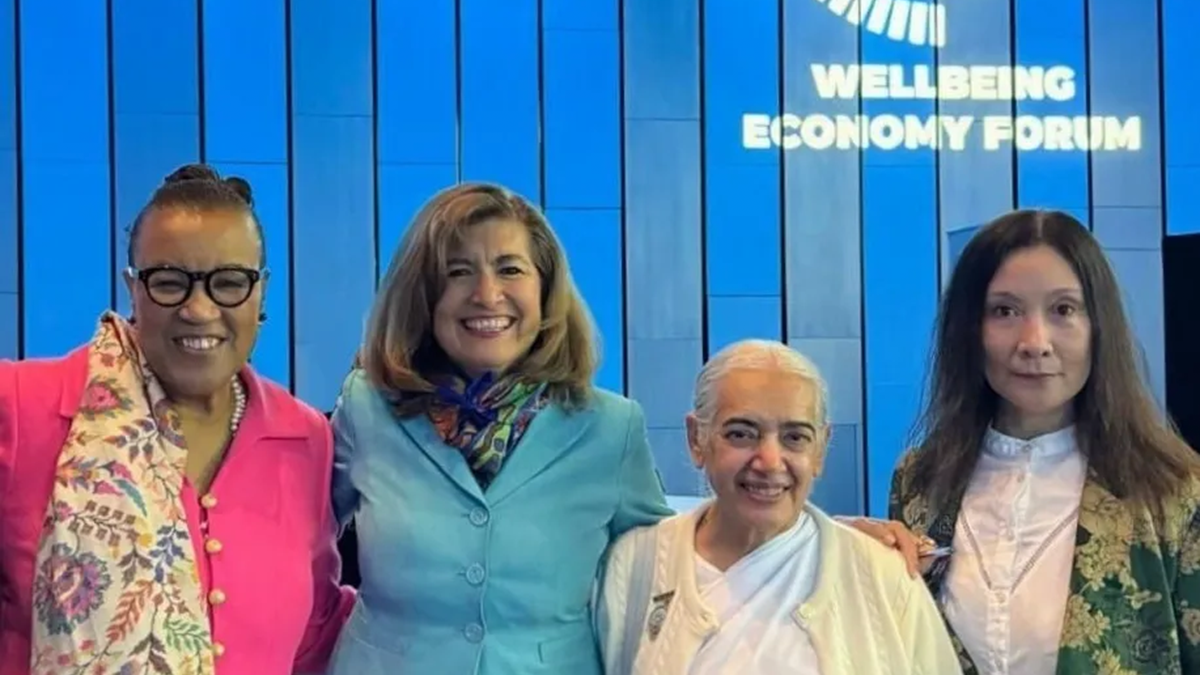
Meeting Baroness Patricia Scotland during 2025 Well-Being Economy Forum

Scherto Gill, Director, Global Humanity for Peace Institute

During 2025 Well-Being Economy Forum, held on 8-9 May in Reykjavik, Iceland, I had a unique opportunity to meet with Rt Hon. Baroness Patricia Scotland, KC, former Secretary-General of the Commonwealth Secretariat.

In our conversation, I have learned that Baroness Scotland’s leadership approach was particularly innovative and effective, especially three non-negotiable strategies for twenty-first-century multilateralism: build coalitions, seek prevention rather than mere reaction, and put new technology to work for the common good.

On building coalition for collaboration, she shared the example how she coordinated the signing of the Apia Commonwealth Ocean Declaration. Pulling together 49 coastal states, land-locked African members, green NGOs and the world’s second-largest shipping registry (Palau), Baroness Scotland secured the Commonwealth’s first-ever ocean treaty text, complete with 30 × 30 conservation goals and a guarantee that rising seas will not wash away maritime boundaries. The achievement was possible only because she had already nurtured ten country-led Blue Charter “action groups”, so the technical arguments were owned by ministers themselves before leaders arrived in Samoa.

That same owner-driven formula underpins the Connectivity Agenda. Instead of issuing top-down prescriptions, Scotland persuaded trade officials from five regional clusters—digital, physical, regulatory, supply-side and B2B—to write each other’s policy toolkits. The prize they chase together is a US $2 trillion intra-Commonwealth trade target by 2030.

Even inside the Secretariat she practised “co-create first, announce later”. The virtual Commonwealth Pro Bono Centre was co-designed by 14 least-developed members and six global law firms; on launch day Malawi’s Attorney-General called it “an invaluable resource that levels the negotiating table”.

Her focus on prevention rather than reaction was marked by her developing the flagship Climate Finance Access Hub. By embedding advisers directly inside ministries, the Hub helped small states raise US $384 million with another half-billion in the pipeline—money aimed at cyclone-resilient roads, mangrove buffers and drought-proof farms before the next cataclysm hits.

Prevention also animated Commonwealth Says NO MORE, the first pan-Commonwealth platform against gender-based violence. Instead of crisis hot-lines alone, the campaign arms local leaders with by-stander training, economic-cost calculators and a referral app designed to stop violence upstream.

Dedicated to the common good, Baroness Patricia developed a project aimed at “Strengthening the Adaptive Capacity of Coastal Communities of Fiji to Climate Change through Nature-Based Seawalls”. Traditionally, coastal-defence proposals from small islands can take 4 years to assemble and 2 years to approve. However, under the coordination of Baroness Scotland, this project took barely one year. Indeed, with the assistance of AI and scenario simulations, providing evidence pack, Fiji filed a full grant request to the Adaptation Fund in October 2023; by 19 April 2024 the Board had approved US $5.7 million for construction. The project will build the 4 km hybrid seawall, restore adjoining mangrove belts and train local youth as shoreline-monitoring rangers.

The Fiji seawall development process is a living case study of her preventative, tech-forward, common-good centred approach to multilateral governance.

Baroness Patricia Scotland steps down as Commonwealth Secretary-General on 31 March 2025; Ghana’s Shirley Ayorkor Botchwey takes over on 1 April 2025.

Advancing Positive Peace in a Fractured World: Reflections from the GHfP Institute’s 2024 Achievements

The year 2024 was a paradoxical one. As global conflicts deepened and social inequalities widened, efforts towards positive peace, well-being, and collective healing gained momentum. The Global Humanity for Peace (GHfP) Institute has been at the forefront of these efforts, fostering transformative research, facilitating intergenerational dialogue, and nurturing changemakers committed to reimagining more just and harmonious societies.

Shaping the Future of Peace and Well-Being

At the core of our work is a commitment to positive peace—a concept that extends beyond the absence of conflict to embrace social justice, intergenerational healing, and ecological integrity. Through research, symposia, and policy advocacy, we have sought to bridge divides, empower communities, and reframe governance structures toward values of dignity, dialogue, and care.

1. Advancing Research on Positive Peace

One of our key research areas in 2024 focused on the Pacific’s vision of an Ocean of Peace. Working alongside colleagues from leading UK universities, we explored how peace studies can support indigenous-led efforts to nurture peace as an ethos woven into governance and daily life. This research offers critical insights for regions beyond the Pacific—where tensions and ecological crises demand fresh approaches to peacebuilding.

Our commitment to positive peace also led us to facilitate high-level discussions, such as the International Symposium on Peace in the Middle East, which we co-convened in London, and a panel on the same topic that we presented during the annual Imagine Peace Forum in Iceland. Amidst the backdrop of escalating conflict, these platforms provided rare and necessary spaces for dialogue, exploring how relational peace processes can overcome entrenched divisions.

2. Healing the Harms of Inhumanity

For over three years, the GHfP Institute has played a pivotal role in the UNESCO Collective Healing Initiative, developing intergenerational dialogue & inquiry (IDI) methodologies to address the historical and ongoing harms of structural injustice. In 2024, our Collective Healing Circles (CHCs) expanded in communities in 14 countries across 4 continents, offering a structured yet deeply transformative process of communal healing and contributing to the well-being of future generations.

Our newly launched Handbook for CHC Facilitators & Co-Creators, presented at the UNESCO 30th Anniversary of the Routes of Enslaved Peoples, is now a key resource for collective healing practitioners worldwide. The CHCs—led predominantly by women and youth—are proving to be caring spaces where communities can acknowledge past traumas, restore dignity, and co-imagine just futures.

3. Rethinking Governance for Human and Planetary Flourishing

In a world where political and economic systems often prioritize short-term gains over collective well-being, we have continued our efforts to articulate principles of well-being governance. Our latest publication, Beyond Instrumentalised Politics, proposes an alternative vision—one where governance is guided by non-antagonism, equality, and a deep commitment to the well-being of all.

These ideas underpinned our plenary session at the UNESCO Well-Being of Future Generations Forum, where we engaged policymakers, scholars, and youth leaders in co-constructing pathways for a future where governance is not merely about managing crises but about fostering societal transformation.

4. Transforming Education for Well-Being Futures

Education remains central to our vision for positive peace. In collaboration with the Fetzer Institute, we conducted research into how relational approaches in schools can enhance student well-being. Our findings are informing global efforts to integrate caring and ethics-based education into curricula, ensuring that schools nurture not only academic success but also emotional and moral resilience.

As part of this commitment, we are proud to be a research partner in the Ethics Education Fellowship Programme, working with six ministries of education in Asia and Africa. This initiative is a testament to our belief that education is not just about preparing for the future but about shaping it.

Looking Ahead: A Call to Action

The challenges we face today—from environmental degradation to erosion of democracy, and to youth disempowerment—are complex, but they are not insurmountable. The work of the GHfP Institute in 2024 has demonstrated that peace, healing, and politics of dignity are not abstract ideals but lived realities that we can co-create.

As we move into 2025, we invite partners, educators, policymakers, and communities to join us in advancing this vision. Whether through research collaborations, policy dialogues, or grassroots peace initiatives, each effort contributes to a larger movement towards a world where peace is not just the absence of war, but the presence of justice, dignity, and well-being for all.

GHfP Institute @UNESCO HQ – Launching Collective Healing Handbook

On 10th October 2024, UNESCO Assistant Director General, Mrs Gabriela Ramos, launched the Collective Healing Handbook for Facilitators in Paris, to mark the 30th Anniversary of UNESCO Routes of Enslaved People’s Programme.

The research and development of this Handbook was supported by grants from the Guerrand-Hermès Foundation for Peace. The Handbook is intended to support the efforts of facilitators and other professionals who are interested in hosting Collective Healing Circles (CHCs) in their local community. The intellectual insights underpinning the CHCs proposed in this Handbook are drawn from contemporary research on historical atrocities, such as the transatlantic trade of enslaved Africans, colonialisation, and mass killing and violent displacement of Indigenous peoples, as well as the legacies of dehumanisation, such as racism and structural injustice.

The practical ideas for implementing the CHC Programme featured throughout the Handbook are inspired by existing proven approaches of similar programmes, and those which have emerged from a one-year pilot of the Programme in five countries (Kenya, Nigeria, the UK, the USA and Colombia) on four continents. Click the link below to download the CHC Programme Handbook for Facilitators.

The launch was followed by reports and testimonies from community partners and participants of the UNESCO Collective Healing Initiative on the process and impact of our CHC activities on four continents.

Amongst those in the audience at UNESCO HQ were global leaders, national delegations, and civil society representatives.

Building a Global Healing Alliance 

Throughout April 2024, experienced facilitators from across the world have been brought together by the UNESCO Collective Healing Initiative in a major step towards creating a global healing alliance of community-rooted Collective Healing Facilitators.

The UNESCO Collective Healing Capacity Building Programme prepares participants to understand the key theoretical and methodological ideas underpinning the Collective Healing Initiative and builds their capacity to design and host bespoke Collective Healing Circles in their local communities.  

Thanks to the support and generosity of the Global Humanity for Peace InstituteGuerrand-Hermès Foundation and Fetzer Institute, the capacity building programme in April has brought together 25 participants from across 5 continents, including representatives from Brazil, Colombia, Costa Rica, Uruguay, USA, Mexico; Martinique & Guadeloupe; France, UK and Germany; and Kenya, Nigeria and Cameroon. The group includes voices from African, Afro-Caribbean, African-American, European-descent, and Indigenous communities. Participants engaged in a multi-lingual online space, with live simultaneous interpretation available in English, French, Spanish and Portuguese at all times. 

The online capacity building space is one which celebrates rich diversity, whilst also deeply acknowledging the shared experiences of loss, trauma and displacement which pervade the history of all cultures. Through experiential and dialogue-based sessions, participants have been guided through the four interlocking modules which form the structure for the collective healing circles: 1) Acknowledging our shared histories of dehumanisation and recognising their enduring legacies and harms​; 2) Restoring our sense of human wholeness and re-affirming our dignity​; 3) Strengthening relationships & deepening interconnectedness; and 4) Envisioning structural justice & activating our responsibilities for shared future(s). These modules work together to initiate and sustain collective healing within communities whose history has been characterised by structural dehumanisation, displacement, racism and inequality, towards a shared future of social justice and holistic wellbeing. 

As one of the team shared:

This capacity building programme is so much more than a ‘training’; it is a space for mutual sharing and learning, where each participant is bringing their many years of experience and cultural treasure to the space. Each session opens and closes with a participant sharing a cultural practice or ritual from their community – we have shared poems, songs, Indigenous chants… Each of us feels honoured to be in the space together and we are building bonds and friendships that will sustain us and our communities for many years to come.” 

Following completion of the capacity building programme, participants will continue to develop community-rooted UNESCO Collective Healing Circles, with the ongoing guidance of experienced UNESCO Collective Healing Mentors. All participants completing this cycle will be awarded a UNESCO Collective Healing Initiative Certificate of Achievement in formal recognition of their role as UNESCO Collective Healing Circle Facilitators. A waiting list for participation in the next capacity building opportunity is already growing.