New Peer-Reviewed Open-Access Article: Simone Weil on love, justice and collective healing

https://www.tandfonline.com/doi/full/10.1080/20440243.2025.2554849

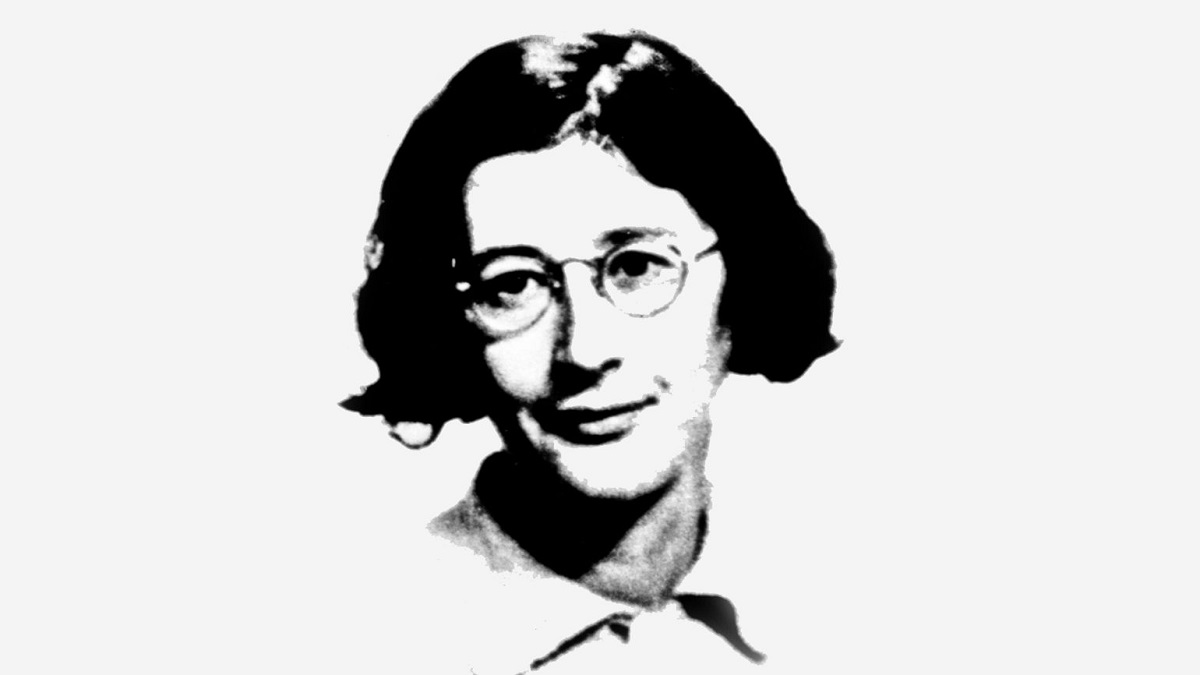
This paper examines the spiritual dimension of dehumanisation and argues that confronting this neglected aspect is essential to healing historical and structural harms. Drawing on the philosophical and theological writings of Simone Weil, it offers a relational interpretation of her insights into the sacred roots of human dignity, the soul-wounding effects of dehumanisation, and love as an antidote to brutality. Through Weil’s concepts of affliction, social degradation and structural injustice, the paper demonstrates that dehumanisation operates not only through material and psychological violence but also through spiritual violation that severs persons and communities from the good.

Building on Weil’s ethical vision, the paper advances a four-fold intergenerational approach to addressing spiritual harm: (1) acknowledging dehumanisation and the reality of affliction; (2) reclaiming human dignity rooted in the sacred; (3) strengthening spiritual belonging through community and intergenerational continuity; and (4) imagining a culture of love oriented to justice and co-flourishing.

Illustrated through contemporary examples, including UNESCO’s Collective Healing Initiative, the paper argues that Weil’s wisdom contributes both philosophically and practically to collective healing, social justice and the regeneration of communities impacted by slavery, colonialism and other enduring forms of inhumanity.

Read the full paper here: https://www.tandfonline.com/doi/full/10.1080/20440243.2025.2554849

 IDG Summit, Track 6 – Healing the Roots of What Drives Us

On October 16th, at the IDG Summit, Track 6 – Healing the Roots of What Drives Us Apart, will explore how trauma-informed leadership can open pathways for systemic healing, peacebuilding, and societal defragmentation. This digital track is an immersive journey into the root causes of polarisation and healing collective trauma, blending trauma science, conflict transformation, and embodied leadership.

Through live group process, reflective practice, artistic embodiment, and narrative tracking, participants will witness how inner development practices can transform fragmentation into collective insight and how to embed this wisdom in leadership, organisations, and society.

Prof Scherto Gill will reflect on the question “What does it take to heal the deep divisions of our world today?” By tracing the development and processes of the UNESCO Collective Healing Initiative, Scherto’s presentation will bring forward communities across four continents experiences engaging in an intergenerational approach to shifting from trauma towards flourishing. This involves facing the wounds of injustice with courage, rediscovering ancestral wisdom with curiosity, nurturing new ways of belonging with compassion, and envisioning well-being futures with care.

This makes the case for why the intergenerational processes of collective healing are not abstract, but involve essential inner capacities of transforming leadership as healer-ship.

Prof Scherto Gill presenting Collective Healing Initiative at 2025 Inner Development Goals Summit

In this video, Prof Scherto Gill offers an outline of her presentation at 2025 Inner Development Goals Summit, focusing on exploring the four processes of the UNESCO Collective Healing Initiative, including an intergenerational approach to leadership as healership.

Intergenerational Dialogue for Well-Being Futures: Reflections from Workshop

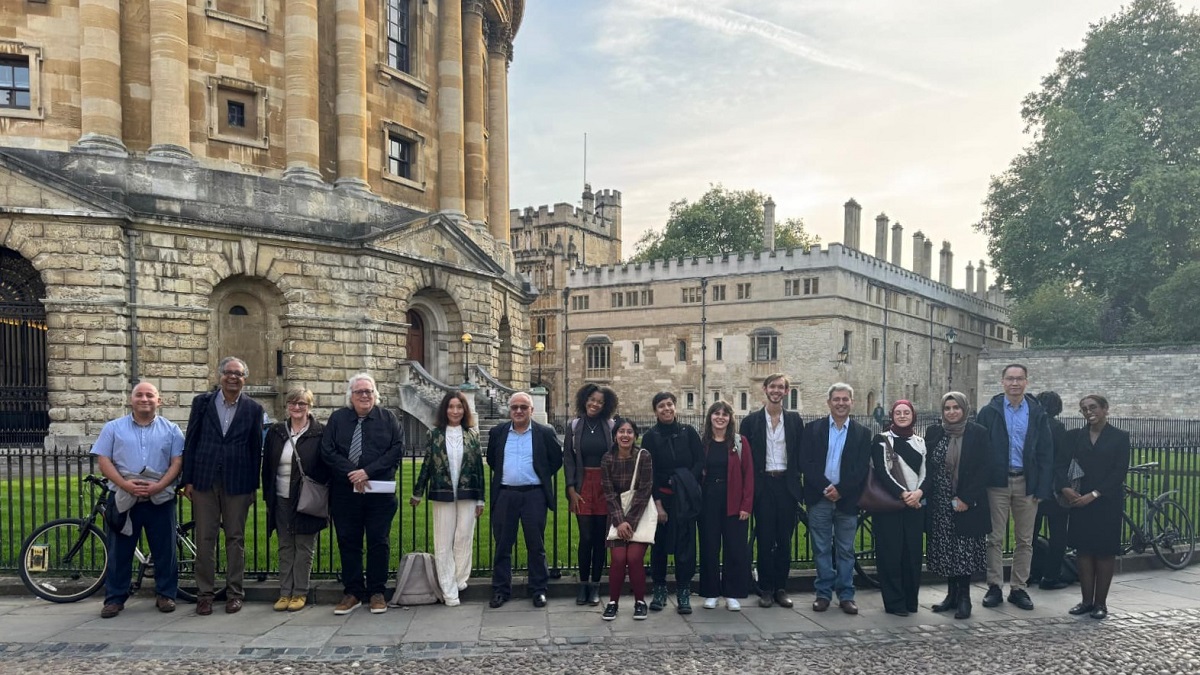
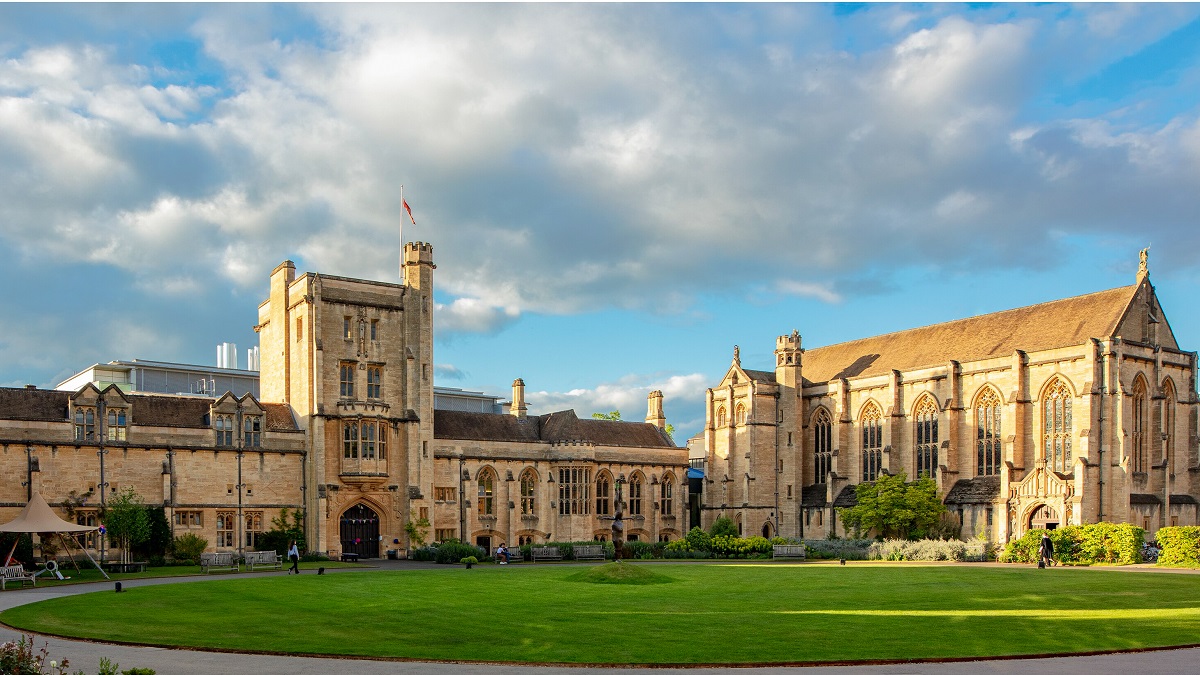
On 19th September, scholars, researchers and practitioners gathered in Mansfield College, Oxford, for a workshop on Intergenerational Dialogue for Well-Being Futures. This event was co-convened in partnership with the Journal of Dialogue Studies, which will publish a special issue (Vol. 14, 2025) on the same theme.

My motivation for guest-editing this issue arises from five years of work with the UNESCO Collective Healing Initiative. At the heart of Initiative are the Collective Healing Circles (CHCs), intergenerational spaces created in communities across Africa, the Americas, and Europe. In these circles, people of all ages come together to acknowledge historical mass atrocities, recognise continued wounds, reclaim ancestral wisdom and human dignity, transcend divisions, and co-imagine shared flourishing. They have shown me both the transformative potential and the challenges of intergenerational dialogue and inspired me to bring these questions into wider academic and policy exploration.

A workshop structured as a journey

Prof Youssef Mahmoud offering words of wisdom in his keynote speech

Following an inspiring keynote from Youssef Mahmoud, former UN Under-Secretary-General, the academic workshop’s programme followed a deliberate arc:

  • Contexts – situating dialogue in linguistic, historical, ethical, grassroots, digital, and spiritual arenas.
  • Conceptualisations – examining how intergenerational dialogue is conceived epistemologically, ethically, and culturally, and how it can serve healing, and transformation.
  • Practices – exploring how dialogue is enacted and transmitted through arts, memory, and creative media.
  • Futures – considering how intergenerational dialogue might serve as a foundation for justice, solidarity, and flourishing societies.

This progression created space not only for rich scholarly exchange, but also for deep reflection on the ethical, methodological, and political dimensions of dialogue across generations.

Insights across the sessions

Several themes resonated across the day:

  • Transmission and transformation: Dialogue mediates the tension between preserving ancestral wisdom and inherited knowledge and transforming it for the future.
  • Agency and co-authorship: Who has the authority to decide what is remembered, transmitted, or reinterpreted? Intergenerational dialogue demands genuine co-authorship.
  • Dialogue as ethical practice: Listening, translation, ritual, and creativity are not just methods, but ethical commitments.
  • Challenges of reconciliation: Dialogues are often uncomfortable — grappling with guilt, silence, or denial — yet necessary for relational repair.
  • Futures through justice: Dialogue is not only about the past; it is a path to recognition, resilience, and flourishing futures.

One aspect that remains insufficiently addressed is the overwhelming domination of structural injustice, which continues to define the lived experience of the global majority. While academic research offers decolonial critique and systemic analysis, the challenge ahead lies in reimagining global governance that can respond to these realities.

Looking ahead

For me, one of the most moving aspects of the workshop was how much it echoed the spirit of the UNESCO Collective Healing Circles. We saw how dialogue is never neutral: it carries risks of stereotyping or tokenising, but also profound possibilities for recognition, resilience, and transformation. We saw how young people are not simply listeners or translators, but co-creators of meaning and futures. And we saw how elders are not only custodians of memory, but partners in reshaping change.

As we move forward, the next step is to revise and deepen the papers in light of the workshop conversations. Guided by the Journal of Dialogue Studies framework, the special issue will ensure that contributions are theoretically rich, methodologically and ethically strong, and — most importantly — relevant to the question at the heart of our gathering: how intergenerational dialogue can nurture well-being futures in contexts marked by structural injustice.

I am grateful to all who joined us in Oxford, for your generosity, insights, and presence. This is not the end, but part of a continuing journey to explore and enact intergenerational dialogue as a vital resource for our shared futures.

Collective Healing Initiative’s Facilitators Learning Circle Sept. 2025

By Scherto R. Gill, Director, Global Humanity for Peace Institute

Every other month, on the second Tuesday, a constellation of facilitators gathers online — a learning circle stretching across 16 countries, 4 continents, and 4 languages: English, French, Spanish, and Portuguese. With the gentle help of AI translation, each voice is received in our own tongue, weaving a luminous tapestry of shared understanding.

On 16th September, 25 facilitators formed our circle. We came together to explore how the Collective Healing Circle (CHC) programme can be tailored to the diverse lived realities of our communities.

The gathering opened with drums from Richmond, Virginia, followed by a short poem carrying the breath from the Amazon — grounding us in rhythm, verses and spirit.

I offered the three inquiries that guide tailoring — investigative, appreciative, and evaluative. These aren’t academic theories. They’re invitations to listen into context before inviting people into the circle — to understand the particular music of each community before attempting to add harmony. Collective Healing practices can’t be copy-and-pasted. They must grow from the soil where they’re planted, shaped by the stories and metaphors already living in that place, responsive to the specific ways that community holds both pain and possibility.

To illustrate how these inquiries unfold in practice, our colleagues from Mexico shared how they wove Indigenous prophecies and ancestral wisdom into the CHC framework. Their presentation was colourful and inviting — words dancing with images, feelings moving through liminal spaces. Not as decoration, but as foundation. Not as addition, but as recognition of what was already there, waiting to be honored. Their approach was as much art as methodology: honouring both the common CHC framework and the particular practice of their land, letting each inform the other until something new is born and emerged.

From there, we dissolved into six small breakout rooms — in four different languages — where 2-4 facilitators gathered in intimate dialogue. These conversations deepened our reflections: What resonated? What requires more care? How might we all be co-creators of the circle? For thirty minutes, these questions evoked and breathed in eight different conversations. Connections spark across impossible distances. Challenges find company. Dormant ideas are awaken through the alchemy of shared reflection.

When the learning circle reforms, something has shifted. Insights pour back into the shared space—through voices and images, stories and the vibrant river of the chat feed. Each offering another thread in the tapestry they’re weaving together.

We closed with an ancestral African chant, together across the screen, a reminder of the deep wisdom carried through song that requires no translation. Listen here.

The circle completes itself not by ending, but by beginning again. Each facilitator carries seeds of inspiration back to their local communities, back to the particular soil where the healing work takes root.

The Golden Patches: Embracing Intergenerational Wisdom

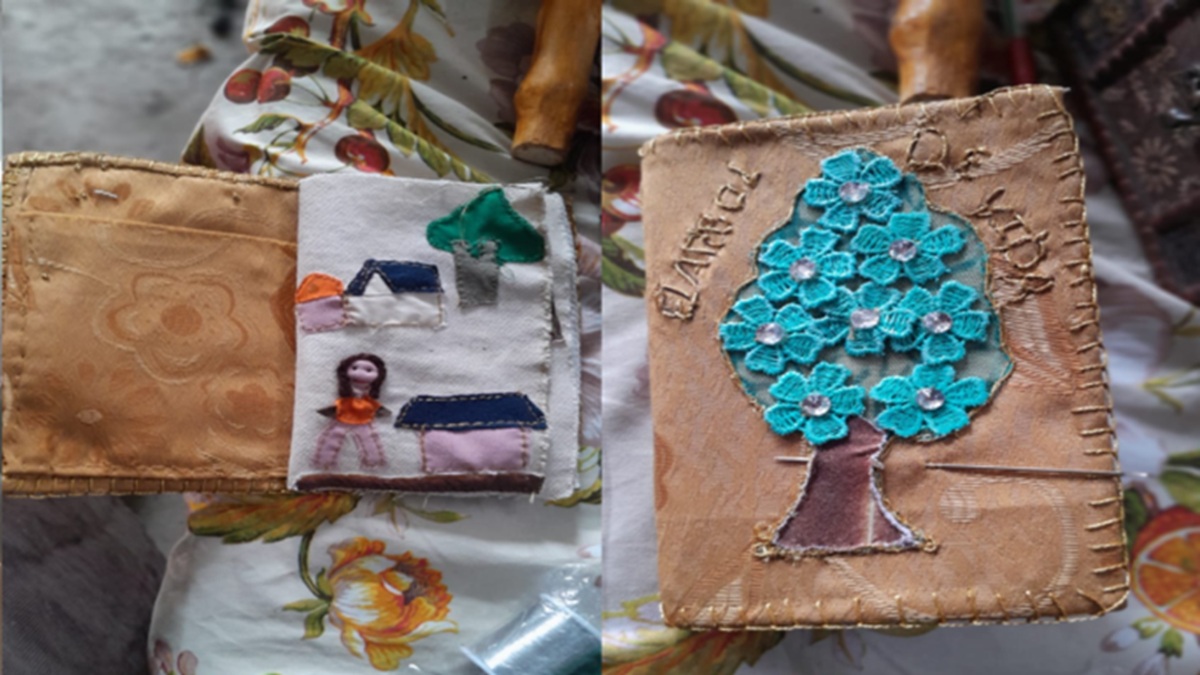
In the Department of Cauca, south of Popayán, the Estrella Roja Humanitarian Camp, established during the 2021 Social Outbreak, has emerged as an organizational experience sustained by community self-management and the leadership of women, youth, and diverse families who defend life, territory, and dignity.

As part of the implementation of the Collective Healing Circles Program, an artistic project called “Golden Patches” has been developed, which constitutes a strategy of memory, expression, and collective care.

The activity brings together adult and older women, along with young women and girls, who, gathered in simple community spaces, work with needles, fabrics, and golden threads. Each participant uses a scrap of fabric from personal items that have accompanied their lives, on which they embroider simple and deeply meaningful symbols.  These embroideries express their resistance to displacement, gender violence, social exclusion, and urban precariousness, as well as the inner treasures cultivated amidst these experiences.

The images that result from this exercise—trees, roots, flowers, and hearts—reflect the community’s resilience and spiritual strength. Each golden stitch becomes an act of healing and a recognition of the inner strength that has allowed them to resist and transform pain.

The embroidered fragments will be compiled in a collective golden book, presented on community altars as a tribute to shared struggles, living memories, and the hope built collectively.

The Mendiendos Dorados process is more than a craft practice: it constitutes a living heritage, a way of narrating memory and affirming dignity through symbolic and spiritual languages that strengthen community bonds.

Building a Global Healing Alliance 

Throughout April 2024, experienced facilitators from across the world have been brought together by the UNESCO Collective Healing Initiative in a major step towards creating a global healing alliance of community-rooted Collective Healing Facilitators.

The UNESCO Collective Healing Capacity Building Programme prepares participants to understand the key theoretical and methodological ideas underpinning the Collective Healing Initiative and builds their capacity to design and host bespoke Collective Healing Circles in their local communities.  

Thanks to the support and generosity of the Global Humanity for Peace InstituteGuerrand-Hermès Foundation and Fetzer Institute, the capacity building programme in April has brought together 25 participants from across 5 continents, including representatives from Brazil, Colombia, Costa Rica, Uruguay, USA, Mexico; Martinique & Guadeloupe; France, UK and Germany; and Kenya, Nigeria and Cameroon. The group includes voices from African, Afro-Caribbean, African-American, European-descent, and Indigenous communities. Participants engaged in a multi-lingual online space, with live simultaneous interpretation available in English, French, Spanish and Portuguese at all times. 

The online capacity building space is one which celebrates rich diversity, whilst also deeply acknowledging the shared experiences of loss, trauma and displacement which pervade the history of all cultures. Through experiential and dialogue-based sessions, participants have been guided through the four interlocking modules which form the structure for the collective healing circles: 1) Acknowledging our shared histories of dehumanisation and recognising their enduring legacies and harms​; 2) Restoring our sense of human wholeness and re-affirming our dignity​; 3) Strengthening relationships & deepening interconnectedness; and 4) Envisioning structural justice & activating our responsibilities for shared future(s). These modules work together to initiate and sustain collective healing within communities whose history has been characterised by structural dehumanisation, displacement, racism and inequality, towards a shared future of social justice and holistic wellbeing. 

As one of the team shared:

This capacity building programme is so much more than a ‘training’; it is a space for mutual sharing and learning, where each participant is bringing their many years of experience and cultural treasure to the space. Each session opens and closes with a participant sharing a cultural practice or ritual from their community – we have shared poems, songs, Indigenous chants… Each of us feels honoured to be in the space together and we are building bonds and friendships that will sustain us and our communities for many years to come.” 

Following completion of the capacity building programme, participants will continue to develop community-rooted UNESCO Collective Healing Circles, with the ongoing guidance of experienced UNESCO Collective Healing Mentors. All participants completing this cycle will be awarded a UNESCO Collective Healing Initiative Certificate of Achievement in formal recognition of their role as UNESCO Collective Healing Circle Facilitators. A waiting list for participation in the next capacity building opportunity is already growing.