40 years ago, when Sir Anthony Berry MP was killed in the IRA Brighton Bombing during the 1984 Tory Party Conference, his daughter Jo stepped into a world of conflict she barely knew. In November 2000 she met Patrick Magee, the former IRA activist responsible for her father’s death. This encounter has deepened her awareness that violence only begets violence. Only through building bridges, can people from all sides enter in spaces where dialogue about peace is possible.
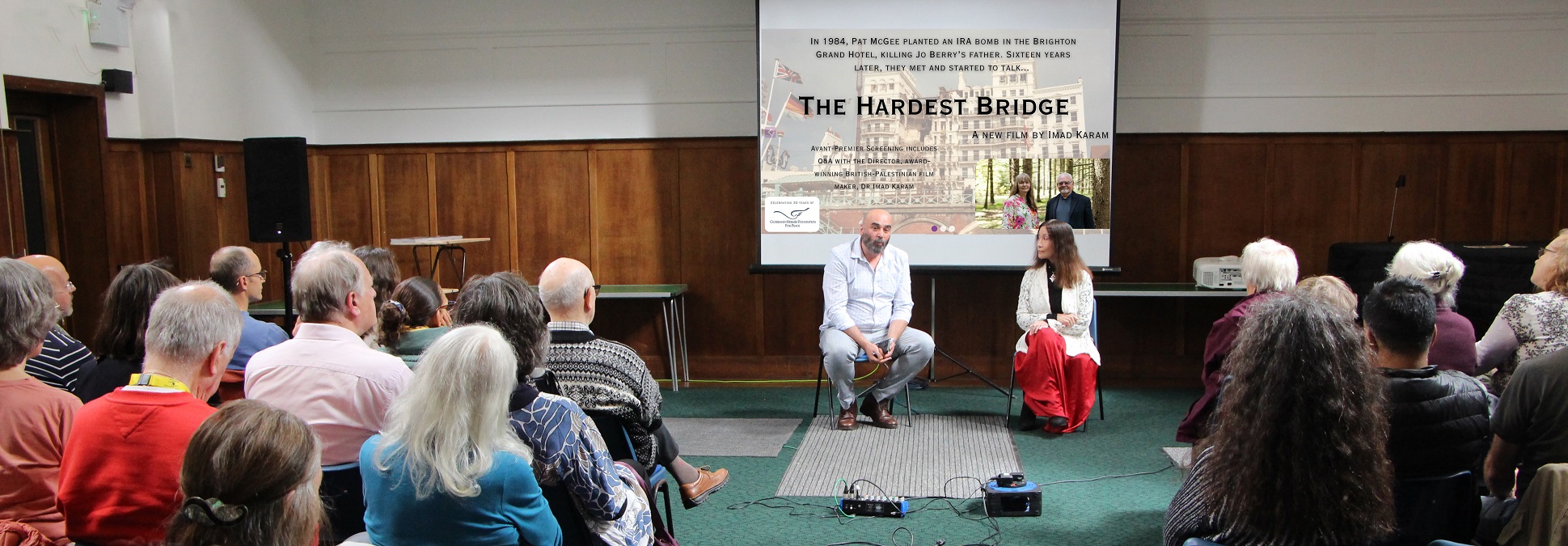
On 30th May, in Brighton, the GHfP Institute co-hosted the screening of a film entitled “The Hardest Bridge” as part of Brighton Festival Fringe. Through recounting Jo and Patrick’s respective stories and shared journeys over last 25 years, this moving documentary explores the historical roots of violent conflict, the legacies of structural injustice, the choices each person is facing and our individual and collective responsibility for peace. More importantly, it captures the process of developing the least likely friendship between Jo Berry and Patrick Magee whose collaboration demonstrates the power of listening, dialogue and reconciliation.
Prof Scherto Gill facilitated the Q&A between the film’s director, Dr Imad Karam, an award-winning British Palestinian film director, and peace activist, and an enthusiastically engaged audience.
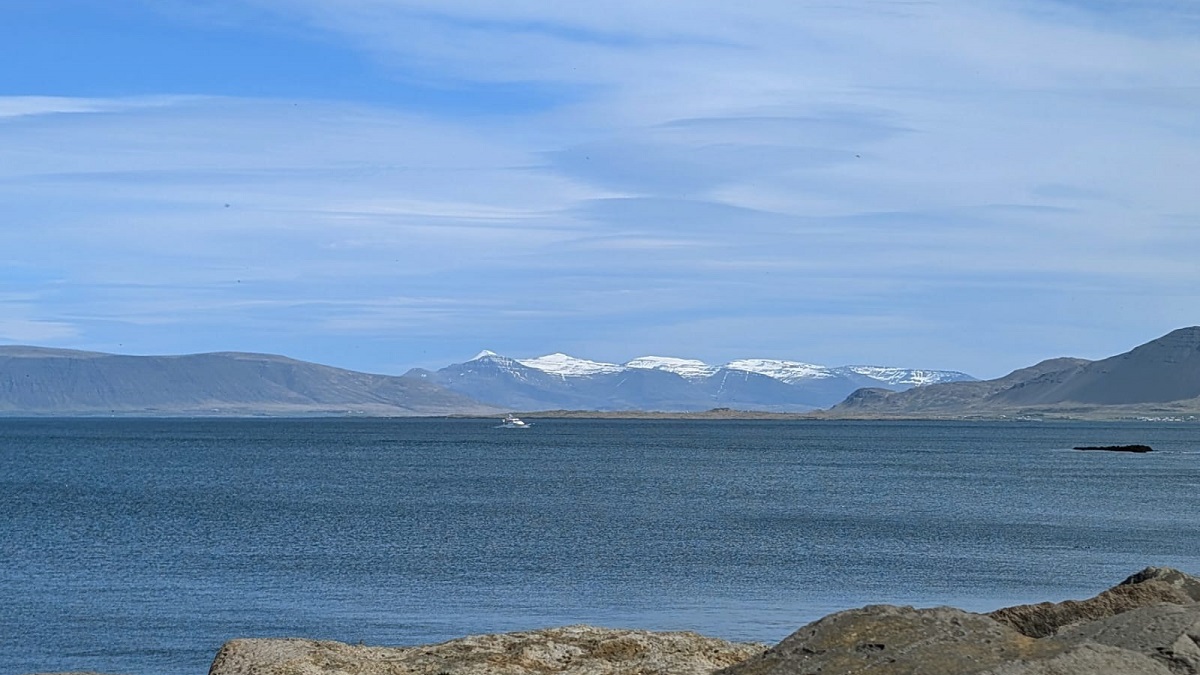
This year, the GHfP Institute was once again a contributor to the annual Well-Being Economy Forum held in Reykjavik, Iceland. Prof Scherto Gill joined the Rector of Icelandic University and former educational minister of Italy in an important panel to explore how higher education might nurture well-being. The specific focus of the session was to identify ways that universities might break silos in co-creating masters programmes dedicated to well-being studies.
Based on insights from the GHfP Institute’s experiences coordinating UNESCO Healing-Justice-Well-Being initiative, Prof Scherto Gill outlined three key points as references when developing Masters programmes in well-being: (1) a holistic conception of well-being to ensure clarification amongst components of well-being, conditions for well-being’s arising, and pathways to well-being; (2) well-being as an organising principle of the course as well as students’ experiences; (3) well-being as the course’s contents as well as the focus of students’ inquiry.
The GHfP’s MA in Peace Studies was used to showcase how well-being programmes can be interdisciplinary, engaging students as co-creators of programme contents, and orienting students’ research towards community’s well-being and nature’s thriving.
The 7th Spirit of Humanity (SoH) Forum brought together over 160 leaders, change-makers, and visionaries from more than 40 countries in Reykjavík, Iceland, under the theme “Inner Wisdom in Governance – Acting with Courage and Compassion.”
Held partly in collaboration with the Wellbeing Economy Forum, the gathering created a heart-centred space to explore how inner transformation can shape more compassionate and courageous leadership.
The GHfP Institute is a partner of the SoH Forum, and we contribute to its programme design, and support the co-creation of the spaces for deep dialogue, curious listening, and collaborative action.
On 10th May, GHfP’s PhD researcher, Isadora Canela, joined Prof Scherto Gill and the co-Founder of Wellbeing Economy Alliance (WEALL) in offering an interactive and experiential workshop entitled: “What if Meditation is not enough; Action is not enough:How would Love manifest in our being, working, creating and acting for a better world?” During this space, they invited the participants to reflect on our experiences of transformation in our personal lives, and what wisdom we might draw from such experiences to imagine systemic change.
Reflecting on the SoH Forum and its impact, Scherto suggests that “In silence, we awaken inner wisdom, seeking clarity in quiet reflection; through listening, we cultivate mutual presence, nurturing Love and caring; in dialogue, we weave our collective insights into pathways for flourishing futures.”
Despite global commitments to the UN Sustainable Development Goals (SDGs), persistent barriers have continued to hinder meaningful progress. Amongst these barriers, are transgenerational trauma, gender-based inequality, limited opportunities for youth engagement, and fragmented community responses. The UNESCO Collective Healing Initiative, through its pioneering Intergenerational Dialogue and Inquiry (IDI) approach, uniquely tackles these barriers by harnessing cultural wisdom, fostering communal resilience, and strengthening youth leadership.
To discern the impact of the IDI approach, the Guerrand-Hermès Foundation and Global Humanity for Peace (GHfP) Institute at the University of Wales Trinity Saint David have undertaken a three-year research study in 9 countries, investigating the processes and outcomes of intergenerational approaches in achieving the SDGs. This study engaged youth and elders, who are participants in the UNESCO Collective Healing programmes. In addition, the Institute also sought the perspectives of global youth on their needs for leadership development and changemaking.
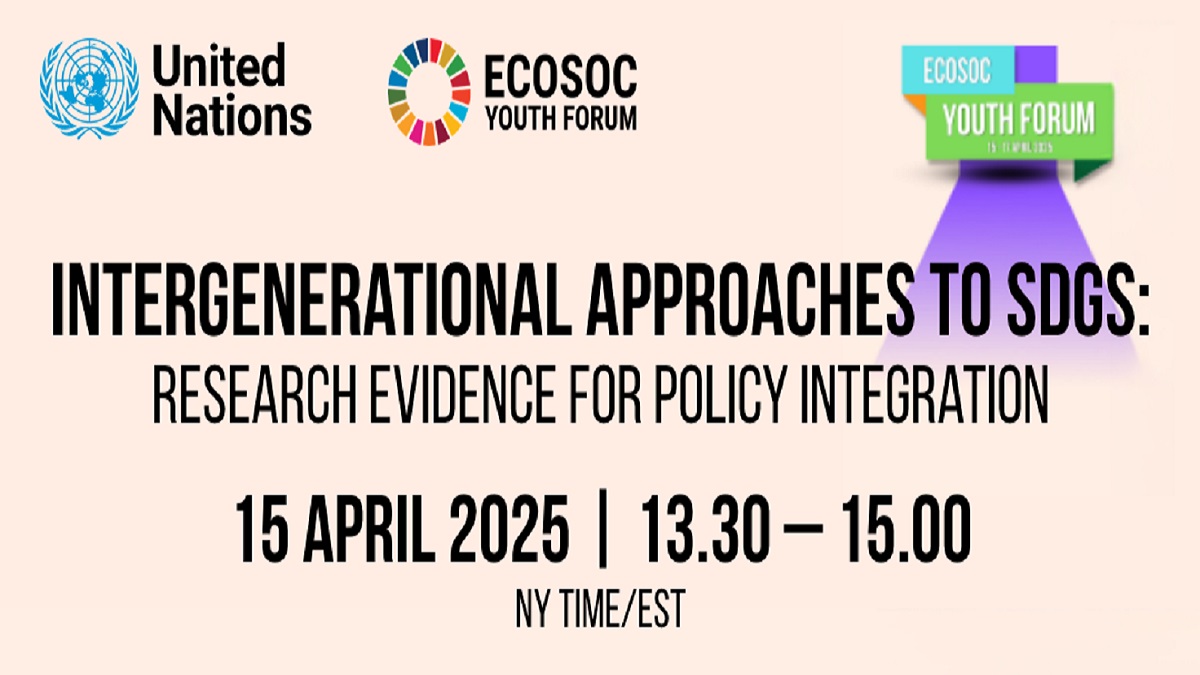
Emergent insights from both studies were presented in New York during the 2025 UN ECOSOC Youth Forum as a Side Event. The questions explored include:
What concrete evidence demonstrates that intergenerational approaches significantly contribute to SDGs?
How can international, national, and community-level policymakers effectively integrate intergenerational approaches in sustainable development strategies?
What specific policy commitments can stakeholders (governments, NGOs, researchers, politicians, youth leaders) make today to ensure that intergenerational approaches become integral to achieving the 2030 Agenda?
Led by Prof Scherto Gill and our young co-researcher, Casey Overton, this interactive event brought together voices from UNESCO, academia, policy, and youth to examine evidence from the research projects, and highlighted opportunities for policy integration, such as scalable intergenerational strategies to bolster community resilience and social inclusion towards well-being futures.
Amongst the findings presented are that today’s youth navigate a world shaped by global disturbance, climate crises, and rapid technological change, often experiencing fragmentation and alienation. Intergenerational processes and approaches can enable elders to better understand youth perspectives while supporting youth to reconnect with traditional wisdom, cultural resources, and collective resilience — key to overcoming obstacles to sustainable development.
These studies underscore the transformative potential of intergenerational strategies in fostering long-term positive change, bridge historical divisions, and promote youth-led collective action for the SDGs. It is precisely such insights that can inform policy development, by stressing the critical need for practical implementation of IDI and for ensuring intergenerational accountability.
Casey further reflected on the potential and limitation of intergenerational approach. In particular, she pointed out that whilst dialogue can serve as connective tissue, aimed at building bridges, enabling understanding and collaboration, power disparity can inhibit dialogue. For instance, IDI in some contexts doesn’t always take place amongst equals. Therefore it requires institutional structures and processes to systematically integrate intergenerational approach to social transformation.
The session received enthusiastic responses from the participants who both recognised the significance of these research studies and echoed the importance of IDI in their own national and local contexts, in Africa, Asia, Europe and the Americas.
The International Day of Conscience (IDC) on 5 Aprilhas been established in 2019 by the General Assembly of the United Nations to invite all human beings to focus their minds every year on how to build a culture of peace with love and conscience. The International Day of Conscience (IDC) 2025 offered an opportunity for people and community from around the globe to reflect and plan and act on what we can do to Leave No One Behind. The event took place at the UN Headquarters in Geneva.
Prof Scherto Gill provided a keynote for the 2025 IDC.
In her speech, she highlighted that:
“In a world riddled with crisis, atrocity and uncertainty, United Nations and other global institutions have the clarity to see that peace is more than an absence of violence. Through this international Day and related activities, we can appreciate peace’s positive attributes.
As an inspiring concept, positive peace underscores that all human beings are bearers of non-instrumental value, and that all life is sacred, and that in no circumstances should a person be treated as less human. Violence of any kind precisely violates our intrinsic value, violates the sacredness of life. Perpetuating violence or participating in violence is a failure to see each person as ‘a spiritual subject’, or a ‘soul’. It is a failure to recognise that each ‘I’ is already constituted in our collective ‘WE’.
The International Day of Conscience is a reminder that peace involves this unique quality of our awareness. This awareness is fundamental to our self-dignity, self-respect, or self-love. According to Brazilian educator, Paulo Freire, this consciousness denotes that our collective mission is to thrive through being and becoming more fully human together. Similarly, from the perspective of African Ubuntu cosmology, no one can thrive alone, and that our well-being involves and is realised through our relational flourishing with other people and other beings on the planet. Ultimately, shared flourishing is positive peace itself.“
At the end of her speech, Professor Gill concludes:
“On this International Day of Conscience, we must face history, face ourselves, and face the future – let’s remember those who came before us who pioneered peace and their message to us today and to the generations yet to come: “Our salvation can only be through love and in love.”
Professor Scherto Gill of the Global Humanity for Peace Institute joined the UNESCO 2024 Global Forum Against Racism and Discrimination held in Barcelona on 10th and 11th of December. The Forum brought together technical and policy experts to advocate for and advance the international movement for structural justice and social equality.
As the Coordinator of UNESCO Collective Healing Initiative, for this event, Professor Gill has been planning and designing, with our community partners, an experiential workshop on intergenerational dialogue and inquiry (IDI). IDI aims to examine and address the legacies of dehumanisation, including slavery, colonialism, racism and discrimination. IDI has been a main process of the Collective Healing Circles (CHC) that had been piloted in communities across 14 countries around the Atlantic Ocean.
The Intergenerational Dialogue and Inquiry workshop formed part of UNESCO flagship ‘Master Class Against Racism and Discrimination’ programme on 10th December 2024 during the UNESCO Global Forum.
TheMaster Classes against Racism and Discrimination, an initiative led by UNESCO, aims to foster a global understanding of racism among young peoplewhile creating a platform to propose actionable policies and solutions to combat racism and discrimination in our societies.
The GHfP Institute was delighted to join UNESCO in celebrating 30 years of the Routes of Enslaved Peoples (REP) Programme in Paris in October 2024.
At this extraordinary event, the GHfP co-organised the presentation of the UNESCO partnership initiative on Collective Healing, Just Society and Global Well-Being. The Collective Healing Initiative is committed to addressing the legacies of dehumanisation, e.g. slavery, colonialism, and indigenous genocide, and other historically rooted injustice, through facilitating and encouraging community-based Collective Healing Circles (CHCs) currently active in 14 countries globally. The initiative is co-sponsored by the UNESCO Social and Human Sciences Sector and the Guerrand-Hermès Foundation and is coordinated by the GHfP Institute.
Our presentation consisted of testimonies and narratives provided by community representatives from four continents (Brazil, Nigeria, the UK, the USA and France/Martinique) who shared their experiences of intergenerational approach to healing, dignity and well-being. They invited the high-level global leaders to consider ways to transform societies and to ensure structural justice. This event further saw UNESCO Assistant Director General (ADG), Mrs Gabriela Ramos launching the Collective Healing Circle Programme Handbook for Facilitators. The development of this Handbook was supported by grants from the Guerrand-Hermès Foundation for Peace, the Fetzer Institute, and the Pureland Foundation. The Handbook is intended to support the efforts of facilitators and other professionals who are interested in hosting Collective Healing Circles (CHCs) in their local community.
Following the presentation, community CHC practitioners and presenters engaged in a deep dialogue with high-level national leaders on the opportunities to engage other stakeholders in this joint efforts towards creating a fair, inclusive and just world for our present and future generations.
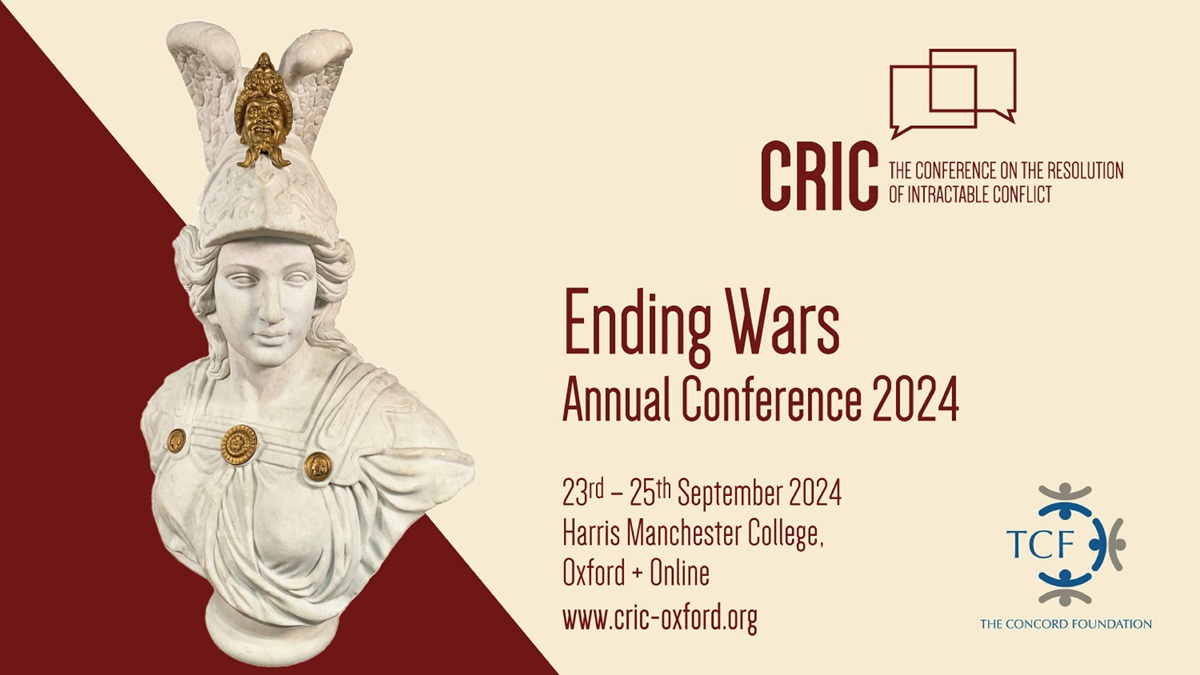
The GHfP Institute is a partner of the annual Conference on Resolution of Intractable Conflict. The 2024 CRIC was held on 23rd to 25th September at Harris Manchester College, University of Oxford. This was the 11th Annual Conference which took place amid deepening concerns about the deteriorating geopolitical tensions. Hence the theme of 2024 CRIC was “Ending Wars” to address two perspectives –
Exploring whether it is possible that out of the immediate worldwide crises of war and climate catastrophe a new approach can be fashioned to deal with our deepest differences, as was the case, albeit not permanently, after the two global conflicts of the first half of the 20th century.
Reflecting on if we are to understand how the current specific and overlapping wars can be closed down.
Minerva, the Roman goddess of war was used as a symbol of CRIC 2024. She is also of goddess of wisdom, art, justice and commerce. Can we bring wisdom to bear on the problem of war?
about CRIC the conference series, introduced by Lord John Alderdice





You must be logged in to post a comment.