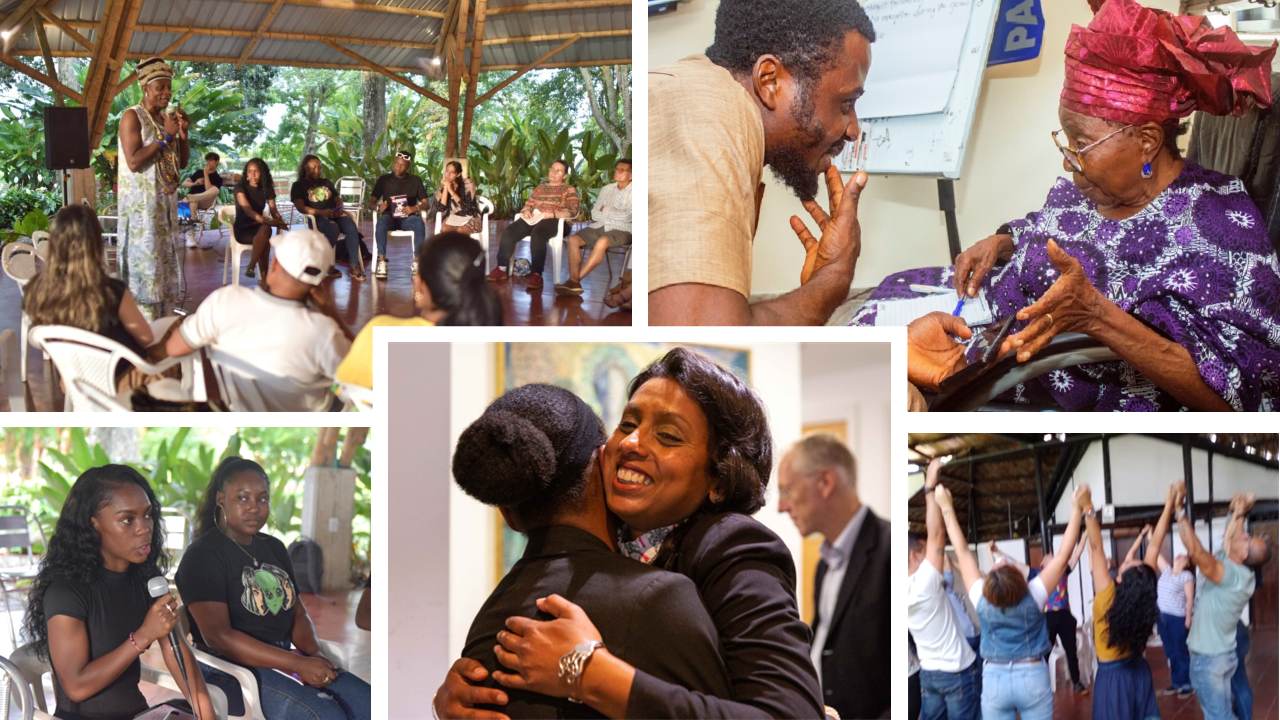
UNESCO, through its Routes of Enslaved Peoples programme, has been working with the Guerrand-Hermès Foundation for Peace since 2018 to develop a methodology for facilitating collective healing. Based on a desk review mapping impactful practices in the field, intergenerational dialogue workshops were co-created and led by impacted communities across four continents (Africa, Europe,
North America and South America) in 2023-24. These sessions proved to be deeply transformative, uplifting impacted communities in recovering historic resources and wisdom that have sustained them throughout hardship, and enabling them to reflect on possible solutions towards systemic change.
Professor Scherto Gill of the Global Humanity for Peace Institute joined the UNESCO 2024 Global Forum Against Racism and Discrimination held in Barcelona on 10th and 11th of December. The Forum brought together technical and policy experts to advocate for and advance the international movement for structural justice and social equality.
As the Coordinator of UNESCO Collective Healing Initiative, for this event, Professor Gill has been planning and designing, with our community partners, an experiential workshop on intergenerational dialogue and inquiry (IDI). IDI aims to examine and address the legacies of dehumanisation, including slavery, colonialism, racism and discrimination. IDI has been a main process of the Collective Healing Circles (CHC) that had been piloted in communities across 14 countries around the Atlantic Ocean.
The Intergenerational Dialogue and Inquiry workshop formed part of UNESCO flagship ‘Master Class Against Racism and Discrimination’ programme on 10th December 2024 during the UNESCO Global Forum.
TheMaster Classes against Racism and Discrimination, an initiative led by UNESCO, aims to foster a global understanding of racism among young peoplewhile creating a platform to propose actionable policies and solutions to combat racism and discrimination in our societies.
On 10th October 2024, UNESCO Assistant Director General, Mrs Gabriela Ramos, launched the Collective Healing Handbook for Facilitators in Paris, to mark the 30th Anniversary of UNESCO Routes of Enslaved People’s Programme.
The research and development of this Handbook was supported by grants from the Guerrand-Hermès Foundation for Peace. The Handbook is intended to support the efforts of facilitators and other professionals who are interested in hosting Collective Healing Circles (CHCs) in their local community. The intellectual insights underpinning the CHCs proposed in this Handbook are drawn from contemporary research on historical atrocities, such as the transatlantic trade of enslaved Africans, colonialisation, and mass killing and violent displacement of Indigenous peoples, as well as the legacies of dehumanisation, such as racism and structural injustice.
The practical ideas for implementing the CHC Programme featured throughout the Handbook are inspired by existing proven approaches of similar programmes, and those which have emerged from a one-year pilot of the Programme in five countries (Kenya, Nigeria, the UK, the USA and Colombia) on four continents. Click the link below to download the CHC Programme Handbook for Facilitators.
The launch was followed by reports and testimonies from community partners and participants of the UNESCO Collective Healing Initiative on the process and impact of our CHC activities on four continents.
Amongst those in the audience at UNESCO HQ were global leaders, national delegations, and civil society representatives.
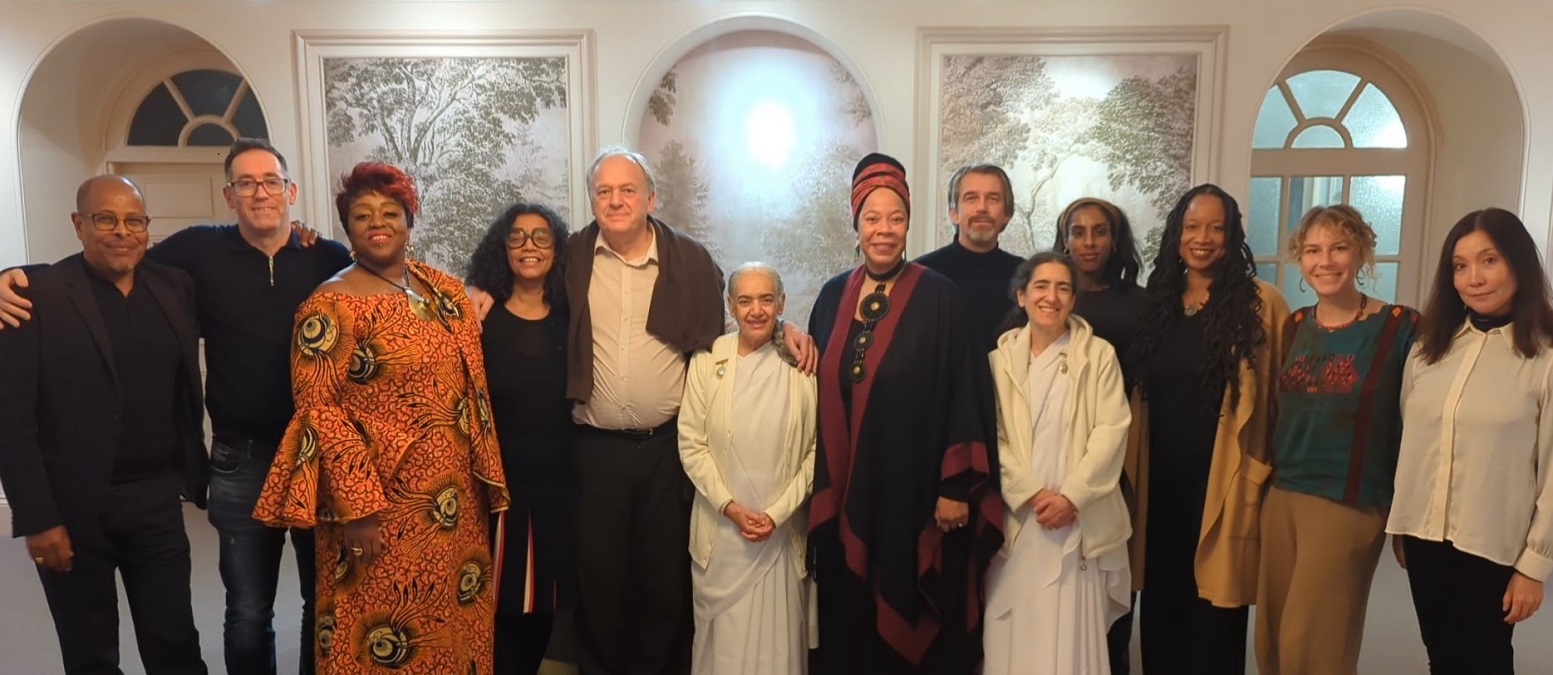
Throughout April 2024, experienced facilitators from across the world have been brought together by the UNESCO Collective Healing Initiative in a major step towards creating a global healing alliance of community-rooted Collective Healing Facilitators.
TheUNESCO Collective Healing Capacity Building Programme prepares participants to understand the key theoretical and methodological ideas underpinning the Collective Healing Initiative and builds their capacity to design and host bespoke Collective Healing Circles in their local communities.
The capacity building programme in April has brought together 25 participants from across 5 continents, including representatives from Brazil, Colombia, Costa Rica, Uruguay, USA, Mexico; Martinique & Guadeloupe; France, UK and Germany; and Kenya, Nigeria and Cameroon. The group includes voices from African, Afro-Caribbean, African-American, European-descent, and Indigenous communities. Participants engaged in a multi-lingual online space, with live simultaneous interpretation available in English, French, Spanish and Portuguese at all times. Thanks to the support and generosity of the Global Humanity for Peace Institute, Guerrand-Hermès Foundation and Fetzer Institute,
The online capacity building space is one which celebrates rich diversity, whilst also deeply acknowledging the shared experiences of loss, trauma and displacement which pervade the history of all cultures. Through experiential and dialogue-based sessions, participants have been guided through the four interlocking modules which form the structure for the collective healing circles: 1) Acknowledging our shared histories of dehumanisation and recognising their enduring legacies and harms; 2) Restoring our sense of human wholeness and re-affirming our dignity; 3) Strengthening relationships & deepening interconnectedness; and 4) Envisioning structural justice & activating our responsibilities for shared future(s). These modules work together to initiate and sustain collective healing within communities whose history has been characterised by structural dehumanisation, displacement, racism and inequality, towards a shared future of social justice and holistic wellbeing.
As one of the team shared:
“This capacity building programme is so much more than a ‘training’; it is a space for mutual sharing and learning, where each participant is bringing their many years of experience and cultural treasure to the space. Each session opens and closes with a participant sharing a cultural practice or ritual from their community – we have shared poems, songs, Indigenous chants… Each of us feels honoured to be in the space together and we are building bonds and friendships that will sustain us and our communities for many years to come.”
Following completion of the capacity building programme, participants will continue to develop community-rooted UNESCO Collective Healing Circles, with the ongoing guidance of experienced UNESCO Collective Healing Mentors. All participants completing this cycle will be awarded a UNESCO Collective Healing Initiative Certificate of Achievement in formal recognition of their role as UNESCO Collective Healing Circle Facilitators. A waiting list for participation in the next capacity building opportunity is already growing.
The UNESCO Collective Healing Circles (CHCs) Capacity-Building for Facilitators is designed to support and nurture experienced facilitators who have interest in hosting UNESCO CHCs in your local community.
Below is a short introduction to the UNESCO CHC Facilitators Capacity Building, including:
background
theoretical underpinnings
community contexts
innovative features
CHC processes and modules
CHC capacity building facilitators mentors
outcomes
It is highly recommended that all facilitators who wish to take part in the UNESCO CHC Capacity Building watch this less-than 15 minutes Introduction presented by the UNESCO CHC Facilitator Mentors.
The Introduction is available in the following languages: English, French, Portuguese and Spanish.
Understanding and healing relational and spiritual harm of dehumanisation
Collective Healing, Social Justice and Global Well-Being is a UNESCO initiative aimed at addressing the legacies of dehumanisation, including the harms of transoceanic enslavement of Africans, colonialism, continued racism, and other forms of structural discrimination. An important aspect of this initiative is to investigate the plethora of harms from multiple dimensions. Partners supporting this initiative include Guerrand-Hermès Foundation, Global Humanity for Peace (GHfP) Institute at University of Wales Trinity Saint David (UWTSD), Fetzer Institute, AfroSpectives, and Virginia Union University (VUU).
Through the UNESCO Routes of Enslaved Peoples Project’s (REP) 30 years’ endeavours, there have been research, documentation, recognising the destruction of afore-mentioned legacies, especially in terms of physical, cultural, and economic harms. To these efforts, during the 2nd session of the UN Permanent Forum on People of African Descent 2023, delegates of African and indigenous descent added a call for more research and better understanding of the relational and spiritual dimensions of these harms, which can serve as the basis for more concerted action towards healing and systemic transformation.
Indeed, without acknowledging relational and spiritual harms, collective efforts to confront the legacies of transoceanic enslavements and continued injustices against people of African and indigenous descent may fall short. Mere materialistic repairs, such as reducing economic disparity, levelling public services, and providing equal access to health, education, housing, finance, and employment, are not enough. While economic and social justice is important, the Afro and indigenous communities directly impacted by the dehumanising legacies insist that addressing the relational and spiritual dimensions of the harms and the connected trauma are equally, if not even more, critical. The characterisation of relational and spiritual harm should help bring to light the complex layers of harm, offering a more holistic conception of dehumanising harm. This will enable us to better recognise how both those who were violently enslaved and their descendants, and those who performed inhumane acts upon the enslaved, and their descendants, suffer from a same harm that can be described as relational and spiritual.
To this end, the partners supporting the collective healing initiative, have jointly launched two processes: the first was a conceptual exploration aimed at understanding what constitutes relational and spiritual harm; and the second was a pilot programme that engaged global communities in intergenerational dialogue and inquiries (IDI) to reflect on people’s lived experiences of the dehumanising legacies and connected relational and spiritual harm. The IDIs also enabled community stakeholders to identify relational and spiritual practices and resources key to resilience and healing of collective trauma.
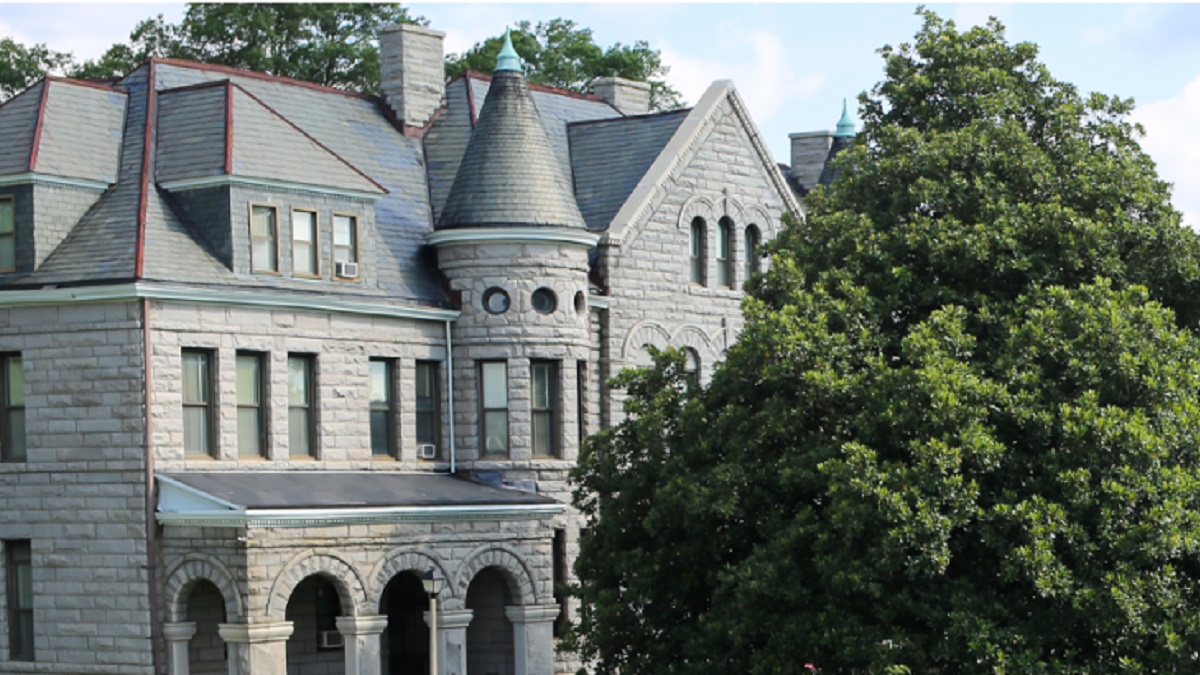
To further deepen our understanding of what constitutes relational and spiritual harm from an interdisciplinary perspective, and to explore what relational and spiritual approaches to healing and community regeneration are necessary in the context of global structural dehumanisation, the partners hosted a second UNESCO Symposium in January 2024 at Virginia Union University, in Richmond, VA., USA.
FOCUS & DISCUSSION QUESTIONS
We invite thinkers, scholars, researcher and practitioners to come together and focus our dialogue on the nature of relational and spiritual harm, and the necessary relational-centred and spiritually-inspired approaches to collective healing. Here, ‘spiritual harm’ is not solely about the wounding perpetuated or condoned by faith-based teaching, spiritual leaders and religious institutions.
We propose the following questions for dialogue and discussion:
What is the nature of dehumanising harm in the contexts of transoceanic slavery?
How might the terms ‘relational’ and ‘spiritual’ shift our understanding of such harm and the connected trauma and continuing injustices? What are the processes, modalities and manifestations of these harms?
How does the relational and spiritual harm differ for the enslaved and their descendants, and the enslavers and their descendants? What are the micro and macro consequences of those harms today?
What forms of healing are necessary to overcome these harms? How do the healing processes differ for those who are at the receiving end of dehumanisation and those who are perpetuating or participating in the perpetuation of dehumanisation?
What should be the future directions of healing work in the light of our understandings of relational and spiritual harm? How could we best integrate the relational and spiritual dimension in global transformation towards just system and well-being of all?
What approaches/practices could we draw upon and learn from global communities? How might research contribute to a new political culture of respect, love and caring?
Collective Healing, Social Justice and Global Well-Being is a UNESCO initiative aimed at addressing the legacies of dehumanisation, including the harms of transoceanic enslavement of Africans, colonialism, continued racism, and other forms of structural discrimination.
Past Event, 11-14 December 2023.
An important aspect of this initiative is to investigate the plethora of harms from multiple dimensions. Partners supporting this initiative include Guerrand-Hermès Foundation, Global Humanity for Peace (GHfP) Institute at University of Wales Trinity Saint David (UWTSD), Fetzer Institute, and AfroSpectives.
Through the UNESCO Routes of Enslaved Peoples Project’s (REP) 30 years’ endeavours, there have been research, documentation, recognising the destruction of afore-mentioned legacies, especially in terms of physical, cultural, and economic harms. To these efforts, during the 2nd session of the UN Permanent Forum on People of African Descent 2023, delegates of African and indigenous descent added a call for more research and better understanding of the relational and spiritual dimensions of these harms, which can serve as the basis for more concerted action towards healing and systemic transformation.
Indeed, without acknowledging relational and spiritual harms, collective efforts to confront the legacies of transoceanic enslavements and continued injustices against people of African and indigenous descent may fall short. Mere materialistic repairs, such as reducing economic disparity, levelling public services, and providing equal access to health, education, housing, finance, and employment, are not enough. While economic and social justice is important, the Afro and indigenous communities directly impacted by the dehumanising legacies insist that addressing the relational and spiritual dimensions of the harms and the connected trauma are equally, if not even more, critical. The characterisation of relational and spiritual harm should help bring to light the complex layers of harm, offering a more holistic conception of dehumanising harm. This will enable us to better recognise how both those who were violently enslaved and their descendants, and those who performed inhumane acts upon the enslaved, and their descendants, suffer from a same harm that can be described as relational and spiritual.
To this end, the partners supporting the collective healing initiative, have jointly launched two processes: the first was a conceptual exploration aimed at understanding what constitutes relational and spiritual harm; and the second was a pilot programme that engaged global communities in intergenerational dialogue and inquiries (IDI) to reflect on people’s lived experiences of the dehumanising legacies and connected relational and spiritual harm. The IDIs also enabled community stakeholders to identify relational and spiritual practices and resources key to resilience and healing of collective trauma.
To further deepen our understanding of what constitutes relational and spiritual harm from an interdisciplinary perspective, and to explore what relational and spiritual approaches to healing and community regeneration are necessary in the context of global structural dehumanisation, the partners hosted a UNESCO Symposium on 11-14 Dec 2023 in Oxford.
FOCUS and DISCUSSION QUESTIONS
We invited thinkers, scholars, researchers and practitioners to come together and to focus our dialogue on the nature of relational and spiritual harm, and the necessary relational-centred and spiritually-inspired approaches to collective healing. Here, ‘spiritual harm’ is not solely about the wounding perpetuated or condoned by faith-based teaching, spiritual leaders and religious institutions.
We proposed the following questions for dialogue and discussion:
What is the nature of dehumanising harm in the contexts of transoceanic slavery?
How might the terms ‘relational’ and ‘spiritual’ shift our understanding of such harm and the connected trauma and continuing injustices? What are the processes, modalities and manifestations of these harms?
How does the relational and spiritual harm differ for the enslaved and their descendants, and the enslavers and their descendants? What are the micro and macro consequences of those harms today?
What forms of healing are necessary to overcome these harms? How do the healing processes differ for those who are at the receiving end of dehumanisation and those who are perpetuating or participating in the perpetuation of dehumanisation?
What should be the future directions of healing work in the light of our understandings of relational and spiritual harm? How could we best integrate the relational and spiritual dimension in global transformation towards just system and well-being of all?
What approaches/practices could we draw upon and learn from global communities? How might research contribute to a new political culture of respect, love and caring?




You must be logged in to post a comment.