The Journal of Dialogue Studies, in partnership with the GHfP Institute, the Guerrand-Hermès Foundation for Peace, UNESCO Collective Healing Initiative, invited contributions for a special issue exploring the role of intergenerational dialogue in shaping collective well-being futures.
In recognising that despite global commitments to the UN Sustainable Development Goals (SDGs), progress remains impeded by persistent barriers, including transgenerational trauma, structural injustice, gender inequality, limited youth engagement, and fragmented political responses. In the face of these obstacles, intergenerational dialogue is increasingly important as it creates facilitated spaces for younger and older people to encounter and learn from each other. Such dialogue allows the community to draw insights from multiple generations, diverse cultural traditions, and rich cosmological worldviews towards building better futures.
This special issue is inspired by the power and potential of intergenerational dialogue. It is a response to the call of the United Nations Pact for the Future, which underscores the necessity of equitable intergenerational processes and collaborative approaches to multilateral governance to ensure sustainable peace, structural justice, and inclusive well-being.
By Scherto R. Gill, Director, Global Humanity for Peace Institute
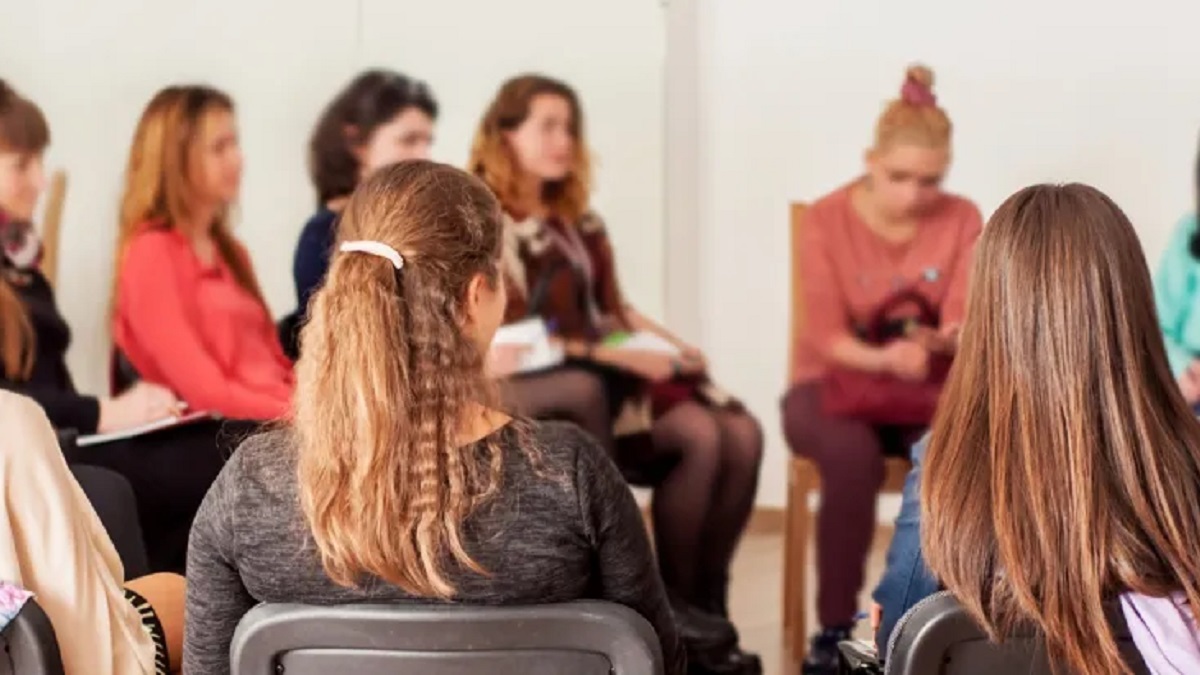
Every other month, on the second Tuesday, a constellation of facilitators gathers online — a learning circle stretching across 16 countries, 4 continents, and 4 languages: English, French, Spanish, and Portuguese. With the gentle help of AI translation, each voice is received in our own tongue, weaving a luminous tapestry of shared understanding.
On 16th September, 25 facilitators formed our circle. We came together to explore how the Collective Healing Circle (CHC) programme can be tailored to the diverse lived realities of our communities.
The gathering opened with drums from Richmond, Virginia, followed by a short poem carrying the breath from the Amazon — grounding us in rhythm, verses and spirit.
I offered the three inquiries that guide tailoring — investigative, appreciative, and evaluative. These aren’t academic theories. They’re invitations to listen into context before inviting people into the circle — to understand the particular music of each community before attempting to add harmony. Collective Healing practices can’t be copy-and-pasted. They must grow from the soil where they’re planted, shaped by the stories and metaphors already living in that place, responsive to the specific ways that community holds both pain and possibility.
To illustrate how these inquiries unfold in practice, our colleagues from Mexico shared how they wove Indigenous prophecies and ancestral wisdom into the CHC framework. Their presentation was colourful and inviting — words dancing with images, feelings moving through liminal spaces. Not as decoration, but as foundation. Not as addition, but as recognition of what was already there, waiting to be honored. Their approach was as much art as methodology: honouring both the common CHC framework and the particular practice of their land, letting each inform the other until something new is born and emerged.
From there, we dissolved into six small breakout rooms — in four different languages — where 2-4 facilitators gathered in intimate dialogue. These conversations deepened our reflections: What resonated? What requires more care? How might we all be co-creators of the circle? For thirty minutes, these questions evoked and breathed in eight different conversations. Connections spark across impossible distances. Challenges find company. Dormant ideas are awaken through the alchemy of shared reflection.
When the learning circle reforms, something has shifted. Insights pour back into the shared space—through voices and images, stories and the vibrant river of the chat feed. Each offering another thread in the tapestry they’re weaving together.
We closed with an ancestral African chant, together across the screen, a reminder of the deep wisdom carried through song requiring no translation.
The circle completes itself not by ending, but by beginning again. Each facilitator carries seeds of inspiration back to their local communities, back to the particular soil where the healing work takes root.
This year, the GHfP Institute has engaged in a global study, commissioned by UNESCO, to explore youth’s needs for leadership development. What marks this research unique is that it has involved youth co-researchers throughout, from identifying research questions, to designing the research questionnaire, from hosting focus-groups, to analysing the data and identifying themes and proposing recommendations. Furthermore, this global study intentionally focuses on the voices of youth from marginalised communities.
Over 1,500 young people across every world region contributed to this research through a desk review, survey questionnaire, focus groups, and in-depth interviews. Their message is clear: leadership must be reimagined. No longer hierarchical, elitist, or tokenistic, youth envision leadership as relational, dialogical, and futures-forming — a practice that is grounded in care for people and the planet. In fact, this study reveals that young people are already leading change today, often under extraordinary constraints, and more importantly, they are leading with visions of justice, dignity, and well-being that the world urgently needs to hear.
What Youth Told Us
Their concerns are urgent and overlapping. From climate change and unemployment to gender-based violence, mental health, and political exclusion, young people confront intersecting crises every day.
They are already leading. In their communities, youth are mobilising for climate justice, creating safe spaces, preserving culture, and challenging systemic injustice.
Barriers are structural, not personal. Youth are not held back by a lack of talent or ambition, but by ageism, tokenism, underfunding, weak civic spaces, and exclusionary education systems.
They know what enables leadership. Trust, mentorship, intergenerational solidarity, sustained resources, and spaces of safety and belonging emerged as essential conditions for flourishing.
They are re-framing leadership itself. Leadership, they argue, is not about power over others, but about dialogue, shared responsibility, and accountability to future generations.
A Blueprint for Futures-Forming Leadership
From these insights, the study distilled:
Three imperatives: address systemic injustice, strengthen intergenerational solidarity, and reimagine governance for the common good.
Five values: collective well-being, dialogue, relationality, justice, and responsibility to future generations.
Seven proposals: practical recommendations from youth, ranging from experiential learning and mentoring to sustainable funding and co-governance structures.
Together, these constitute a youth-authored blueprint for leadership that is capable of meeting the challenges of our time.
A Call to Action
Young people are not asking for charity. They are calling for recognition, resources, and authentic partnership. They ask institutions to:
Institutionalise youth co-governance.
Secure long-term funding and seed grants.
Embed youth leadership into UNESCO and partners’ core systems.
Build decentralised hubs for exchange and solidarity.
Leverage partnerships across sectors to scale impact.
Why This Matters
Leadership for the future cannot be postponed. The crises we face are urgent, and the creativity and courage of youth are already shaping the path forward. What is needed now is not another round of rhetoric, but a living covenant between generations — a commitment to co-create futures where dignity, justice, and flourishing are shared by all.
UNESCO’s Futures-Forming Leadership Report amplifies the voices of young people. The responsibility lies with us — institutions, funders, educators, policymakers — to act on what they have said.
Because youth are not the leaders of tomorrow. They are the leaders of today.
Edited by Prof Scherto Gill, Beyond Inhumanity is a book that emerges from the ongoing intellectual dialogue as part of the UNESCO Collective Healing Initiative. The Initiative focuses on healing the wounds of inhumanity, co-creating just societies and enhancing the flourishing of current and future generations.
About this book
Collective efforts to address the legacies of slavery and colonialism tend to orient solely towards dealing with material compensation, such as reducing economic disparity, and levelling access to public services. However, communities directly impacted by the dehumanizing legacies have insisted on a broader reckoning—one that recognizes all dimensions of the harms, including the spiritual injury and the relevant psychosocial trauma inflicted across the generations. They remind us that harms of structural injustice extend beyond the material, the physical and the psychological, also entangling the moral, relational, and spiritual fabric of human life. Understanding harms of inhumanity brings to light the layers of damage and is key to identifying interdisciplinary approaches to collective healing, social transformation and the well-being of all.
This book emerges from the ongoing intellectual dialogue as part of the UNESCO Collective Healing Initiative. The Initiative focuses on healing the wounds of inhumanity, co-creating just societies and enhancing the flourishing of current and future generations.
Despite global commitments to the UN Sustainable Development Goals (SDGs), persistent barriers have continued to hinder meaningful progress. Amongst these barriers, are transgenerational trauma, gender-based inequality, limited opportunities for youth engagement, and fragmented community responses. The UNESCO Collective Healing Initiative, through its pioneering Intergenerational Dialogue and Inquiry (IDI) approach, uniquely tackles these barriers by harnessing cultural wisdom, fostering communal resilience, and strengthening youth leadership.
To discern the impact of the IDI approach, the Guerrand-Hermès Foundation and Global Humanity for Peace (GHfP) Institute at the University of Wales Trinity Saint David have undertaken a three-year research study in 9 countries, investigating the processes and outcomes of intergenerational approaches in achieving the SDGs. This study engaged youth and elders, who are participants in the UNESCO Collective Healing programmes. In addition, the Institute also sought the perspectives of global youth on their needs for leadership development and changemaking.
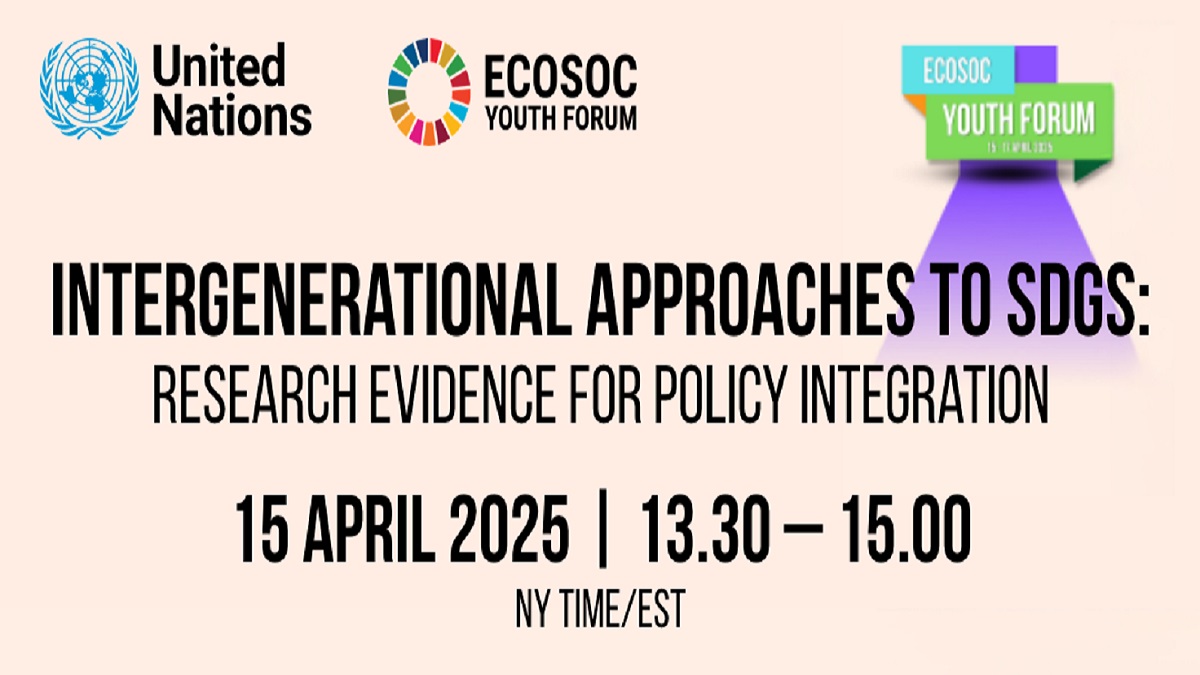
Emergent insights from both studies were presented in New York during the 2025 UN ECOSOC Youth Forum as a Side Event. The questions explored include:
What concrete evidence demonstrates that intergenerational approaches significantly contribute to SDGs?
How can international, national, and community-level policymakers effectively integrate intergenerational approaches in sustainable development strategies?
What specific policy commitments can stakeholders (governments, NGOs, researchers, politicians, youth leaders) make today to ensure that intergenerational approaches become integral to achieving the 2030 Agenda?
Led by Prof Scherto Gill and our young co-researcher, Casey Overton, this interactive event brought together voices from UNESCO, academia, policy, and youth to examine evidence from the research projects, and highlighted opportunities for policy integration, such as scalable intergenerational strategies to bolster community resilience and social inclusion towards well-being futures.
Amongst the findings presented are that today’s youth navigate a world shaped by global disturbance, climate crises, and rapid technological change, often experiencing fragmentation and alienation. Intergenerational processes and approaches can enable elders to better understand youth perspectives while supporting youth to reconnect with traditional wisdom, cultural resources, and collective resilience — key to overcoming obstacles to sustainable development.
These studies underscore the transformative potential of intergenerational strategies in fostering long-term positive change, bridge historical divisions, and promote youth-led collective action for the SDGs. It is precisely such insights that can inform policy development, by stressing the critical need for practical implementation of IDI and for ensuring intergenerational accountability.
Casey further reflected on the potential and limitation of intergenerational approach. In particular, she pointed out that whilst dialogue can serve as connective tissue, aimed at building bridges, enabling understanding and collaboration, power disparity can inhibit dialogue. For instance, IDI in some contexts doesn’t always take place amongst equals. Therefore it requires institutional structures and processes to systematically integrate intergenerational approach to social transformation.
The session received enthusiastic responses from the participants who both recognised the significance of these research studies and echoed the importance of IDI in their own national and local contexts, in Africa, Asia, Europe and the Americas.
Professor Scherto Gill of the Global Humanity for Peace Institute joined the UNESCO 2024 Global Forum Against Racism and Discrimination held in Barcelona on 10th and 11th of December. The Forum brought together technical and policy experts to advocate for and advance the international movement for structural justice and social equality.
As the Coordinator of UNESCO Collective Healing Initiative, for this event, Professor Gill has been planning and designing, with our community partners, an experiential workshop on intergenerational dialogue and inquiry (IDI). IDI aims to examine and address the legacies of dehumanisation, including slavery, colonialism, racism and discrimination. IDI has been a main process of the Collective Healing Circles (CHC) that had been piloted in communities across 14 countries around the Atlantic Ocean.
The Intergenerational Dialogue and Inquiry workshop formed part of UNESCO flagship ‘Master Class Against Racism and Discrimination’ programme on 10th December 2024 during the UNESCO Global Forum.
TheMaster Classes against Racism and Discrimination, an initiative led by UNESCO, aims to foster a global understanding of racism among young peoplewhile creating a platform to propose actionable policies and solutions to combat racism and discrimination in our societies.
The GHfP Institute was delighted to join UNESCO in celebrating 30 years of the Routes of Enslaved Peoples (REP) Programme in Paris in October 2024.
At this extraordinary event, the GHfP co-organised the presentation of the UNESCO partnership initiative on Collective Healing, Just Society and Global Well-Being. The Collective Healing Initiative is committed to addressing the legacies of dehumanisation, e.g. slavery, colonialism, and indigenous genocide, and other historically rooted injustice, through facilitating and encouraging community-based Collective Healing Circles (CHCs) currently active in 14 countries globally. The initiative is co-sponsored by the UNESCO Social and Human Sciences Sector and the Guerrand-Hermès Foundation and is coordinated by the GHfP Institute.
Our presentation consisted of testimonies and narratives provided by community representatives from four continents (Brazil, Nigeria, the UK, the USA and France/Martinique) who shared their experiences of intergenerational approach to healing, dignity and well-being. They invited the high-level global leaders to consider ways to transform societies and to ensure structural justice. This event further saw UNESCO Assistant Director General (ADG), Mrs Gabriela Ramos launching the Collective Healing Circle Programme Handbook for Facilitators. The development of this Handbook was supported by grants from the Guerrand-Hermès Foundation for Peace, the Fetzer Institute, and the Pureland Foundation. The Handbook is intended to support the efforts of facilitators and other professionals who are interested in hosting Collective Healing Circles (CHCs) in their local community.
Following the presentation, community CHC practitioners and presenters engaged in a deep dialogue with high-level national leaders on the opportunities to engage other stakeholders in this joint efforts towards creating a fair, inclusive and just world for our present and future generations.
On 10th October 2024, UNESCO Assistant Director General, Mrs Gabriela Ramos, launched the Collective Healing Handbook for Facilitators in Paris, to mark the 30th Anniversary of UNESCO Routes of Enslaved People’s Programme.
The research and development of this Handbook was supported by grants from the Guerrand-Hermès Foundation for Peace. The Handbook is intended to support the efforts of facilitators and other professionals who are interested in hosting Collective Healing Circles (CHCs) in their local community. The intellectual insights underpinning the CHCs proposed in this Handbook are drawn from contemporary research on historical atrocities, such as the transatlantic trade of enslaved Africans, colonialisation, and mass killing and violent displacement of Indigenous peoples, as well as the legacies of dehumanisation, such as racism and structural injustice.
The practical ideas for implementing the CHC Programme featured throughout the Handbook are inspired by existing proven approaches of similar programmes, and those which have emerged from a one-year pilot of the Programme in five countries (Kenya, Nigeria, the UK, the USA and Colombia) on four continents. Click the link below to download the CHC Programme Handbook for Facilitators.
The launch was followed by reports and testimonies from community partners and participants of the UNESCO Collective Healing Initiative on the process and impact of our CHC activities on four continents.
Amongst those in the audience at UNESCO HQ were global leaders, national delegations, and civil society representatives.







You must be logged in to post a comment.