Research and grassroots practices have highlighted and demonstrated the importance of intergenerational dialogue and inquiry in integrating past trauma as part of collective healing, racial justice and well-being. Likewise, traditional wisdom, such as that illustrated by the African Akan metaphor of ‘Sankofa’, and the indigenous idea of ‘medicine wheel’, also suggests that remembering the past is a path to recovering the knowledge of previous generations, connecting past-present-future, harmonising with all elements in the cosmos, and restoring the wholeness of our being.
Global Humanity for Peace Institute, is delighted to have accepted applications for the 2025 Young Changemakers Programme (YCP), a unique international opportunity for young people aged 19–27 to develop their potential as changemakers.
2025 marked the Catholic Jubilee. Inviting us to embrace forgiveness, share hope, and aspire towards renewal. In this spirit, 2025 Young Changemakers Programme (YCP) was held in Rome, offering young participants an inspiring and transformative learning journey. Through a circular itinerary that wove together encounter, experience, inquiry, and action, the YCP sought to foster participants’ self-awareness, mutual appreciation, and a deeper understanding of both local and global challenges.
Building on the innovative pedagogies of the Pontifical Foundation Scholas Occurrentes , University of Meaning , and Global Humanity for Peace Institute at the University of Wales Trinity Saint David , the YCP makes learning relevant to participants’ personal and professional development, as well as youth needs in contributing to social transformation.
In this video, Prof Scherto Gill offers an outline of her presentation at 2025 Inner Development Goals Summit, focusing on exploring the four processes of the UNESCO Collective Healing Initiative, including an intergenerational approach to leadership as healership.
On October 16th, at the IDG Summit, Track 6 – Healing the Roots of What Drives Us Apart, will explore how trauma-informed leadership can open pathways for systemic healing, peacebuilding, and societal defragmentation. This digital track is an immersive journey into the root causes of polarisation and healing collective trauma, blending trauma science, conflict transformation, and embodied leadership.
Through live group process, reflective practice, artistic embodiment, and narrative tracking, participants will witness how inner development practices can transform fragmentation into collective insight and how to embed this wisdom in leadership, organisations, and society.
Prof Scherto Gill reflected on the question “What does it take to heal the deep divisions of our world today?” By tracing the development and processes of the UNESCO Collective Healing Initiative, the presentation brings forward communities across four continents experiences engaging in an intergenerational approach to shifting from trauma towards flourishing. This involves facing the wounds of injustice with courage, rediscovering ancestral wisdom with curiosity, nurturing new ways of belonging with compassion, and envisioning well-being futures with care.
This makes the case for why the intergenerational processes of collective healing are not abstract, but involve essential inner capacities of transforming leadership as healer-ship.
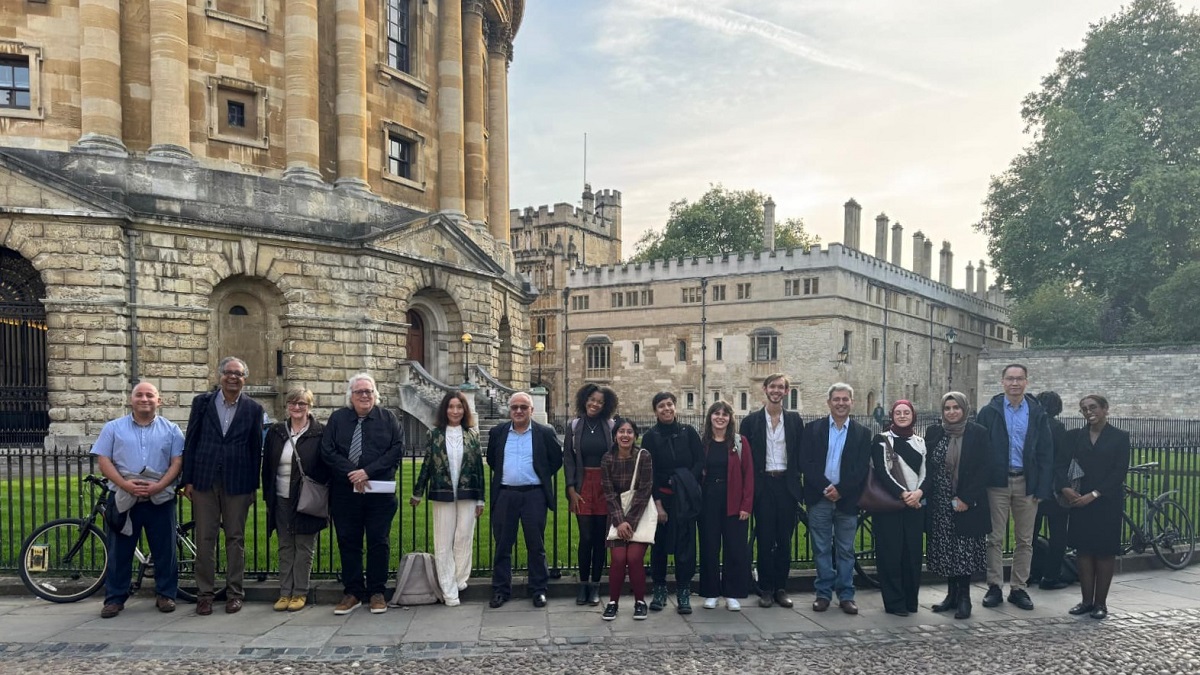
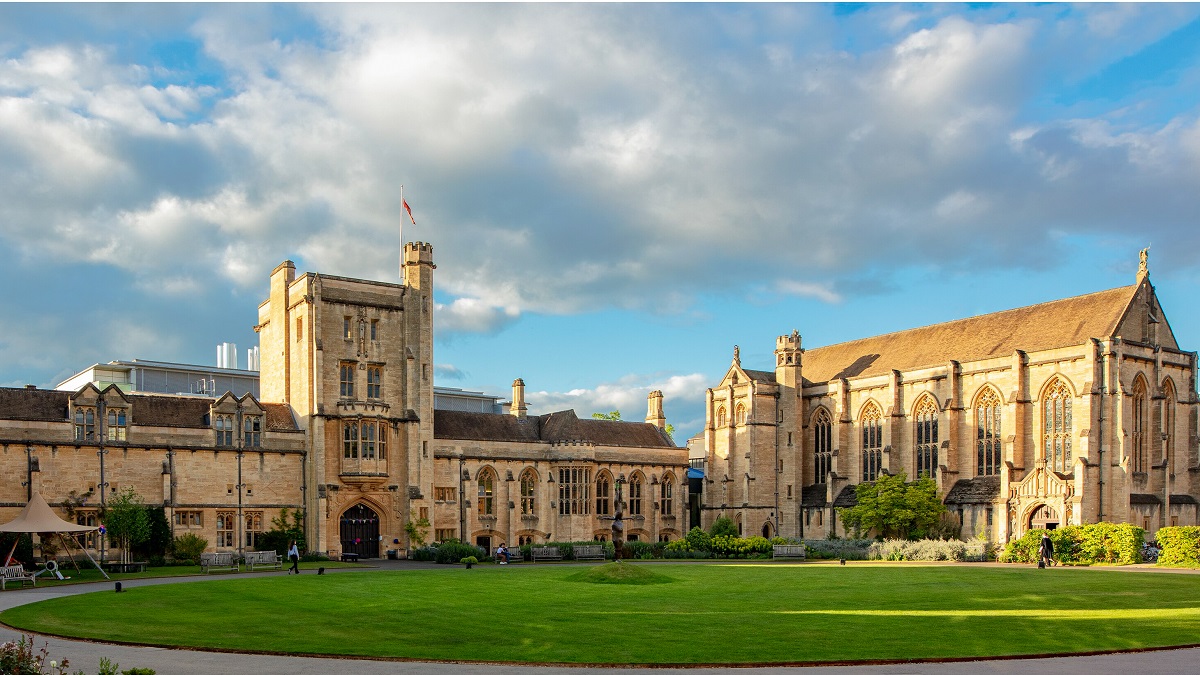
On 19th September, scholars, researchers and practitioners gathered in Mansfield College, Oxford, for a workshop on Intergenerational Dialogue for Well-Being Futures. This event was co-convened in partnership with the Journal of Dialogue Studies, which will publish a special issue (Vol. 14, 2025) on the same theme.
My motivation for guest-editing this issue arises from five years of work with the UNESCO Collective Healing Initiative. At the heart of Initiative are the Collective Healing Circles (CHCs), intergenerational spaces created in communities across Africa, the Americas, and Europe. In these circles, people of all ages come together to acknowledge historical mass atrocities, recognise continued wounds, reclaim ancestral wisdom and human dignity, transcend divisions, and co-imagine shared flourishing. They have shown me both the transformative potential and the challenges of intergenerational dialogue and inspired me to bring these questions into wider academic and policy exploration.
A workshop structured as a journey
Following an inspiring keynote from Youssef Mahmoud, former UN Under-Secretary-General, the academic workshop’s programme followed a deliberate arc:
Contexts – situating dialogue in linguistic, historical, ethical, grassroots, digital, and spiritual arenas.
Conceptualisations – examining how intergenerational dialogue is conceived epistemologically, ethically, and culturally, and how it can serve healing, and transformation.
Practices – exploring how dialogue is enacted and transmitted through arts, memory, and creative media.
Futures – considering how intergenerational dialogue might serve as a foundation for justice, solidarity, and flourishing societies.
This progression created space not only for rich scholarly exchange, but also for deep reflection on the ethical, methodological, and political dimensions of dialogue across generations.
Insights across the sessions
Several themes resonated across the day:
Transmission and transformation: Dialogue mediates the tension between preserving ancestral wisdom and inherited knowledge and transforming it for the future.
Agency and co-authorship: Who has the authority to decide what is remembered, transmitted, or reinterpreted? Intergenerational dialogue demands genuine co-authorship.
Dialogue as ethical practice: Listening, translation, ritual, and creativity are not just methods, but ethical commitments.
Challenges of reconciliation: Dialogues are often uncomfortable — grappling with guilt, silence, or denial — yet necessary for relational repair.
Futures through justice: Dialogue is not only about the past; it is a path to recognition, resilience, and flourishing futures.
One aspect that remains insufficiently addressed is the overwhelming domination of structural injustice, which continues to define the lived experience of the global majority. While academic research offers decolonial critique and systemic analysis, the challenge ahead lies in reimagining global governance that can respond to these realities.
Looking ahead
For me, one of the most moving aspects of the workshop was how much it echoed the spirit of the UNESCO Collective Healing Circles. We saw how dialogue is never neutral: it carries risks of stereotyping or tokenising, but also profound possibilities for recognition, resilience, and transformation. We saw how young people are not simply listeners or translators, but co-creators of meaning and futures. And we saw how elders are not only custodians of memory, but partners in reshaping change.
As we move forward, the next step is to revise and deepen the papers in light of the workshop conversations. Guided by the Journal of Dialogue Studies framework, the special issue will ensure that contributions are theoretically rich, methodologically and ethically strong, and — most importantly — relevant to the question at the heart of our gathering: how intergenerational dialogue can nurture well-being futures in contexts marked by structural injustice.
I am grateful to all who joined us in Oxford, for your generosity, insights, and presence. This is not the end, but part of a continuing journey to explore and enact intergenerational dialogue as a vital resource for our shared futures.
The Journal of Dialogue Studies, in partnership with the GHfP Institute, the Guerrand-Hermès Foundation for Peace, UNESCO Collective Healing Initiative, invited contributions for a special issue exploring the role of intergenerational dialogue in shaping collective well-being futures.
In recognising that despite global commitments to the UN Sustainable Development Goals (SDGs), progress remains impeded by persistent barriers, including transgenerational trauma, structural injustice, gender inequality, limited youth engagement, and fragmented political responses. In the face of these obstacles, intergenerational dialogue is increasingly important as it creates facilitated spaces for younger and older people to encounter and learn from each other. Such dialogue allows the community to draw insights from multiple generations, diverse cultural traditions, and rich cosmological worldviews towards building better futures.
This special issue is inspired by the power and potential of intergenerational dialogue. It is a response to the call of the United Nations Pact for the Future, which underscores the necessity of equitable intergenerational processes and collaborative approaches to multilateral governance to ensure sustainable peace, structural justice, and inclusive well-being.
In Colombia, Cauca, south of Popayán, at the Estrella Roja Humanitarian Camp, established during the 2021 Social Outbreak, has emerged as an organizational experience sustained by community self-management and the leadership of women, youth, and diverse families who defend life, territory, and dignity.
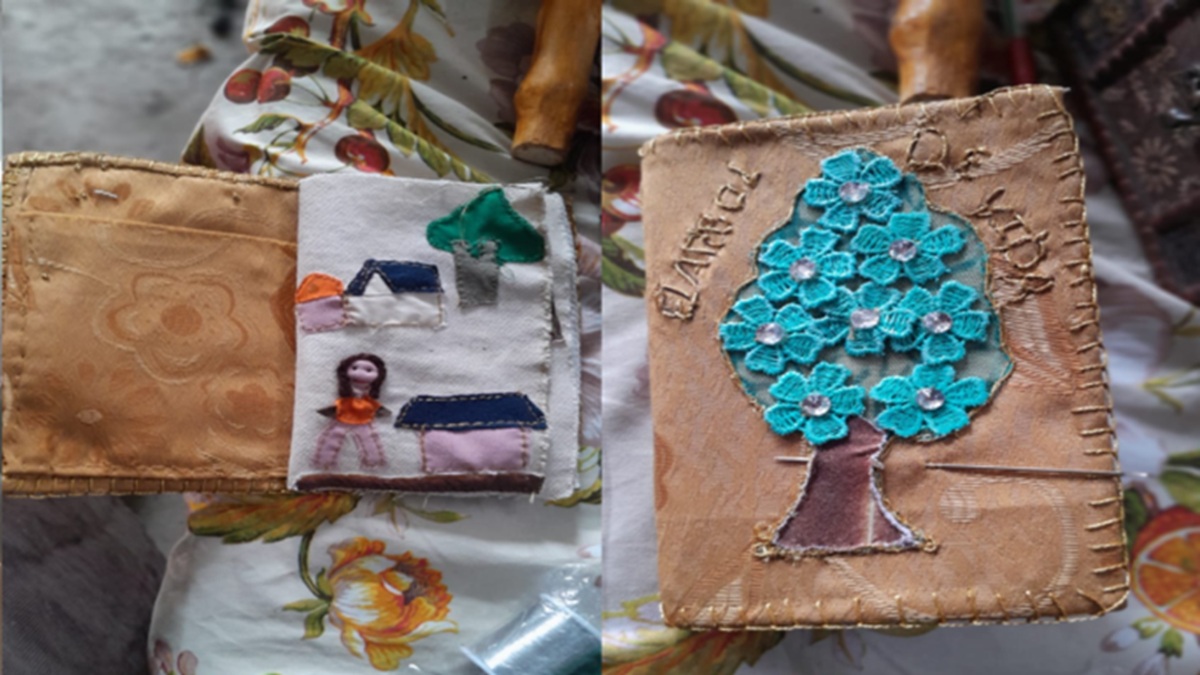
As part of the implementation of the Collective Healing Circles Program, an artistic project called “Golden Patches” has been developed, which constitutes a strategy of memory, expression, and collective care.
The activity brings together adult and older women, along with young women and girls, who, gathered in simple community spaces, work with needles, fabrics, and golden threads. Each participant uses a scrap of fabric from personal items that have accompanied their lives, on which they embroider simple and deeply meaningful symbols. These embroideries express their resistance to displacement, gender violence, social exclusion, and urban precariousness, as well as the inner treasures cultivated amidst these experiences.
The images that result from this exercise—trees, roots, flowers, and hearts—reflect the community’s resilience and spiritual strength. Each golden stitch becomes an act of healing and a recognition of the inner strength that has allowed them to resist and transform pain.
The embroidered fragments will be compiled in a collective golden book, presented on community altars as a tribute to shared struggles, living memories, and the hope built collectively.
The Mendiendos Dorados process is more than a craft practice: it constitutes a living heritage, a way of narrating memory and affirming dignity through symbolic and spiritual languages that strengthen community bonds.
Despite global commitments to the UN Sustainable Development Goals (SDGs), persistent barriers have continued to hinder meaningful progress. Amongst these barriers, are transgenerational trauma, gender-based inequality, limited opportunities for youth engagement, and fragmented community responses. The UNESCO Collective Healing Initiative, through its pioneering Intergenerational Dialogue and Inquiry (IDI) approach, uniquely tackles these barriers by harnessing cultural wisdom, fostering communal resilience, and strengthening youth leadership.
To discern the impact of the IDI approach, the Guerrand-Hermès Foundation and Global Humanity for Peace (GHfP) Institute at the University of Wales Trinity Saint David have undertaken a three-year research study in 9 countries, investigating the processes and outcomes of intergenerational approaches in achieving the SDGs. This study engaged youth and elders, who are participants in the UNESCO Collective Healing programmes. In addition, the Institute also sought the perspectives of global youth on their needs for leadership development and changemaking.
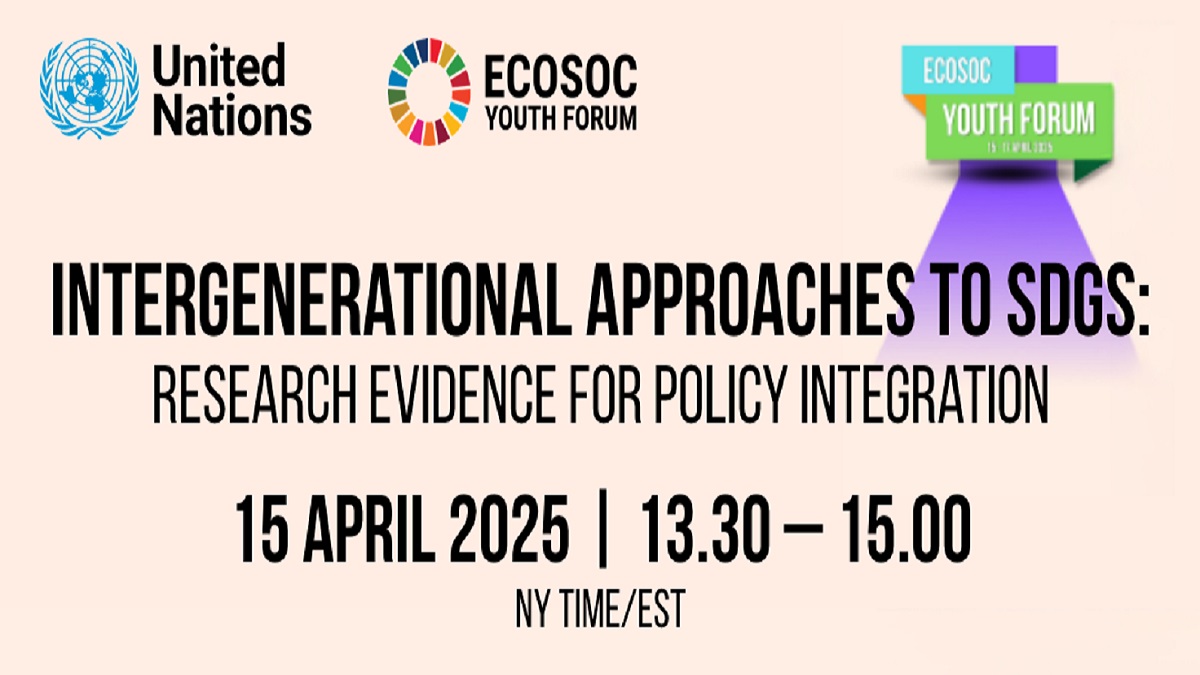
Emergent insights from both studies were presented in New York during the 2025 UN ECOSOC Youth Forum as a Side Event. The questions explored include:
What concrete evidence demonstrates that intergenerational approaches significantly contribute to SDGs?
How can international, national, and community-level policymakers effectively integrate intergenerational approaches in sustainable development strategies?
What specific policy commitments can stakeholders (governments, NGOs, researchers, politicians, youth leaders) make today to ensure that intergenerational approaches become integral to achieving the 2030 Agenda?
Led by Prof Scherto Gill and our young co-researcher, Casey Overton, this interactive event brought together voices from UNESCO, academia, policy, and youth to examine evidence from the research projects, and highlighted opportunities for policy integration, such as scalable intergenerational strategies to bolster community resilience and social inclusion towards well-being futures.
Amongst the findings presented are that today’s youth navigate a world shaped by global disturbance, climate crises, and rapid technological change, often experiencing fragmentation and alienation. Intergenerational processes and approaches can enable elders to better understand youth perspectives while supporting youth to reconnect with traditional wisdom, cultural resources, and collective resilience — key to overcoming obstacles to sustainable development.
These studies underscore the transformative potential of intergenerational strategies in fostering long-term positive change, bridge historical divisions, and promote youth-led collective action for the SDGs. It is precisely such insights that can inform policy development, by stressing the critical need for practical implementation of IDI and for ensuring intergenerational accountability.
Casey further reflected on the potential and limitation of intergenerational approach. In particular, she pointed out that whilst dialogue can serve as connective tissue, aimed at building bridges, enabling understanding and collaboration, power disparity can inhibit dialogue. For instance, IDI in some contexts doesn’t always take place amongst equals. Therefore it requires institutional structures and processes to systematically integrate intergenerational approach to social transformation.
The session received enthusiastic responses from the participants who both recognised the significance of these research studies and echoed the importance of IDI in their own national and local contexts, in Africa, Asia, Europe and the Americas.
Professor Scherto Gill of the Global Humanity for Peace Institute joined the UNESCO 2024 Global Forum Against Racism and Discrimination held in Barcelona on 10th and 11th of December. The Forum brought together technical and policy experts to advocate for and advance the international movement for structural justice and social equality.
As the Coordinator of UNESCO Collective Healing Initiative, for this event, Professor Gill has been planning and designing, with our community partners, an experiential workshop on intergenerational dialogue and inquiry (IDI). IDI aims to examine and address the legacies of dehumanisation, including slavery, colonialism, racism and discrimination. IDI has been a main process of the Collective Healing Circles (CHC) that had been piloted in communities across 14 countries around the Atlantic Ocean.
The Intergenerational Dialogue and Inquiry workshop formed part of UNESCO flagship ‘Master Class Against Racism and Discrimination’ programme on 10th December 2024 during the UNESCO Global Forum.
TheMaster Classes against Racism and Discrimination, an initiative led by UNESCO, aims to foster a global understanding of racism among young peoplewhile creating a platform to propose actionable policies and solutions to combat racism and discrimination in our societies.
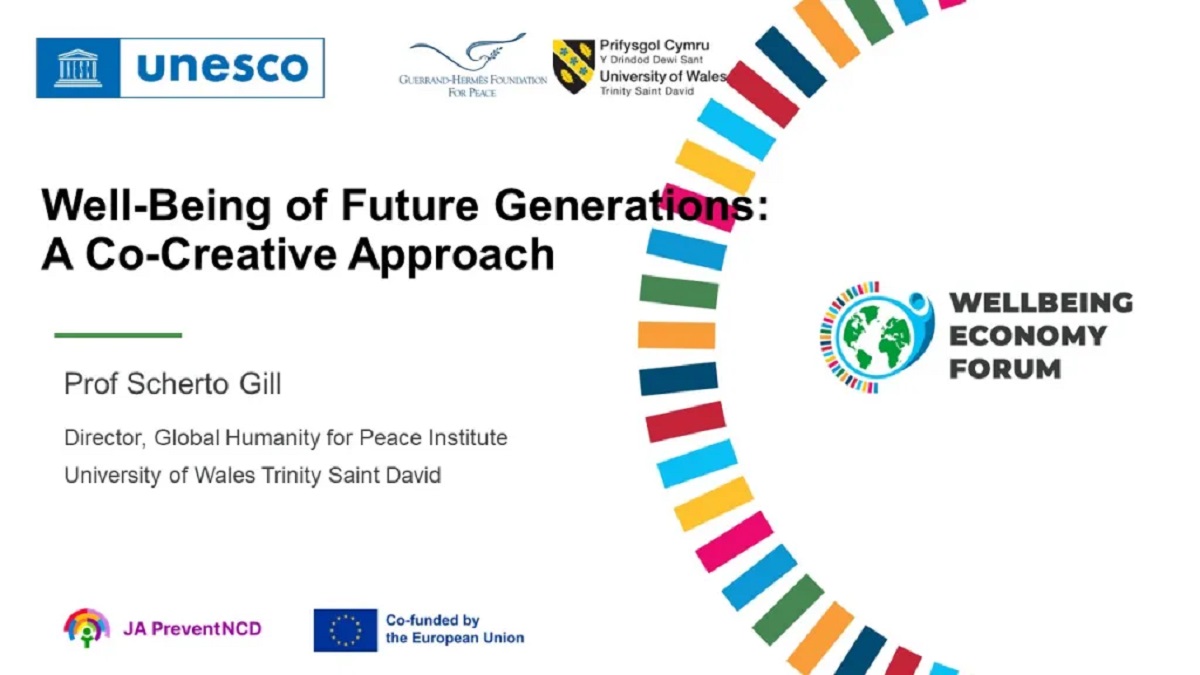
Well-Being of Future Generations: A Co-Creative Approach, Harpa, Reykjavik. June 2024.
When our current economic systems effectively prioritise materialism, self-interest, and other misplaced values, a greater majority of humanity suffers. Some grapple with political antagonism and oppression, some experience racism and discrimination, and others struggle in poverty and marginalisation, and lack the opportunity for decent livelihood. Alongside related ecological disasters, causing catastrophic harm to humans and the more-than-human, such systemic and environmental turbulence has not only engendered a pandemic of ill-being amongst global youth, but can also have long-term detrimental effects on collective well-being in generations to come.
Despite bringing in technological advancement and increased wealth, in fact, capitalism remains entrenched in a culture of individualism and instrumentalisation. Such a culture perpetuates paradigms of separation, dehumanisation and inequality. Conversely, it also reflects a deeper crisis of humanity, namely a loss of core human values, such as respect for human dignity and care for our interconnectedness.
To move beyond the current impasse towards global transformation requires a fuller appreciation of what it means to live and act in accordance with our shared humanity. It involves a better understanding of how diverse social, political and grassroots actors can collectively respond to the myriad crises, and co-imagine common pathways for enhancing the well-being and flourishing of all in the future.
In such contexts, UNESCO Social and Human Sciences (SHS) Sector, in collaboration with Global Humanity for Peace (GHfP) Institute at the University of Wales TSD, convened an international Symposium during the Well-Being Economy Forum 2024, held on 11th June 2024 in Reykjavik, Iceland. The theme of the Symposium is Well-Being of Future Generations: A Co-Creative Approach.
UNESCO has focused its fundamental mission on developing mutual understanding, confronting contemporary challenges, and building lasting peace. UNESCO SHS Sector, under the leadership of Mrs Gabriela Ramos, has extended expertise in co-constructing just, inclusive, and resilient societies. In particular, UNESCO recognises that concerted global efforts are imperative to reframe the present existential crises as an opportunity for inclusive intercultural and intergenerational dialogue, and cross-boundary collaboration.
In particular, the Symposium drew insights from UNESCO’s focus on human rights and social justice to foreground an ethical approach to inclusive well-being policymaking. Furthermore, by stressing gender equality, youth empowerment and futures-forming changemaking, the Symposium advocated a co-creative approach to social transformation.
In this Symposium, we gather significant interdisciplinary perspectives to explore how our global systems can be:
underpinned by the respect for the intrinsic value of every person and a commitment to the equal dignity of all.
characterised by dialogue and co-creation in the processes.
aimed at enhancing well-being of present and future generations alongside the flourishing of all beings in nature.
Through listening, dialogue and reflection, the contributors and participants will have an opportunity to give voice to the theme of the Symposium. In particular, the esteemed panel and youth will discuss how core human values and principles can inform the provision of well-being sensitive public policies, especially in education, equality and ecological integrity; the design of caring institutions, and the nurturing of futures-forming changemakers.









You must be logged in to post a comment.