Research Spotlight: New Perspectives on Healing Collective Trauma

How do we heal history’s deepest wounds? In her new Open Access book, “New Perspectives on Healing Collective Trauma,” Prof. Scherto Gill brings together global voices to explore the intersection of structural justice, intergenerational dialogue, and collective healing. Featuring insights from Professors Myriam Cottias, Ana Lucia Araujo, and Lord Alderdice, Drs Joy DeGruy, Ali Moussa Iye, Esther Armah, Gail Christopher, Thomas Hübl, Indigenous leader, Lewis Cardinal, and more.

📖 Read it for free by clicking on this open access book link: New Perspectives on Healing Collective Trauma: Towards Social Justice and Communal Well-Being

In an era marked by deep global divisions, how do societies move beyond the paralysis of historical wounds? This groundbreaking new volume, “New Perspectives on Healing Collective Trauma,” edited by Prof. Scherto Gill, offers a transformative roadmap. Moving the conversation beyond individual psychology, this book establishes collective healing as a systemic, structural, and intergenerational imperative necessary for achieving genuine social justice.

Why This Research Matters Now

Historical injustices—enslavement, colonialism, and systemic racism—are not just events of the past; they are lived realities that continue to shape economic disparities, political polarization, and cultural fragmentation. This book argues that traditional approaches to peacebuilding often fail because they neglect the deep spiritual and psychosocial wounds that communities carry across generations.

This research highlights that healing is political. It connects the inner work of trauma integration with the outer work of structural change, proposing that we cannot have one without the other.

Key Innovations & Frameworks

The book introduces and expands upon several cutting-edge concepts that redefine the field of trauma studies and peacebuilding:

  • Intergenerational Dialogue and Inquiry (IDI): A flagship methodology featured in the book (and piloted by the UNESCO Collective Healing Initiative), IDI creates safe spaces for youth and elders to break the silence on past atrocities, facilitating a transfer of wisdom and resilience rather than just trauma.
  • The Politics of Dignity: Prof. Gill challenges current governance models, proposing a “politics of dignity” where institutions are intentionally designed to affirm the intrinsic value of every person, actively dismantling the structures of dehumanization.
  • Emotional Justice: Contributor Esther A. Armah introduces a language to navigate the unspoken emotional economies of racism, arguing that policy changes are insufficient without addressing the “emotional currency” of oppression.
  • Healing Architecture: The volume explores how our physical environments and public spaces can be designed to foster relational health and communal repair, rather than enforcing separation.

Global Case Studies

The research is grounded in diverse, real-world applications, offering a truly global perspective:

  • The Americas: Examining the enduring legacies of the Transatlantic Slave Trade and the demand for reparations (featuring contributions from Joy DeGruy and Ana Lucia Araujo).
  • Canada: Centering Indigenous voices in the processes of Truth and Reconciliation (Lewis Cardinal).
  • Global South & Beyond: Insights from community-led healing circles in Africa and racial healing initiatives in the US (Gail C. Christopher).

Who Should Read This?

This volume is an essential resource for researchers, policymakers, community organizers, and peace practitioners. It bridges the gap between academic theory and grassroots practice, offering tools for those working in:

  • Conflict Transformation & Peacebuilding
  • Public Health & Trauma Studies
  • Social Policy & Governance
  • Indigenous Studies & Decolonial Practice

Read the Full Research

As a commitment to global knowledge equity, this title is available as an Open Access publication. Read the book for free here

#CollectiveHealing #SocialJustice #TraumaResearch #OpenAccess

Simone Weil on love, justice and collective healing.

New Peer-Reviewed Open-Access Article.

Read the full paper here:

Dehumanisation as spiritual harm: Simone Weil on love justice and collective healing

This paper examines the spiritual dimension of dehumanisation and argues that confronting this neglected aspect is essential to healing historical and structural harms. Drawing on the philosophical and theological writings of Simone Weil, it offers a relational interpretation of her insights into the sacred roots of human dignity, the soul-wounding effects of dehumanisation, and love as an antidote to brutality. Through Weil’s concepts of affliction, social degradation and structural injustice, the paper demonstrates that dehumanisation operates not only through material and psychological violence but also through spiritual violation that severs persons and communities from the good.

Building on Weil’s ethical vision, the paper advances a four-fold intergenerational approach to addressing spiritual harm: (1) acknowledging dehumanisation and the reality of affliction; (2) reclaiming human dignity rooted in the sacred; (3) strengthening spiritual belonging through community and intergenerational continuity; and (4) imagining a culture of love oriented to justice and co-flourishing.

Illustrated through contemporary examples, including UNESCO’s Collective Healing Initiative, the paper argues that Weil’s wisdom contributes both philosophically and practically to collective healing, social justice and the regeneration of communities impacted by slavery, colonialism and other enduring forms of inhumanity.

Intergenerational Dialogue for Well-Being Futures: Theories, Practices and Policy Pathways.

An Academic Workshop

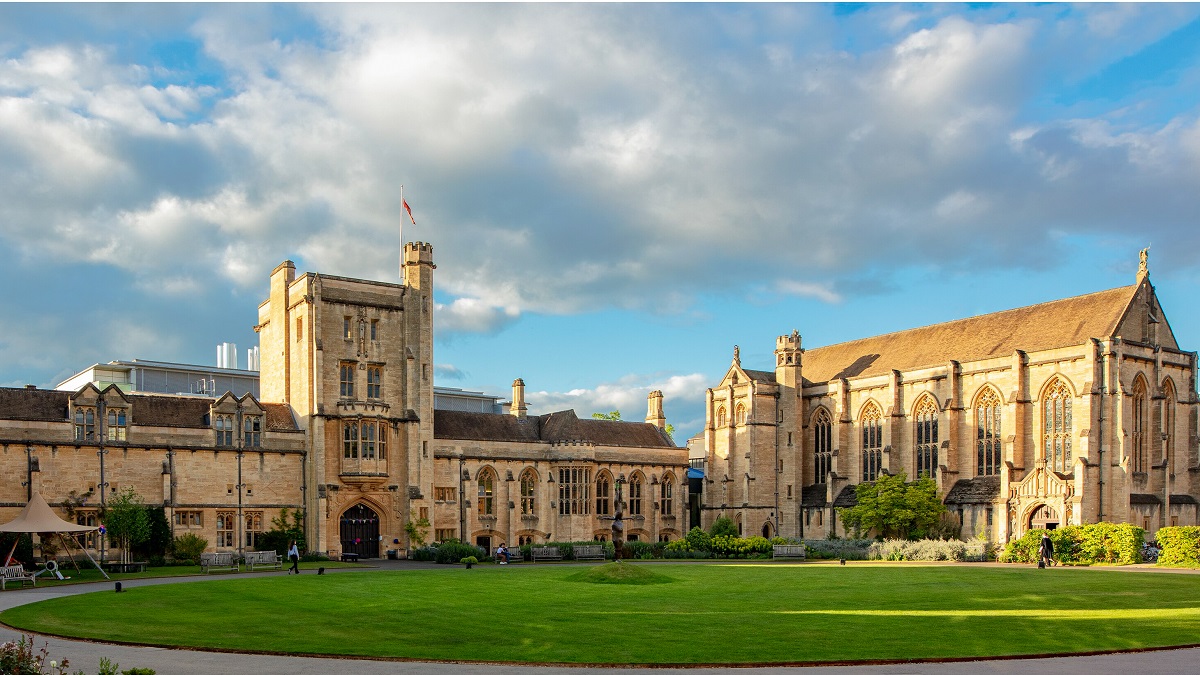
19th September 2025, Mansfield College, Oxford

The Journal of Dialogue Studies, in partnership with the GHfP Institute, the Guerrand-Hermès Foundation for Peace, UNESCO Collective Healing Initiative, invited contributions for a special issue exploring the role of intergenerational dialogue in shaping collective well-being futures.

In recognising that despite global commitments to the UN Sustainable Development Goals (SDGs), progress remains impeded by persistent barriers, including transgenerational trauma, structural injustice, gender inequality, limited youth engagement, and fragmented political responses. In the face of these obstacles, intergenerational dialogue is increasingly important as it creates facilitated spaces for younger and older people to encounter and learn from each other. Such dialogue allows the community to draw insights from multiple generations, diverse cultural traditions, and rich cosmological worldviews towards building better futures. 

This special issue is inspired by the power and potential of intergenerational dialogue. It is a response to the call of the United Nations Pact for the Future, which underscores the necessity of equitable intergenerational processes and collaborative approaches to multilateral governance to ensure sustainable peace, structural justice, and inclusive well-being. 

A Global Study on Futures-Forming Leadership

This year, the GHfP Institute has engaged in a global study, commissioned by UNESCO, to explore youth’s needs for leadership development. What marks this research unique is that it has involved youth co-researchers throughout, from identifying research questions, to designing the research questionnaire, from hosting focus-groups, to analysing the data and identifying themes and proposing recommendations. Furthermore, this global study intentionally focuses on the voices of youth from marginalised communities.

Over 1,500 young people across every world region contributed to this research through a desk review, survey questionnaire, focus groups, and in-depth interviews. Their message is clear: leadership must be reimagined. No longer hierarchical, elitist, or tokenistic, youth envision leadership as relational, dialogical, and futures-forming — a practice that is grounded in care for people and the planet. In fact, this study reveals that young people are already leading change today, often under extraordinary constraints, and more importantly, they are leading with visions of justice, dignity, and well-being that the world urgently needs to hear.

What Youth Told Us

  • Their concerns are urgent and overlapping. From climate change and unemployment to gender-based violence, mental health, and political exclusion, young people confront intersecting crises every day.
  • They are already leading. In their communities, youth are mobilising for climate justice, creating safe spaces, preserving culture, and challenging systemic injustice.
  • Barriers are structural, not personal. Youth are not held back by a lack of talent or ambition, but by ageism, tokenism, underfunding, weak civic spaces, and exclusionary education systems.
  • They know what enables leadership. Trust, mentorship, intergenerational solidarity, sustained resources, and spaces of safety and belonging emerged as essential conditions for flourishing.
  • They are re-framing leadership itself. Leadership, they argue, is not about power over others, but about dialogue, shared responsibility, and accountability to future generations.

A Blueprint for Futures-Forming Leadership

From these insights, the study distilled:

  • Three imperatives: address systemic injustice, strengthen intergenerational solidarity, and reimagine governance for the common good.
  • Five values: collective well-being, dialogue, relationality, justice, and responsibility to future generations.
  • Seven proposals: practical recommendations from youth, ranging from experiential learning and mentoring to sustainable funding and co-governance structures.

Together, these constitute a youth-authored blueprint for leadership that is capable of meeting the challenges of our time.

A Call to Action

Young people are not asking for charity. They are calling for recognition, resources, and authentic partnership. They ask institutions to:

  • Institutionalise youth co-governance.
  • Secure long-term funding and seed grants.
  • Embed youth leadership into UNESCO and partners’ core systems.
  • Build decentralised hubs for exchange and solidarity.
  • Leverage partnerships across sectors to scale impact.

Why This Matters

Leadership for the future cannot be postponed. The crises we face are urgent, and the creativity and courage of youth are already shaping the path forward. What is needed now is not another round of rhetoric, but a living covenant between generations — a commitment to co-create futures where dignity, justice, and flourishing are shared by all.

UNESCO’s Futures-Forming Leadership Report amplifies the voices of young people. The responsibility lies with us — institutions, funders, educators, policymakers — to act on what they have said.

Because youth are not the leaders of tomorrow. They are the leaders of today.

Prof Scherto Gill’s Keynote Lecture at SMN Annual Gathering 2025

On 29th June, Prof Scherto Gill provided a closing keynote lecture at the Scientific and Medical Network’s 2025 Annual Gathering, entitled: Love: Mediating the Earthly and the Heavenly, Integrating the Immanent and the Transcendent. Other speakers at this event were Prof Federico Faggin and Prof Sarah Stewart-Brown.

In her lecture, Scherto sets the challenge in an era defined by profound tensions, stark oppositions and fragmenting contradictions. While unprecedented technological and material abundance enriches the lives of a small minority, pervasive deprivation, both economic and environmental, continues to diminish the lives of the majority. Whereas monetary wealth is pursued as precious goods, nature’s beauty and goodness are being irreversibly destroyed. Claiming to seek growth beyond human constraint, modern life often ignores the value and wonder of grounded everyday experiences, such as the depth of friendship, the delight of gardening, the inspiration of the creating and appreciating arts, the awe of nature, and the joy of living in congenial political communities.

She then asks: what if the very tensions and paradoxes we face hold the key to a richer and more integrated life? How might we bridge these oppositions and restore a vital connection between our immediate, earthly living and transcendent aspirations?

In pursuit of answers, she turns to Diotima of Mantineia, whose teachings on love, as depicted in Plato’s Symposium, offer profound insights into harmonising these opposing realms. Most of us are familiar with Plato’s ladder of love, a vision of ascending from possessing physical beauty and attraction towards the seeking spiritual and eternal goodness or beauty itself. This is typically described as a transcendent vision. Yet Diotima’s insight goes further, inviting us not merely to ascend but to integrate, honouring every rung of experience as essential and sacred, in an infinite process of creative becoming.

The lecture delves deeper into Diotima’s teachings, particularly her conception of Erôs as a daimon, a powerful spirit neither wholly divine nor simply mortal, born of Poros, the god of abundance, and Penia, a mortal embodying poverty. This symbolic lineage endows Erôs with both creative potential and persistent need, perpetually dwelling in the vibrant tension between gratification and longing, contentment and aspiration.

Through engaging dialogue and reflective practices, her session further explores how embracing this daimonic tension can help mediate contemporary divides. Scherto asks the participants to consider how recognising and honouring the inherent goodness, beauty, and creative possibility within our everyday, our earthly lived experiences can bridge us towards transcendent ideals and values, enriching our personal, communal and political life in peace.

scientific and medical  network 2025

UN ECOSOC Youth Forum, 2025

Despite global commitments to the UN Sustainable Development Goals (SDGs), persistent barriers have continued to hinder meaningful progress. Amongst these barriers, are transgenerational trauma, gender-based inequality, limited opportunities for youth engagement, and fragmented community responses. The UNESCO Collective Healing Initiative, through its pioneering Intergenerational Dialogue and Inquiry (IDI) approach, uniquely tackles these barriers by harnessing cultural wisdom, fostering communal resilience, and strengthening youth leadership.

iga-sdgs-b

To discern the impact of the IDI approach, the Guerrand-Hermès Foundation and Global Humanity for Peace (GHfP) Institute at the University of Wales Trinity Saint David have undertaken a three-year research study in 9 countries, investigating the processes and outcomes of intergenerational approaches in achieving the SDGs. This study engaged youth and elders, who are participants in the UNESCO Collective Healing programmes. In addition, the Institute also sought the perspectives of global youth on their needs for leadership development and changemaking. 

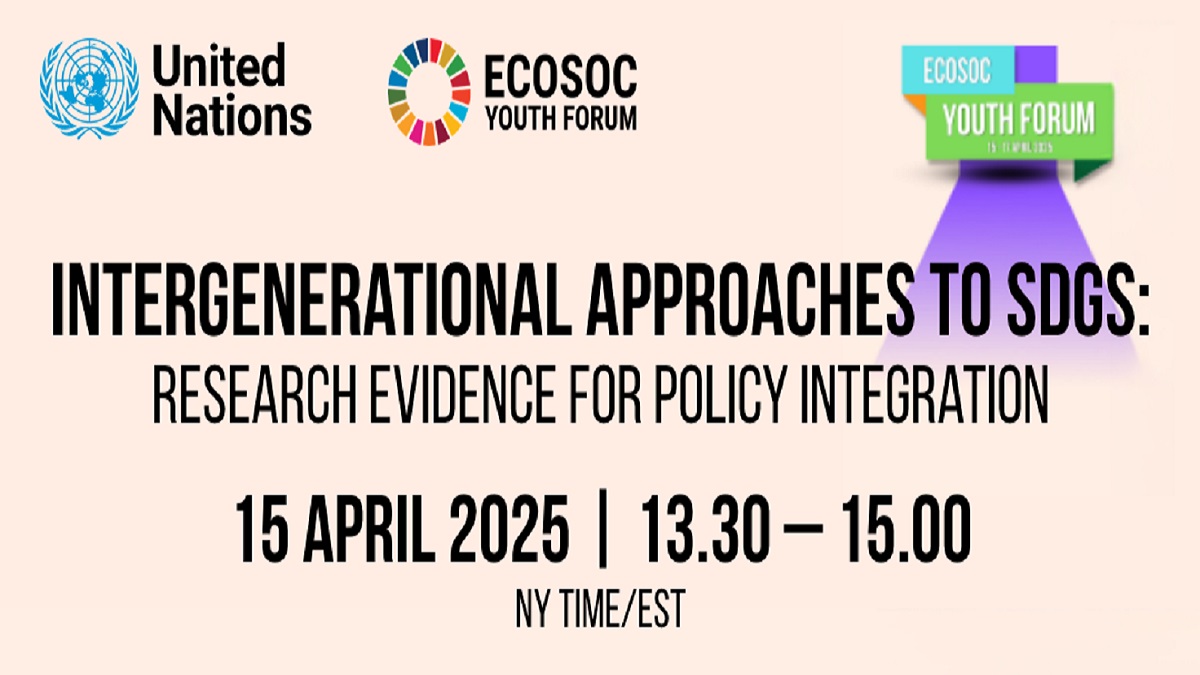
Emergent insights from both studies were presented in New York during the 2025 UN ECOSOC Youth Forum as a Side Event. The questions explored include:

  • What concrete evidence demonstrates that intergenerational approaches significantly contribute to SDGs?
  • How can international, national, and community-level policymakers effectively integrate intergenerational approaches in sustainable development strategies? 
  • What specific policy commitments can stakeholders (governments, NGOs, researchers, politicians, youth leaders) make today to ensure that intergenerational approaches become integral to achieving the 2030 Agenda?

Led by Prof Scherto Gill and our young co-researcher, Casey Overton, this interactive event brought together voices from UNESCO, academia, policy, and youth to examine evidence from the research projects, and highlighted opportunities for policy integration, such as scalable intergenerational strategies to bolster community resilience and social inclusion towards well-being futures.

intergenerational approaches to sdgs a

Amongst the findings presented are that today’s youth navigate a world shaped by global disturbance, climate crises, and rapid technological change, often experiencing fragmentation and alienation. Intergenerational processes and approaches can enable elders to better understand youth perspectives while supporting youth to reconnect with traditional wisdom, cultural resources, and collective resilience — key to overcoming obstacles to sustainable development.

These studies underscore the transformative potential of intergenerational strategies in fostering long-term positive change, bridge historical divisions, and promote youth-led collective action for the SDGs. It is precisely such insights that can inform policy development, by stressing the critical need for practical implementation of IDI and for ensuring intergenerational accountability.

intergenerational approaches to sdgs. montage 1200

Casey further reflected on the potential and limitation of intergenerational approach. In particular, she pointed out that whilst dialogue can serve as connective tissue, aimed at building bridges, enabling understanding and collaboration, power disparity can inhibit dialogue. For instance, IDI in some contexts doesn’t always take place amongst equals. Therefore it requires institutional structures and processes to systematically integrate intergenerational approach to social transformation.

The session received enthusiastic responses from the participants who both recognised the significance of these research studies and echoed the importance of IDI in their own national and local contexts, in Africa, Asia, Europe and the Americas.

Symposium on the Centrality of Harmony in Education

July 2024 IF20 Education Symposium

G20 Interfaith Forum (IF20) has convened diverse interfaith actors inspired by the G20 agendas since 2014. Through dialogue, and analytic work, IF20 aims to enrich the G20 process by bringing the wisdom, experience, and voice of diverse faith communities alongside other global constituencies. IF20 Education Working Group (Edu WG), chaired by Prof Scherto Gill, has been actively contributing to policy recommendations relevant to the annual G20 themes.

For 2024, the IF20 Edu WG hosts an international symposium on The Centrality of Harmony in Education in the Global Retreat Centre, Oxford on 1-3 July. It focuses on comprehensive analysis in terms of how Harmony in Education may enhance interfaith/intercultural collaboration, positive peace, inclusive citizenship, climate awareness, and co-flourishing with Nature.

Harmony, in this context, is a philosophy advanced by His Majesty King Charles in his 2010 seminal book entitled: Harmony: A New Way of Looking at our World. The notion of harmony is extremely potent as it allows us to recognise that separation from each other and exploitation of Nature have resulted in present social and ecological catastrophe impacting all. Harmony in Education is thus an imperative for the present and future generations to learn to embrace our interconnection and interdependence and return us to a just world and sustainable planet.

The Symposium gathers IF20 Education Working Group partners, such as ADYAN Foundation, Guerrand-Hermès Foundation, Scholas Occurentes, Salzberg Global Seminar, and other international educational organisations, including King’s Foundation, Harmony Institute, the Harmony Project, Education Policy & Administration, Government of NCT of Delhi, India, and WES Networks Brazil, to explore how Harmony in Education can contribute to 2024 G20’s theme of Just World Sustainable Planet.

During the Symposium, each participant/contributor will make a presentation on their relevant work under the G20 2024’s theme. Then the participants will dialogue and discuss policy ideas around integrating Harmony Education in public schooling.  

Questions to be considered during the Symposium:

  • What are our understandings of harmony in the context of global challenges? How might we integrate harmony in our ways of being?
  • In what ways might harmony contribute to the G20 2024 theme – Just Society Sustainable Planet?
  • How can education help advance harmony?
  • What policy ideas should we propose to G20 leaders in terms of integrating harmony in education?
  • What case studies might demonstrate the imperative of harmony in education and its contribution to the G20 2024’s concerns, especially in terms of justice, sustainability and good governance?

Participants

Adyan Foundation

Brahma Kumaris World Spiritual University

Education Policy & Administration, Government of NCT of Delhi

The Fetzer Institute

Guerrand-Hermès Foundation for Peace

Harmony Institute

The Harmony Project

Global Humanity for Peace Institute

The King’s Foundation, UK

Pontifical Foundation Scholas Occurrentes

Salzburg Global Seminar

WEBS Association, Brazil

UNESCO Symposium on Well-Being of Future Generations

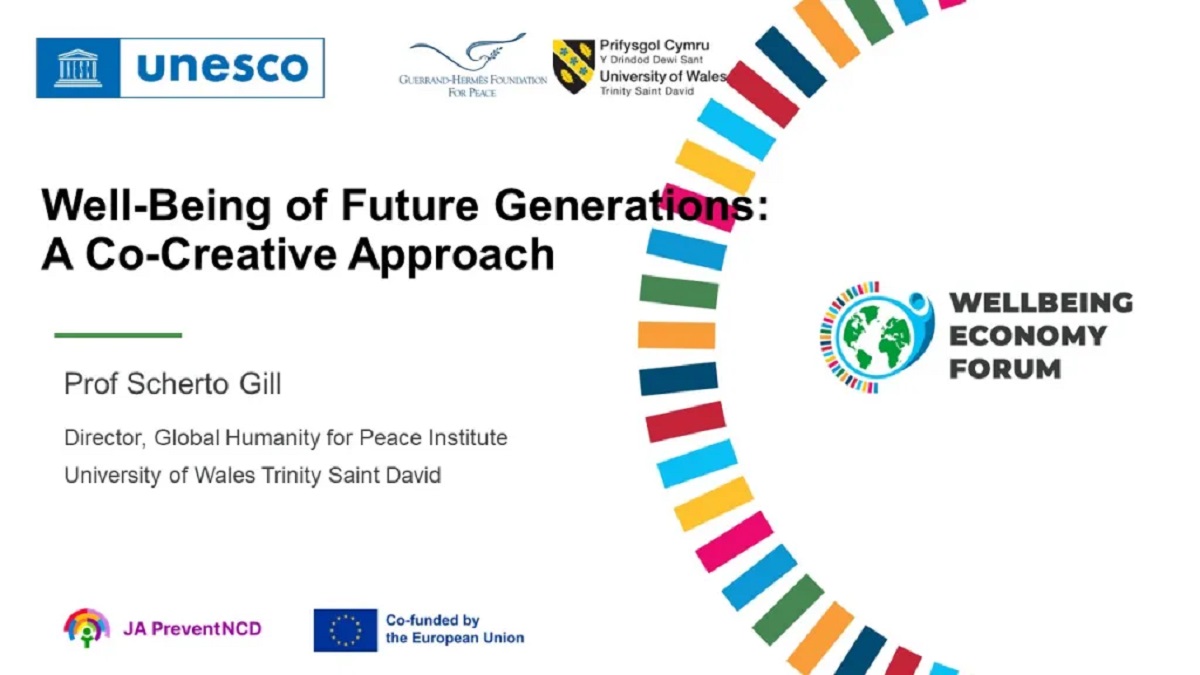
Well-Being of Future Generations: A Co-Creative Approach, Harpa, Reykjavik. June 2024.

When our current economic systems effectively prioritise materialism, self-interest, and other misplaced values, a greater majority of humanity suffers. Some grapple with political antagonism and oppression, some experience racism and discrimination, and others struggle in poverty and marginalisation, and lack the opportunity for decent livelihood. Alongside related ecological disasters, causing catastrophic harm to humans and the more-than-human, such systemic and environmental turbulence has not only engendered a pandemic of ill-being amongst global youth, but can also have long-term detrimental effects on collective well-being in generations to come.

Despite bringing in technological advancement and increased wealth, in fact, capitalism remains entrenched in a culture of individualism and instrumentalisation. Such a culture perpetuates paradigms of separation, dehumanisation and inequality. Conversely, it also reflects a deeper crisis of humanity, namely a loss of core human values, such as respect for human dignity and care for our interconnectedness.

Well-Being of Future Generations: A Co-Creative Approach, June 2024, Harpa, Reykjavik. venue image

To move beyond the current impasse towards global transformation requires a fuller appreciation of what it means to live and act in accordance with our shared humanity. It involves a better understanding of how diverse social, political and grassroots actors can collectively respond to the myriad crises, and co-imagine common pathways for enhancing the well-being and flourishing of all in the future.

In such contexts, UNESCO Social and Human Sciences (SHS) Sector, in collaboration with Global Humanity for Peace (GHfP) Institute at the University of Wales TSD, convened an international Symposium during the Well-Being Economy Forum 2024, held on 11th June 2024 in Reykjavik, IcelandThe theme of the Symposium is Well-Being of Future Generations: A Co-Creative Approach.

UNESCO has focused its fundamental mission on developing mutual understanding, confronting contemporary challenges, and building lasting peace. UNESCO SHS Sector, under the leadership of Mrs Gabriela Ramos, has extended expertise in co-constructing just, inclusive, and resilient societies. In particular, UNESCO recognises that concerted global efforts are imperative to reframe the present existential crises as an opportunity for inclusive intercultural and intergenerational dialogue, and cross-boundary collaboration.

In particular, the Symposium drew insights from UNESCO’s focus on human rights and social justice to foreground an ethical approach to inclusive well-being policymaking. Furthermore, by stressing gender equality, youth empowerment and futures-forming changemaking, the Symposium advocated a co-creative approach to social transformation.


Card for the event. Well-Being of Future Generations: A Co-Creative Approach, June 2024, Harpa, Reykjavik.

In this Symposium, we gather significant interdisciplinary perspectives to explore how our global systems can be:

  • underpinned by the respect for the intrinsic value of every person and a commitment to the equal dignity of all.
  • characterised by dialogue and co-creation in the processes.
  • aimed at enhancing well-being of present and future generations alongside the flourishing of all beings in nature.

Through listening, dialogue and reflection, the contributors and participants will have an opportunity to give voice to the theme of the Symposium. In particular, the esteemed panel and youth will discuss how core human values and principles can inform the provision of well-being sensitive public policies, especially in education, equality and ecological integrity; the design of caring institutions, and the nurturing of futures-forming changemakers.