Being Peace Making Peace

Being Peace, Making Peace: Can Higher Education Help Us Become Peace?
Bahá’í Chair for World Peace, University of Maryland
Wednesday 21 October 2026, 2:00–3:30pm ET (7:00–8:30pm UK) · Online · Free

Professor Scherto Gill, Director of the Global Humanity for Peace Institute, will give a public lecture for the Bahá’í Chair for World Peace.

Why do societies that value peace continue to produce enemies? The lecture approaches this question by reconsidering what kind of beings we are. Human nature, it argues, is neither fixed in selfishness nor guaranteed in goodness; we are relational and unfinished, and what we become depends on the conditions in which we are formed.

From there it turns to peace as a quality of flourishing together, and to universities as institutions that shape, every day, how we recognise one another and what we remember. It asks what higher education would have to become for its graduates to live together well.

The lecture will be followed by thirty minutes of open discussion.

Register: https://tinyurl.com/bahai-gill

Global Humanity for Peace Annual Report 2025

Promoting peace and a flourishing human future

Established in 2021 as a collaboration between the University of Wales Trinity Saint David (UWTSD) and the Guerrand-Hermès Foundation for Peace, the Institute advances positive peace and global well-being through research, publications, educational programmes, professional development and community engagement.

The year was marked by geopolitical tension, climate displacement and widening digital divides. It also showed a remarkable human capacity for solidarity and collective action. The report sets out the Institute’s work under five areas of engagement.

1. Positive peace

With colleagues at UCL and the universities of Bradford, Winchester, Durham and Oxford, the Institute contributed peace-studies research to the Pacific’s Ocean of Peace vision. Prof Scherto Gill gave keynotes at the International Day of Conscience at the UN in Geneva and at the Scientific and Medical Network’s Annual Gathering, where she spoke on love as an energising force for peace. The Institute also contributed to the Spirit of Humanity Forum and co-hosted a Brighton Festival Fringe screening of The Hardest Bridge. The year also saw the first cohort join our MA Peace Studies.

2. Well-being

Our research on well-being governance set out four principles for good governance: non-instrumentality, equality, non-antagonism and the well-being of all. Prof Gill spoke at the Well-Being Economy Forum in Reykjavik. The Institute also contributed to a UK national round table of the Independent Commission on Communities and Cohesion.

3. Collective healing

As research and capacity-building partner of the UNESCO Collective Healing Initiative, the Institute supported Collective Healing Circles in 14 sites. Each circle brought together 15–25 intergenerational participants. In 2025 the focus was on participatory action research, so that communities could assess healing in their own terms.

Other highlights:

  • Bi-monthly professional development sessions for 35–45 facilitators from 16 countries, in four languages
  • An Intergenerational Dialogue & Inquiry pilot with Virginia Union University
  • A keynote at the Inner Development Goals Summit
  • A UNESCO colloquium in Barcelona, From Structural Injustice to the Politics of Dignity
  • Two nominations for the Zayed Award for Human Fraternity

4. Educational transformation

As Research Partner to the Ethics Education Fellowship, the Institute supported teachers across six education systems in Asia and Africa to lead their own monitoring, evaluation and learning. New grants from the Fetzer Institute and Pureland Foundation launched a global case study on ecosystems approaches to education for well-being futures. It draws on examples from Colombia, Kenya, Finland and New Zealand.

5. Futures-forming leadership

Our UNESCO-commissioned global study was co-led by young researchers from marginalised communities. It produced a Blueprint for a UNESCO Futures-Forming Leadership Programme. The findings were presented at the UN ECOSOC Youth Forum in New York and at the House of Lords, at an event hosted by Lord Alderdice. With Scholas Occurrentes, we piloted a Young Changemakers Programme in Rome for 15 young people from 9 countries.

Publications

2025 saw a strong list of open-access publications. These include two edited volumes by Prof Scherto Gill: Beyond Inhumanity (De Gruyter) and New Perspectives on Healing Collective Trauma (Routledge). There was also a special issue of the Journal of Dialogue Studies, and the global study Leadership for the Future with UNESCO. The full list is in the report.

With thanks

We are deeply grateful to the partners whose grants made this work possible: the Guerrand-Hermès Foundation for Peace, the Fetzer Institute, the Pureland Foundation and UNESCO. We also thank our partners Creators of Peace International, Initiatives of Change, Scholas Occurrentes and the Spirit of Humanity Forum, and all our grassroots facilitators and co-researchers.


We are pleased to publish the Global Humanity for Peace Institute’s Annual Report 2025.

Research Spotlight: New Perspectives on Healing Collective Trauma

How do we heal history’s deepest wounds? In her new Open Access book, “New Perspectives on Healing Collective Trauma,” Prof. Scherto Gill brings together global voices to explore the intersection of structural justice, intergenerational dialogue, and collective healing. Featuring insights from Professors Myriam Cottias, Ana Lucia Araujo, and Lord Alderdice, Drs Joy DeGruy, Ali Moussa Iye, Esther Armah, Gail Christopher, Thomas Hübl, Indigenous leader, Lewis Cardinal, and more.

📖 Read it for free by clicking on this open access book link: New Perspectives on Healing Collective Trauma: Towards Social Justice and Communal Well-Being

In an era marked by deep global divisions, how do societies move beyond the paralysis of historical wounds? This groundbreaking new volume, “New Perspectives on Healing Collective Trauma,” edited by Prof. Scherto Gill, offers a transformative roadmap. Moving the conversation beyond individual psychology, this book establishes collective healing as a systemic, structural, and intergenerational imperative necessary for achieving genuine social justice.

Why This Research Matters Now

Historical injustices—enslavement, colonialism, and systemic racism—are not just events of the past; they are lived realities that continue to shape economic disparities, political polarization, and cultural fragmentation. This book argues that traditional approaches to peacebuilding often fail because they neglect the deep spiritual and psychosocial wounds that communities carry across generations.

This research highlights that healing is political. It connects the inner work of trauma integration with the outer work of structural change, proposing that we cannot have one without the other.

Key Innovations & Frameworks

The book introduces and expands upon several cutting-edge concepts that redefine the field of trauma studies and peacebuilding:

  • Intergenerational Dialogue and Inquiry (IDI): A flagship methodology featured in the book (and piloted by the UNESCO Collective Healing Initiative), IDI creates safe spaces for youth and elders to break the silence on past atrocities, facilitating a transfer of wisdom and resilience rather than just trauma.
  • The Politics of Dignity: Prof. Gill challenges current governance models, proposing a “politics of dignity” where institutions are intentionally designed to affirm the intrinsic value of every person, actively dismantling the structures of dehumanization.
  • Emotional Justice: Contributor Esther A. Armah introduces a language to navigate the unspoken emotional economies of racism, arguing that policy changes are insufficient without addressing the “emotional currency” of oppression.
  • Healing Architecture: The volume explores how our physical environments and public spaces can be designed to foster relational health and communal repair, rather than enforcing separation.

Global Case Studies

The research is grounded in diverse, real-world applications, offering a truly global perspective:

  • The Americas: Examining the enduring legacies of the Transatlantic Slave Trade and the demand for reparations (featuring contributions from Joy DeGruy and Ana Lucia Araujo).
  • Canada: Centering Indigenous voices in the processes of Truth and Reconciliation (Lewis Cardinal).
  • Global South & Beyond: Insights from community-led healing circles in Africa and racial healing initiatives in the US (Gail C. Christopher).

Who Should Read This?

This volume is an essential resource for researchers, policymakers, community organizers, and peace practitioners. It bridges the gap between academic theory and grassroots practice, offering tools for those working in:

  • Conflict Transformation & Peacebuilding
  • Public Health & Trauma Studies
  • Social Policy & Governance
  • Indigenous Studies & Decolonial Practice

Read the Full Research

As a commitment to global knowledge equity, this title is available as an Open Access publication. Read the book for free here

#CollectiveHealing #SocialJustice #TraumaResearch #OpenAccess

Young Changemakers Programme, Rome 2025

Global Humanity for Peace Institute, is delighted to have accepted applications for the 2025 Young Changemakers Programme (YCP), a unique international opportunity for young people aged 19–27 to develop their potential as changemakers.

2025 marked the Catholic Jubilee. Inviting us to embrace forgiveness, share hope, and aspire towards renewal. In this spirit, 2025 Young Changemakers Programme (YCP) was held in Rome, offering young participants an inspiring and transformative learning journey. Through a circular itinerary that wove together encounter, experience, inquiry, and action, the YCP sought to foster participants’ self-awareness, mutual appreciation, and a deeper understanding of both local and global challenges.

Building on the innovative pedagogies of the Pontifical Foundation Scholas Occurrentes , University of Meaning , and Global Humanity for Peace Institute at the University of Wales Trinity Saint David , the YCP makes learning relevant to participants’ personal and professional development, as well as youth needs in contributing to social transformation.

Ethics Education Fellowship, transforming education

The GHfP Institute is a research partner for The Ethics Education Fellowship programme (EEF). EEF seeks to strengthen the sustainable delivery of ethics education programs for children in formal education settings to advance global citizenship and build more peaceful and inclusive societies.  Teachers who took part in our program report stronger competencies and an improved ability to build inclusive, respectful, and engaging classrooms, leading to better learning outcomes and students’ engagement.

On Tuesday, 11 November 2025, policymakers, teacher educators, and partners came together in an international webinar: Transforming Education: National Examples to Promote and Integrate Ethics Education – Successes, Challenges and Opportunities.

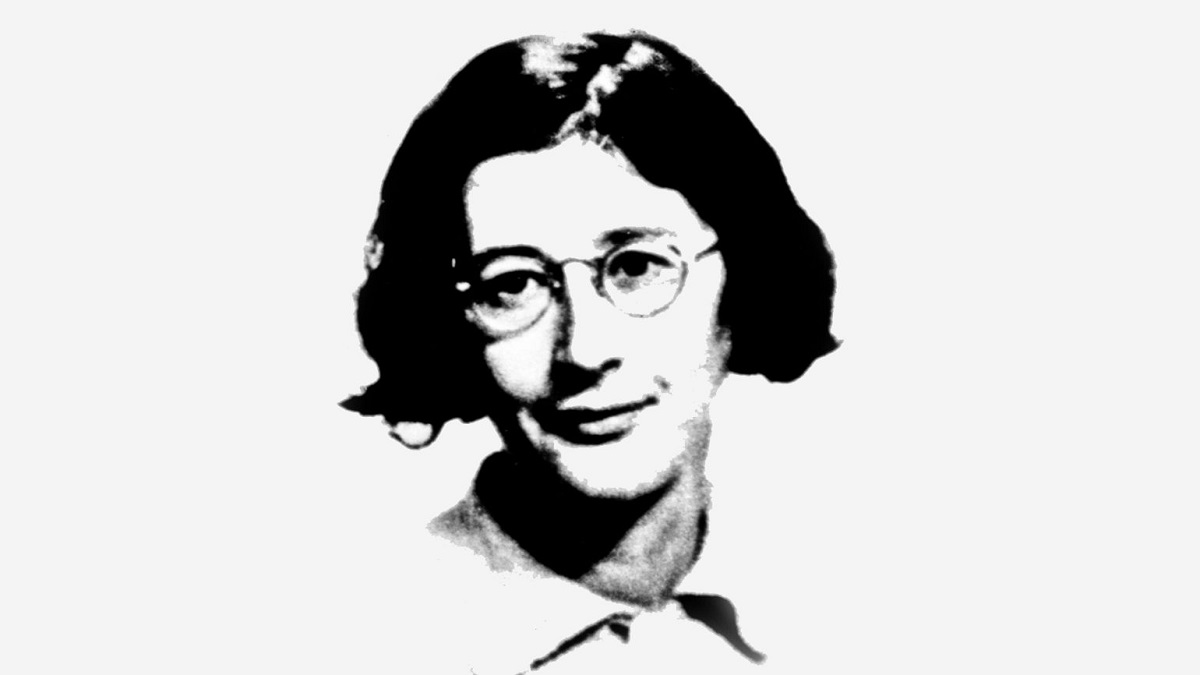
Simone Weil on love, justice and collective healing.

New Peer-Reviewed Open-Access Article.

Read the full paper here:

Dehumanisation as spiritual harm: Simone Weil on love justice and collective healing

This paper examines the spiritual dimension of dehumanisation and argues that confronting this neglected aspect is essential to healing historical and structural harms. Drawing on the philosophical and theological writings of Simone Weil, it offers a relational interpretation of her insights into the sacred roots of human dignity, the soul-wounding effects of dehumanisation, and love as an antidote to brutality. Through Weil’s concepts of affliction, social degradation and structural injustice, the paper demonstrates that dehumanisation operates not only through material and psychological violence but also through spiritual violation that severs persons and communities from the good.

Building on Weil’s ethical vision, the paper advances a four-fold intergenerational approach to addressing spiritual harm: (1) acknowledging dehumanisation and the reality of affliction; (2) reclaiming human dignity rooted in the sacred; (3) strengthening spiritual belonging through community and intergenerational continuity; and (4) imagining a culture of love oriented to justice and co-flourishing.

Illustrated through contemporary examples, including UNESCO’s Collective Healing Initiative, the paper argues that Weil’s wisdom contributes both philosophically and practically to collective healing, social justice and the regeneration of communities impacted by slavery, colonialism and other enduring forms of inhumanity.

Prof Scherto Gill presenting Collective Healing Initiative at 2025 Inner Development Goals Summit

In this video, Prof Scherto Gill offers an outline of her presentation at 2025 Inner Development Goals Summit, focusing on exploring the four processes of the UNESCO Collective Healing Initiative, including an intergenerational approach to leadership as healership.


On October 16th, at the IDG Summit, Track 6 – Healing the Roots of What Drives Us Apart, will explore how trauma-informed leadership can open pathways for systemic healing, peacebuilding, and societal defragmentation. This digital track is an immersive journey into the root causes of polarisation and healing collective trauma, blending trauma science, conflict transformation, and embodied leadership.

Through live group process, reflective practice, artistic embodiment, and narrative tracking, participants will witness how inner development practices can transform fragmentation into collective insight and how to embed this wisdom in leadership, organisations, and society.

Prof Scherto Gill reflected on the question “What does it take to heal the deep divisions of our world today?” By tracing the development and processes of the UNESCO Collective Healing Initiative, the presentation brings forward communities across four continents experiences engaging in an intergenerational approach to shifting from trauma towards flourishing. This involves facing the wounds of injustice with courage, rediscovering ancestral wisdom with curiosity, nurturing new ways of belonging with compassion, and envisioning well-being futures with care.

This makes the case for why the intergenerational processes of collective healing are not abstract, but involve essential inner capacities of transforming leadership as healer-ship.

STAND UP FOR CHILDREN IN WAR!

On International Day of Peace, we call all partners to join this global mobilization for individual and collective consciousness to ignite hope, raise awareness, and inspire action to protect children from war.

The world is witnessing an alarming rise in armed conflicts, violence, and displacement, and it is children who suffer the most. Children in conflict zones are facing severe and ongoing violations of their rights, including their rights to life, physical integrity, family life and education, resulting in lasting physical and psychological consequences.

A Global Mobilization Is Underway

Faith leaders, UN representatives, civil society, children, and youth are standing up to raise global consciousness about the devastating impact of war and violence on children. They are speaking up and calling on their governments to ensure the protection and well-being of children and to find a peaceful resolution to conflicts.

In Geneva, a high-level event “Stand Up for Children in War” took place on 22nd September at the UNHCR. It was part of the campaign co-signed by 150 partner organisations, including the World Council of Churches (WCC).

Photo: Ivars Kupcis/WCC

How You Can Stand Up for Children in War

Whether you are a member of a religious community, an educator, a parent, or simply a person of goodwill, you can stand up for children affected by war, amplify their voices, advocate for their protection, and promote solidarity and compassion.

To help you get started, here is a list of suggestions on what you can do to join this campaign:

Your organization can also Stand Up for Children in War

Sign Our Joint Statement Now!

As a Religious Leader

  1. Reach out to decision-makers, national authorities, the mass media, or other religious leaders and ask them to join you in advocating to protect children from war.
  2. Dedicate sermons to raise awareness about the devastating impact of war on children.
  3. Organize a prayer, meditation, or ceremony with your community to inspire spiritual solidarity, ethical commitment, and compassion. This can be a powerful collective call to action to protect children.
  4. Facilitate a physical space in your place of worship where community members can leave flowers, light candles, or place art to show their solidarity with children affected by war.
  5. Organize interfaith gatherings bringing together religious leaders of various faith traditions to speak up jointly on the impact of war on children and call on your governments to ensure their protection and well-being, and find a peaceful resolution to conflicts.
  6. Share a video with us that conveys your message and includes a call to action, inspiring hope, compassion, and ethical responses.
  7. Together with other religious leaders, reach out to the UNICEF office and UN Resident Coordinator to engage in dialogue with governments to call for the protection of children. You can find contact information of UNICEF and UN Representatives in several countries in the Resource Kit.

As a Member of a Religious or Spiritual Community​

  1. Suggest to your religious leaders that they hold a special prayer or ceremony for children in war or an interfaith gathering or prayer. The Resource Kit offers suggested formats.
  2. Invite your religious leader to join the campaign. Share the information above on ways your religious leader can get involved.
  3. Use your social media platforms to speak up about the urgent need to protect children from war. Share and repost content from our campaign or other credible sources using the hashtag #standup4children. Find a list of sources in the Resource Kit.
  4. Organize a symbolic act with your communities, such as lighting candles or holding signs with messages of solidarity. Capture this moment with photos or videos and share it widely on social media using the hashtag #standup4children.

As a Parent or Caregiver

  1. Talk to children. Use age-appropriate language to discuss what children in war zones experience, what causes wars, and the importance of learning to solve conflicts in peaceful ways. Explain why it is crucial for people of all generations to unite in solidarity for peace. The Resource Kit offers materials that can help you talk with children about the impact of war.
  2. Engage children in an activity. Review the Resource Kit to find activities that nurture empathy and compassion in children. Encourage children to create a message, painting, or other art form to express their feelings.

As a Teacher or Educator in Informal Settings

  1. Talk to learners you engage with. Use age-appropriate language to discuss the experience of children in war zones, the root causes of wars, and the importance of solving conflicts peacefully. Review the Resource Kit to find materials that can help you talk with children about the impact of war.
  2. Engage learners in an activity that nurtures empathy, solidarity, and compassion, and encourage them to create a video, a message, or a piece of art to express their feelings and thoughts. Get inspired by activities in the Resource Kit.
  3. Create a designated space in your classroom or a common school area where learners can leave messages, create drawings, or place other symbolic items to show their solidarity with children affected by war.
  4. Create a “Letters of Hope” campaign where learners write encouraging messages to children affected by war. Send the letters to refugee camps or refugee support centers, embassies, and local media. Take photos of the letters and share them on social media by using the hashtag #standup4children.

As a Young Person

  1. Spark a dialogue with those around you, reflecting on the impact of wars on millions of children who are being robbed of their childhoods, their safety, and their future.
  2. Use your social media to speak up about the urgent need to protect children from war. Share and repost content from this campaign. Use the hashtag #standup4children.
  3. Engage with other young people around you. Get together with your friends and do a symbolic act of solidarity, creating a mural, or holding signs with messages of hope and peace, such as lighting candles. You can capture this moment with photos or videos and share it widely on social media using the hashtag #standup4children.
  4. Write a letter to your government officials or a UN representative in your country asking them to take action to protect children in war. Find a template in our Resource Kit.
  5. Join movements of young people around you, either in person or virtually, that are actively engaging for peace.

As a Person of Goodwill

  1. Use your social media platforms to speak up and mobilize others. Share and repost content from the campaign and other reliable sources to keep the conversation active about the impact of war on children, the urgent need for peace, and positive actions that can ignite hope. Use the hashtag #standup4children.
  2. Write a letter to your government officials or a UN representative in your country asking them to take action to protect children in war. Find a template in our Resource Kit.

As an Institutional Partner

  1. Engage national offices and networks, share facts and key messages about the impact of war on children. Find more information in the Resource Kit.
  2. Ask people in your networks to engage through social media to speak up about the urgent need to protect children from war. Invite them to react and repost from this campaign. Invite them to use the hashtag #standup4children. Find more information in the Resource Kit.
  3. Organize an event on or around September 21st to Stand Up for Children in War and the protection of Children’s Rights.
  4. Raise your voice. Share with us a short video message or short article speaking about the impact of war on children and your call to action. Your messages will be shared on a website dedicated to the campaign.