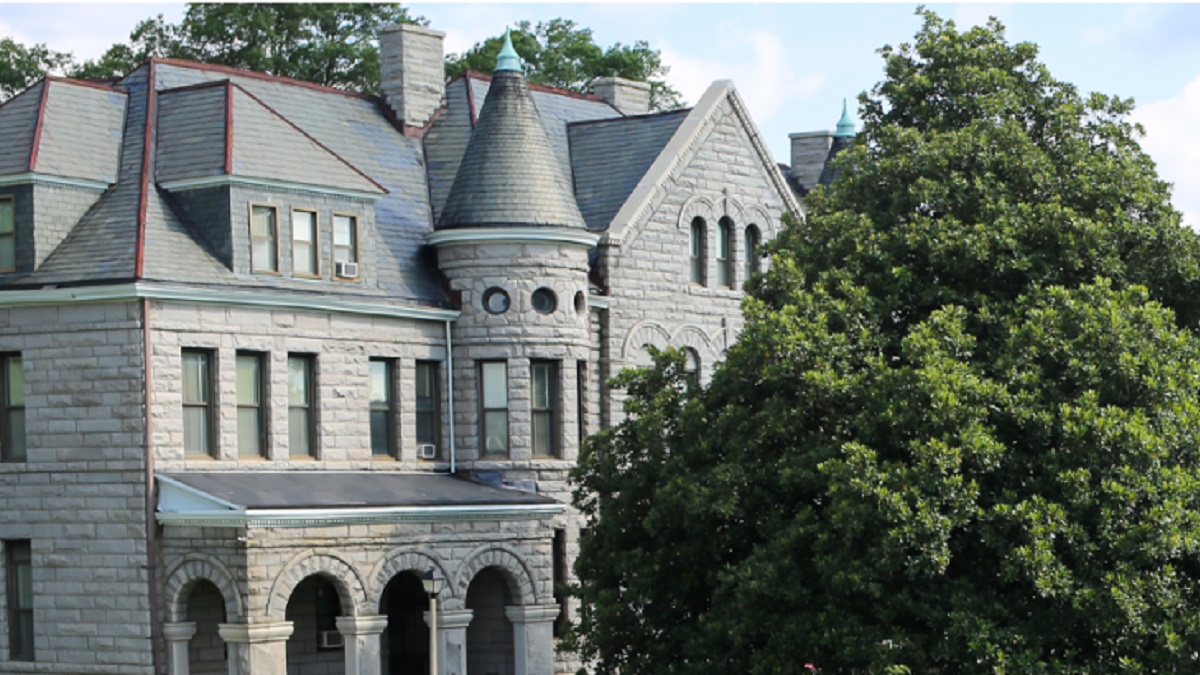
UNESCO Symposium at VUU, 2024

Understanding and healing relational and spiritual harm of dehumanisation

Collective Healing, Social Justice and Global Well-Being is a UNESCO initiative aimed at addressing the legacies of dehumanisation, including the harms of transoceanic enslavement of Africans, colonialism, continued racism, and other forms of structural discrimination. An important aspect of this initiative is to investigate the plethora of harms from multiple dimensions. Partners supporting this initiative include Guerrand-Hermès Foundation, Global Humanity for Peace (GHfP) Institute at University of Wales Trinity Saint David (UWTSD), Fetzer Institute, AfroSpectives, and Virginia Union University (VUU).

Through the UNESCO Routes of Enslaved Peoples Project’s (REP) 30 years’ endeavours, there have been research, documentation, recognising the destruction of afore-mentioned legacies, especially in terms of physical, cultural, and economic harms. To these efforts, during the 2nd session of the UN Permanent Forum on People of African Descent 2023, delegates of African and indigenous descent added a call for more research and better understanding of the relational and spiritual dimensions of these harms, which can serve as the basis for more concerted action towards healing and systemic transformation.

Indeed, without acknowledging relational and spiritual harms, collective efforts to confront the legacies of transoceanic enslavements and continued injustices against people of African and indigenous descent may fall short. Mere materialistic repairs, such as reducing economic disparity, levelling public services, and providing equal access to health, education, housing, finance, and employment, are not enough. While economic and social justice is important, the Afro and indigenous communities directly impacted by the dehumanising legacies insist that addressing the relational and spiritual dimensions of the harms and the connected trauma are equally, if not even more, critical. The characterisation of relational and spiritual harm should help bring to light the complex layers of harm, offering a more holistic conception of dehumanising harm. This will enable us to better recognise how both those who were violently enslaved and their descendants, and those who performed inhumane acts upon the enslaved, and their descendants, suffer from a same harm that can be described as relational and spiritual.

To this end, the partners supporting the collective healing initiative, have jointly launched two processes: the first was a conceptual exploration aimed at understanding what constitutes relational and spiritual harm; and the second was a pilot programme that engaged global communities in intergenerational dialogue and inquiries (IDI) to reflect on people’s lived experiences of the dehumanising legacies and connected relational and spiritual harm. The IDIs also enabled community stakeholders to identify relational and spiritual practices and resources key to resilience and healing of collective trauma.

intergenerational image vuu symposium 2024

To further deepen our understanding of what constitutes relational and spiritual harm from an interdisciplinary perspective, and to explore what relational and spiritual approaches to healing and community regeneration are necessary in the context of global structural dehumanisation, the partners hosted a second UNESCO Symposium in January 2024 at Virginia Union University, in Richmond, VA., USA.

FOCUS & DISCUSSION QUESTIONS

We invite thinkers, scholars, researcher and practitioners to come together and focus our dialogue on the nature of relational and spiritual harm, and the necessary relational-centred and spiritually-inspired approaches to collective healing. Here, ‘spiritual harm’ is not solely about the wounding perpetuated or condoned by faith-based teaching, spiritual leaders and religious institutions. 

We propose the following questions for dialogue and discussion:

  1. What is the nature of dehumanising harm in the contexts of transoceanic slavery?
  2. How might the terms ‘relational’ and ‘spiritual’ shift our understanding of such harm and the connected trauma and continuing injustices? What are the processes, modalities and manifestations of these harms?
  3. How does the relational and spiritual harm differ for the enslaved and their descendants, and the enslavers and their descendants? What are the micro and macro consequences of those harms today?
  4. What forms of healing are necessary to overcome these harms? How do the healing processes differ for those who are at the receiving end of dehumanisation and those who are perpetuating or participating in the perpetuation of dehumanisation?
  5. What should be the future directions of healing work in the light of our understandings of relational and spiritual harm? How could we best integrate the relational and spiritual dimension in global transformation towards just system and well-being of all?
  6. What approaches/practices could we draw upon and learn from global communities? How might research contribute to a new political culture of respect, love and caring?
Governance for the Human Future: The Centrality of Dialogue

Past event, September 2022.

The Journal of Dialogue Studies, in partnership with the Global Humanity for Peace Institute, invited papers that explore the ways governance processes might be improved by drawing on insights from innovative dialogue theories and congenial dialogue practices.

These papers were presented in an International Academic Workshop entitled Governance for the Human Future: The Centrality of Dialogue on the 10th of September 2022, 9 am BST.

In this workshop, there were 14 abstracts critically addressing the following themes to explore the ways international governance processes might be improved by drawing on insights from innovative dialogue theory and good dialogue practices.

  1. How might dialogue theory and good dialogue practices contribute positively to the governance processes? In what ways might these insights be applied effectively to governance?
  2. How significant are various theories of dialogue for governance processes? How might these dialogue theories be further developed and enriched?
  3. What dialogue practices might make positive contributions to good governance? How do they do so?
  4. What are the major impediments to meaningful dialogues? How might they be overcome?
  5. What might we learn from non-western approaches to good governance? How is dialogue practised in these approaches?
  6. How might good dialogue practices transform governance processes?

Editorial Board

  • Prof Scherto R. Gill, University of Wales Trinity Saint David
  • Prof Edward Abbott-Halpin, The University of the Highlands and Islands
  • Dr Ali Moussa Iye, Afrospectives and Former UNESCO Routes of Dialogue Chief
  • Dr Sara Silvestri, City, University of London
  • Prof Garrett Thomson, Guerrand-Hermes Foundation, and The College of Wooster
  • Prof Paul Weller, Universities of Coventry and Derby, and Regent’s Park College, University of Oxford

Programme

Session 1: Dialogue Theories and Governance (9:30–11:00)

Keynote
Prof Kenneth Gergen, President of the Taos Institute and Chair of the Board and the Mustin Professor of Psychology at Swarthmore College

Theoretical Approaches on the Role of Dialogue in International Governance: A Review of the Literature
Dr Patrice Brodeur, Associate Professor at the Institute of Religious Studies, University of Montreal

Dialogues as Consensus-Building for Governance: A Conceptual Analysis
Prof Garrett Thomson, CEO Guerrand-Hermes Foundation and Professor of Philosophy at the College of Wooster

Water Diplomacy and Governance: Philosophical Perspectives and Political Implications
Dr Medha Bisht, Associate Professor at the Department of International Relations, South Asian University, New Delhi

Session 2: Dialogue Practices in Governance (11:15–13:00)

Special Tribute to Dr Steve Wright — ‘The Wright Way for Dialogue’
Prof Simon Lee, The Open University and Professor of Jurisprudence, Queen’s University Belfast
Prof Edward Abbott-Halpin, Principal of Orkney College, University of the Highlands and Islands

Harnessing Performative Knowledge to Achieve Fruitful Dialogue: The Participatory Arts-Based Approach
Dr Barbara Groot, Senior Researcher at the Leyden Academy on Vitality and Ageing, Leiden University Medical Centre
Prof Tineke A. Abma, Professor for Participation at the Leiden University Medical Centre, and Executive-Director of the Leyden Academy on Vitality and Ageing

The 30th Anniversary of a Grassroots Dialogue in Northern Ireland
Prof Simon Lee, The Open University and Professor of Jurisprudence, Queen’s University Belfast

Conversation as a Methodology for Human Flourishing, Belonging, and Understanding
Dr Saiyyidah Zaidi, Convenor at the Centre for Belonging and Understanding and a Faculty Member and Tutor with Meyler Campbell

The Case of the Popular University of Social Movements: Lessons on Dialogue from and for Humanisation and the Transformation of Traditional Institutions
Alexandre da Trindade E Oliveira, Doctoral Student at the Faculty of Education, University of Cambridge

Session 3: Challenges of Meaningful Dialogue in Governance (14:00–15:30)

Keynote: Dialogue and the Route to Relational Governance
Prof Kenneth Gergen, President of the Taos Institute and Chair of the Board and the Mustin Professor of Psychology at Swarthmore College

Ready for a Perfect Storm: Leadership, Dialogue and Trust in a Time of Disconnection
Prof Mike Hardy, Chair of Intercultural Relations and Founding Director of the Centre for Trust, Peace, and Social Relations at Coventry University
Dr Uroosa Mushtaq, Doctoral Fellow (Cotutelle), Centre for Trust Peace and Social Relations at Coventry University

Digital Media and Problems of Fragmentation, Rise of Populism and the Post-Truth Era
Dr Serik Orazgaliyev, Associate Professor at the Graduate School of Public Policy, Nazarbayev University and Research Affiliate at the Cambridge Central Asia Forum, Jesus College, University of Cambridge

Dialogue and the Document on Human Fraternity: ‘Academic’ Scriptural Reasoning as a Tool for Promoting International Governance
Ahmed Ragab Abdelhay, Assistant Lecturer at Al-Azhar University and Professional Doctorate Student at the University of Wales Trinity Saint David

Cultural Democracy at the Frontiers of Patronage: Public Interest Art versus Promotional Culture
Dr Owen Logan, Honorary Research Fellow in the University of Aberdeen’s School of Divinity, History, Philosophy and Art History
Dr Martyn Hudson, Assistant Professor in Art and Design History at Northumbria University, Newcastle
Prof Alex Law, Professor of Sociology at the School of Business, Law and Social Sciences, Abertay University
Dr Kirsten Lloyd, Lecturer in Curatorial Theory and Practice at The University of Edinburgh

Session 4: Innovative Approaches to Good Governance in non-Western Contexts (15:45–17:30)

From the inside out: The “culture of dialogue” among pro-democratic actors in Equatorial Guinea
Carolina Nvé Díaz San Francisco, Doctoral Student in Anthropology, Universidad Nacional de Educación a Distancia and A Researcher at the Disparities Research Unit (Massachusetts General Hospital, Harvard Medical School)

Democracy and Dialogue in India: The Minority Discourse
Dr Sneha Roy, Programme Officer at the KAICIID International Dialogue Centre

Dialogue and the Document on Human Fraternity: ‘Academic’ Scriptural Reasoning as a Tool for Promoting International Governance
Ahmed Ragab Abdelhay, Assistant Lecturer at Al-Azhar University and Professional Doctorate Student at the University of Wales Trinity Saint David

Public Policy, Collaborative Governance, and Female Entrepreneurship in the Caribbean: A Critical Assessment
Dr Talia R. Esnard, Senior Lecturer and Head of Department of Behavioural Sciences at The University of the West Indies, Trinidad and Tobago

A Book of Abstracts was produced for this workshop.