Professor Scherto Gill of the Global Humanity for Peace Institute joined the UNESCO 2024 Global Forum Against Racism and Discrimination held in Barcelona on 10th and 11th of December. The Forum brought together technical and policy experts to advocate for and advance the international movement for structural justice and social equality.
As the Coordinator of UNESCO Collective Healing Initiative, for this event, Professor Gill has been planning and designing, with our community partners, an experiential workshop on intergenerational dialogue and inquiry (IDI). IDI aims to examine and address the legacies of dehumanisation, including slavery, colonialism, racism and discrimination. IDI has been a main process of the Collective Healing Circles (CHC) that had been piloted in communities across 14 countries around the Atlantic Ocean.
The Intergenerational Dialogue and Inquiry workshop formed part of UNESCO flagship ‘Master Class Against Racism and Discrimination’ programme on 10th December 2024 during the UNESCO Global Forum.
TheMaster Classes against Racism and Discrimination, an initiative led by UNESCO, aims to foster a global understanding of racism among young peoplewhile creating a platform to propose actionable policies and solutions to combat racism and discrimination in our societies.
The GHfP Institute was delighted to join UNESCO in celebrating 30 years of the Routes of Enslaved Peoples (REP) Programme in Paris in October 2024.
At this extraordinary event, the GHfP co-organised the presentation of the UNESCO partnership initiative on Collective Healing, Just Society and Global Well-Being. The Collective Healing Initiative is committed to addressing the legacies of dehumanisation, e.g. slavery, colonialism, and indigenous genocide, and other historically rooted injustice, through facilitating and encouraging community-based Collective Healing Circles (CHCs) currently active in 14 countries globally. The initiative is co-sponsored by the UNESCO Social and Human Sciences Sector and the Guerrand-Hermès Foundation and is coordinated by the GHfP Institute.
Our presentation consisted of testimonies and narratives provided by community representatives from four continents (Brazil, Nigeria, the UK, the USA and France/Martinique) who shared their experiences of intergenerational approach to healing, dignity and well-being. They invited the high-level global leaders to consider ways to transform societies and to ensure structural justice. This event further saw UNESCO Assistant Director General (ADG), Mrs Gabriela Ramos launching the Collective Healing Circle Programme Handbook for Facilitators. The development of this Handbook was supported by grants from the Guerrand-Hermès Foundation for Peace, the Fetzer Institute, and the Pureland Foundation. The Handbook is intended to support the efforts of facilitators and other professionals who are interested in hosting Collective Healing Circles (CHCs) in their local community.
Following the presentation, community CHC practitioners and presenters engaged in a deep dialogue with high-level national leaders on the opportunities to engage other stakeholders in this joint efforts towards creating a fair, inclusive and just world for our present and future generations.
On 10th October 2024, UNESCO Assistant Director General, Mrs Gabriela Ramos, launched the Collective Healing Handbook for Facilitators in Paris, to mark the 30th Anniversary of UNESCO Routes of Enslaved People’s Programme.
The research and development of this Handbook was supported by grants from the Guerrand-Hermès Foundation for Peace. The Handbook is intended to support the efforts of facilitators and other professionals who are interested in hosting Collective Healing Circles (CHCs) in their local community. The intellectual insights underpinning the CHCs proposed in this Handbook are drawn from contemporary research on historical atrocities, such as the transatlantic trade of enslaved Africans, colonialisation, and mass killing and violent displacement of Indigenous peoples, as well as the legacies of dehumanisation, such as racism and structural injustice.
The practical ideas for implementing the CHC Programme featured throughout the Handbook are inspired by existing proven approaches of similar programmes, and those which have emerged from a one-year pilot of the Programme in five countries (Kenya, Nigeria, the UK, the USA and Colombia) on four continents. Click the link below to download the CHC Programme Handbook for Facilitators.
The launch was followed by reports and testimonies from community partners and participants of the UNESCO Collective Healing Initiative on the process and impact of our CHC activities on four continents.
Amongst those in the audience at UNESCO HQ were global leaders, national delegations, and civil society representatives.
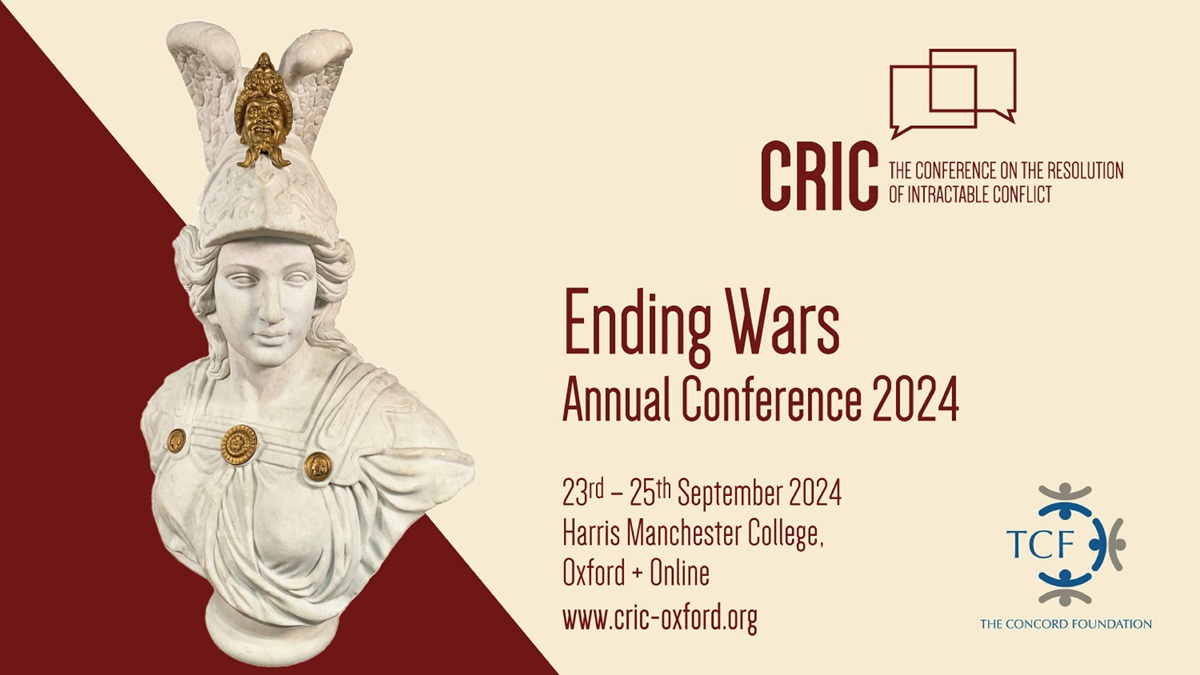
The GHfP Institute is a partner of the annual Conference on Resolution of Intractable Conflict. The 2024 CRIC was held on 23rd to 25th September at Harris Manchester College, University of Oxford. This was the 11th Annual Conference which took place amid deepening concerns about the deteriorating geopolitical tensions. Hence the theme of 2024 CRIC was “Ending Wars” to address two perspectives –
Exploring whether it is possible that out of the immediate worldwide crises of war and climate catastrophe a new approach can be fashioned to deal with our deepest differences, as was the case, albeit not permanently, after the two global conflicts of the first half of the 20th century.
Reflecting on if we are to understand how the current specific and overlapping wars can be closed down.
Minerva, the Roman goddess of war was used as a symbol of CRIC 2024. She is also of goddess of wisdom, art, justice and commerce. Can we bring wisdom to bear on the problem of war?
about CRIC the conference series, introduced by Lord John Alderdice
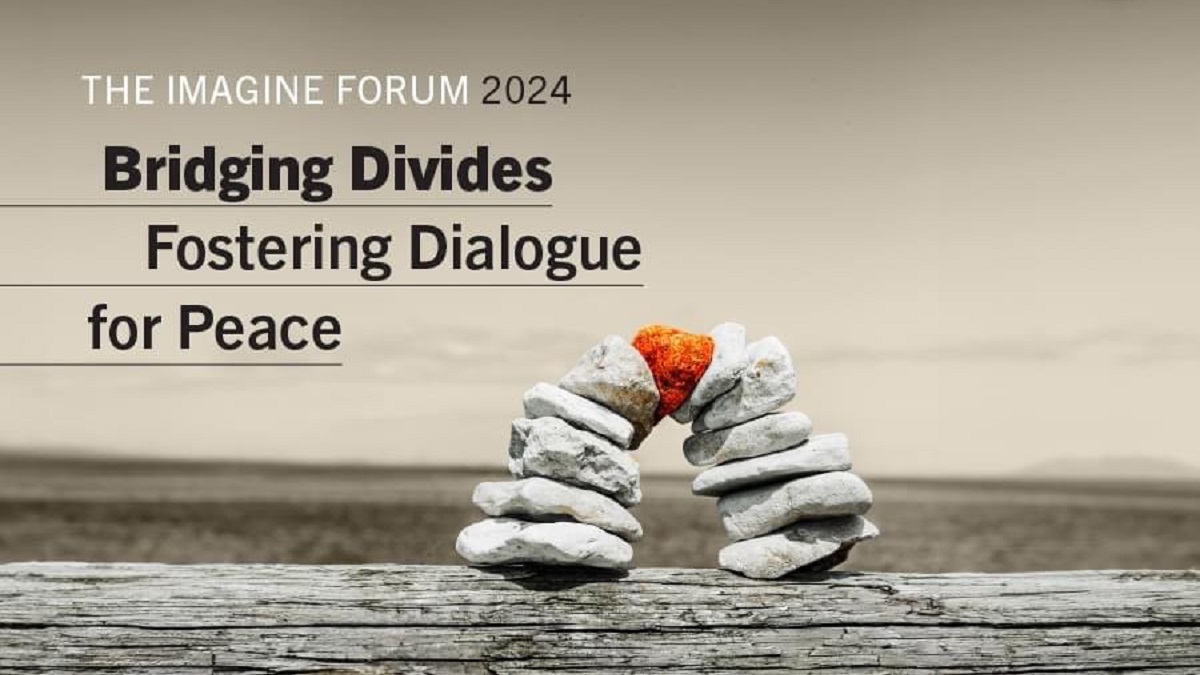
Hosted by Höfði Reykjavik Peace Centre, in collaboration with the Icelandic Ministry for Foreign Affairs, the Forum featured keynote addresses from distinguished experts and dynamic panel discussions with practitioners, researchers, and high-level officials working within their own countries and as international supporters of peace-making efforts.
This year, the GHfP Institute took part in the Imagine Forum held in Reykjavik on 10th October. Prof Scherto Gill convened a panel entitled Is Peace in the Middle EastPossible? An Exploration of Dialogue as a Pathway to Move Beyond the Impasse. Contributors to her panel included: Dr Imad Karam, Director, Initiatives of Change International, Justine Abi Saad, Program Advisor for Peacebuilding and Conflict Transformation at GIZ, and Helen María Ólafsdóttir, Security Sector and Development Specialist at UNDP.
The panel explored the current situations in the Middle East, and imagined opportunities that dialogue might offer towards building peace in the region, and the conditions necessary for dialogue to flourish.
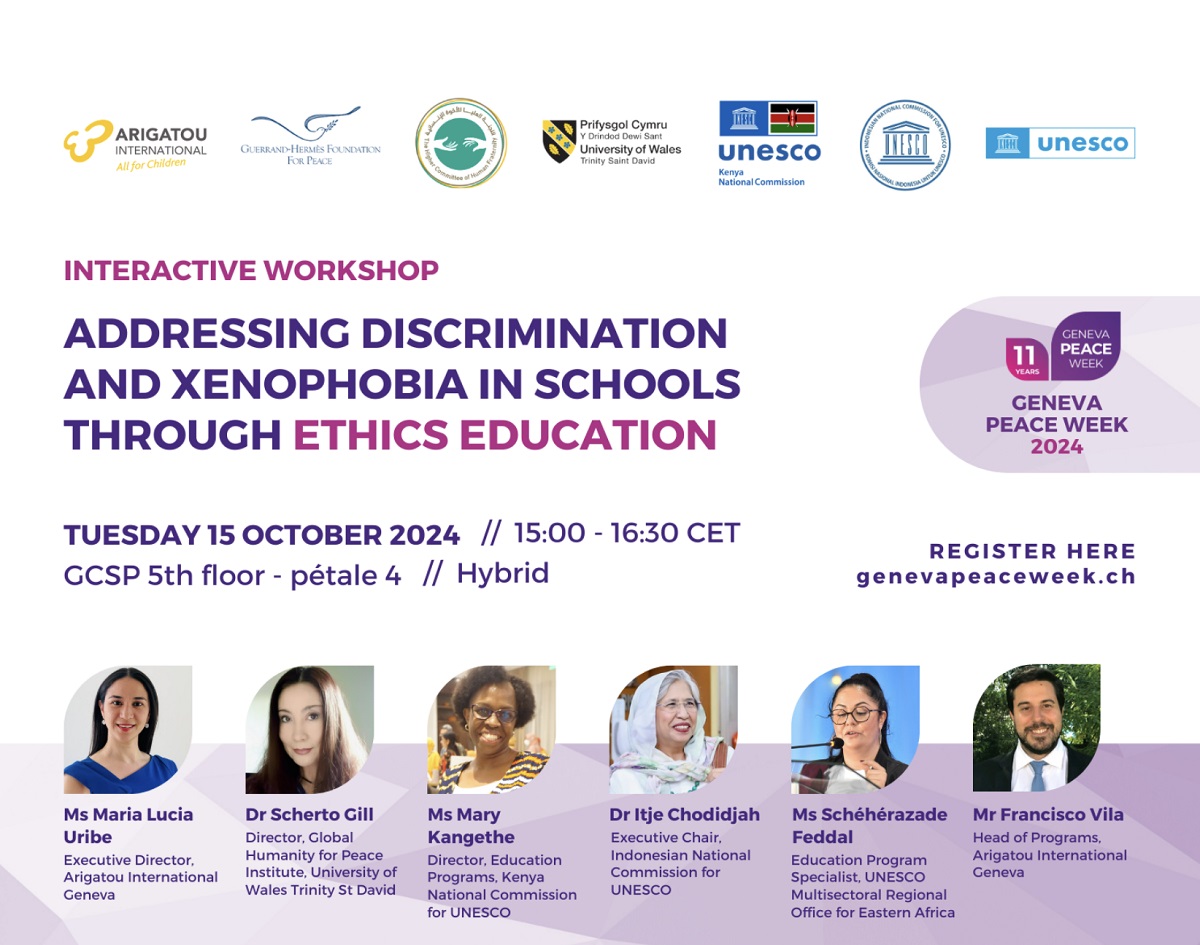
Particularly where indicators of inter-group tensions are worsening and there is increasing xenophobia, discrimination and bullying in schools and communities, education should provide children with peace-building tools and skills as well as nurturing ethical values. Data shows, that there is an increase in bullying motivated by prejudice against someone’s actual or perceived race, ethnicity, culture, citizenship status or religion. This type of bullying is associated with a wide range of negative outcomes including poor mental health, lower academic engagement, and an increased risk of involvement in delinquent behaviours, especially among older learners. Ethics education and its transformative pedagogy have demonstrated proven results to develop safe learning environments, support children’s sense of meaning and purpose, improve children’s relationships across religious, ethnic and cultural backgrounds, ultimately equipping them to develop a sense of solidarity, building trust, and enhancing social relations to address polarization, division and fear of the other in communities.
This session was a highly interactive workshop based on the ethics education transformative pedagogy, which provided the opportunity to acquire knowledge, practice skills, learn from one another, and co-create learning together. The workshop contributed towards engaging in a narrative analysis about structural and cultural violence in schools, as well as aiming to contribute to generate reflections on how schools can become champions of peace through interactive pedagogical approaches, inclusive learning environments, dialogue approaches, children-led solutions, community engagement and a whole-school approach.
G20 Interfaith Forum (IF20) has convened diverse interfaith actors inspired by the G20 agendas since 2014. Through dialogue, and analytic work, IF20 aims to enrich the G20 process by bringing the wisdom, experience, and voice of diverse faith communities alongside other global constituencies. IF20 Education Working Group (Edu WG), chaired by Prof Scherto Gill, has been actively contributing to policy recommendations relevant to the annual G20 themes.
For 2024, the IF20 Edu WG hosts an international symposium on The Centrality of Harmony in Education in the Global Retreat Centre, Oxford on 1-3 July. It focuses on comprehensive analysis in terms of how Harmony in Education may enhance interfaith/intercultural collaboration, positive peace, inclusive citizenship, climate awareness, and co-flourishing with Nature.
Harmony, in this context, is a philosophy advanced by His Majesty King Charles in his 2010 seminal book entitled: Harmony: A New Way of Looking at our World. The notion of harmony is extremely potent as it allows us to recognise that separation from each other and exploitation of Nature have resulted in present social and ecological catastrophe impacting all. Harmony in Education is thus an imperative for the present and future generations to learn to embrace our interconnection and interdependence and return us to a just world and sustainable planet.
The Symposium gathers IF20 Education Working Group partners, such as ADYAN Foundation, Guerrand-Hermès Foundation, Scholas Occurentes, Salzberg Global Seminar, and other international educational organisations, including King’s Foundation, Harmony Institute, the Harmony Project, Education Policy & Administration, Government of NCT of Delhi, India, and WES Networks Brazil, to explore how Harmony in Education can contribute to 2024 G20’s theme of Just World Sustainable Planet.
During the Symposium, each participant/contributor will make a presentation on their relevant work under the G20 2024’s theme. Then the participants will dialogue and discuss policy ideas around integrating Harmony Education in public schooling.
Questions to be considered during the Symposium:
What are our understandings of harmony in the context of global challenges? How might we integrate harmony in our ways of being?
In what ways might harmony contribute to the G20 2024 theme – Just Society Sustainable Planet?
How can education help advance harmony?
What policy ideas should we propose to G20 leaders in terms of integrating harmony in education?
What case studies might demonstrate the imperative of harmony in education and its contribution to the G20 2024’s concerns, especially in terms of justice, sustainability and good governance?
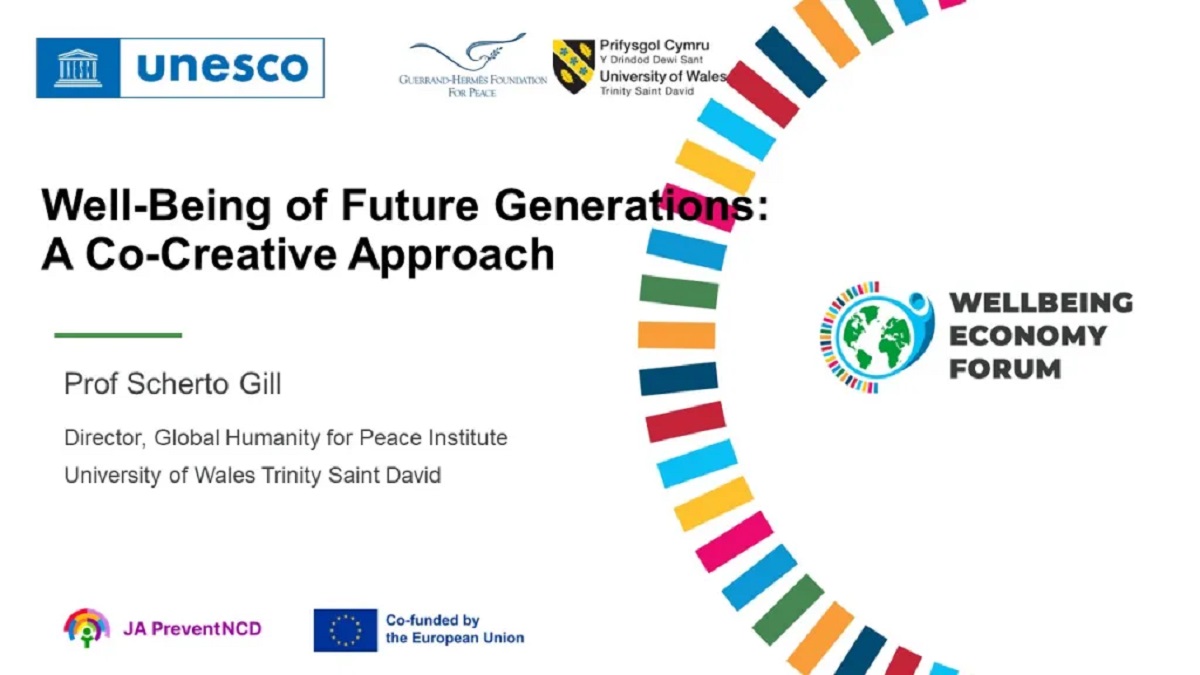
Well-Being of Future Generations: A Co-Creative Approach, Harpa, Reykjavik. June 2024.
When our current economic systems effectively prioritise materialism, self-interest, and other misplaced values, a greater majority of humanity suffers. Some grapple with political antagonism and oppression, some experience racism and discrimination, and others struggle in poverty and marginalisation, and lack the opportunity for decent livelihood. Alongside related ecological disasters, causing catastrophic harm to humans and the more-than-human, such systemic and environmental turbulence has not only engendered a pandemic of ill-being amongst global youth, but can also have long-term detrimental effects on collective well-being in generations to come.
Despite bringing in technological advancement and increased wealth, in fact, capitalism remains entrenched in a culture of individualism and instrumentalisation. Such a culture perpetuates paradigms of separation, dehumanisation and inequality. Conversely, it also reflects a deeper crisis of humanity, namely a loss of core human values, such as respect for human dignity and care for our interconnectedness.
To move beyond the current impasse towards global transformation requires a fuller appreciation of what it means to live and act in accordance with our shared humanity. It involves a better understanding of how diverse social, political and grassroots actors can collectively respond to the myriad crises, and co-imagine common pathways for enhancing the well-being and flourishing of all in the future.
In such contexts, UNESCO Social and Human Sciences (SHS) Sector, in collaboration with Global Humanity for Peace (GHfP) Institute at the University of Wales TSD, convened an international Symposium during the Well-Being Economy Forum 2024, held on 11th June 2024 in Reykjavik, Iceland. The theme of the Symposium is Well-Being of Future Generations: A Co-Creative Approach.
UNESCO has focused its fundamental mission on developing mutual understanding, confronting contemporary challenges, and building lasting peace. UNESCO SHS Sector, under the leadership of Mrs Gabriela Ramos, has extended expertise in co-constructing just, inclusive, and resilient societies. In particular, UNESCO recognises that concerted global efforts are imperative to reframe the present existential crises as an opportunity for inclusive intercultural and intergenerational dialogue, and cross-boundary collaboration.
In particular, the Symposium drew insights from UNESCO’s focus on human rights and social justice to foreground an ethical approach to inclusive well-being policymaking. Furthermore, by stressing gender equality, youth empowerment and futures-forming changemaking, the Symposium advocated a co-creative approach to social transformation.
In this Symposium, we gather significant interdisciplinary perspectives to explore how our global systems can be:
underpinned by the respect for the intrinsic value of every person and a commitment to the equal dignity of all.
characterised by dialogue and co-creation in the processes.
aimed at enhancing well-being of present and future generations alongside the flourishing of all beings in nature.
Through listening, dialogue and reflection, the contributors and participants will have an opportunity to give voice to the theme of the Symposium. In particular, the esteemed panel and youth will discuss how core human values and principles can inform the provision of well-being sensitive public policies, especially in education, equality and ecological integrity; the design of caring institutions, and the nurturing of futures-forming changemakers.







You must be logged in to post a comment.