Being Peace Making Peace

Being Peace, Making Peace: Can Higher Education Help Us Become Peace?
Bahá’í Chair for World Peace, University of Maryland
Wednesday 21 October 2026, 2:00–3:30pm ET (7:00–8:30pm UK) · Online · Free

Professor Scherto Gill, Director of the Global Humanity for Peace Institute, will give a public lecture for the Bahá’í Chair for World Peace.

Why do societies that value peace continue to produce enemies? The lecture approaches this question by reconsidering what kind of beings we are. Human nature, it argues, is neither fixed in selfishness nor guaranteed in goodness; we are relational and unfinished, and what we become depends on the conditions in which we are formed.

From there it turns to peace as a quality of flourishing together, and to universities as institutions that shape, every day, how we recognise one another and what we remember. It asks what higher education would have to become for its graduates to live together well.

The lecture will be followed by thirty minutes of open discussion.

Register: https://tinyurl.com/bahai-gill

STAND UP FOR CHILDREN IN WAR!

On International Day of Peace, we call all partners to join this global mobilization for individual and collective consciousness to ignite hope, raise awareness, and inspire action to protect children from war.

The world is witnessing an alarming rise in armed conflicts, violence, and displacement, and it is children who suffer the most. Children in conflict zones are facing severe and ongoing violations of their rights, including their rights to life, physical integrity, family life and education, resulting in lasting physical and psychological consequences.

A Global Mobilization Is Underway

Faith leaders, UN representatives, civil society, children, and youth are standing up to raise global consciousness about the devastating impact of war and violence on children. They are speaking up and calling on their governments to ensure the protection and well-being of children and to find a peaceful resolution to conflicts.

In Geneva, a high-level event “Stand Up for Children in War” took place on 22nd September at the UNHCR. It was part of the campaign co-signed by 150 partner organisations, including the World Council of Churches (WCC).

Photo: Ivars Kupcis/WCC

How You Can Stand Up for Children in War

Whether you are a member of a religious community, an educator, a parent, or simply a person of goodwill, you can stand up for children affected by war, amplify their voices, advocate for their protection, and promote solidarity and compassion.

To help you get started, here is a list of suggestions on what you can do to join this campaign:

Your organization can also Stand Up for Children in War

Sign Our Joint Statement Now!

As a Religious Leader

  1. Reach out to decision-makers, national authorities, the mass media, or other religious leaders and ask them to join you in advocating to protect children from war.
  2. Dedicate sermons to raise awareness about the devastating impact of war on children.
  3. Organize a prayer, meditation, or ceremony with your community to inspire spiritual solidarity, ethical commitment, and compassion. This can be a powerful collective call to action to protect children.
  4. Facilitate a physical space in your place of worship where community members can leave flowers, light candles, or place art to show their solidarity with children affected by war.
  5. Organize interfaith gatherings bringing together religious leaders of various faith traditions to speak up jointly on the impact of war on children and call on your governments to ensure their protection and well-being, and find a peaceful resolution to conflicts.
  6. Share a video with us that conveys your message and includes a call to action, inspiring hope, compassion, and ethical responses.
  7. Together with other religious leaders, reach out to the UNICEF office and UN Resident Coordinator to engage in dialogue with governments to call for the protection of children. You can find contact information of UNICEF and UN Representatives in several countries in the Resource Kit.

As a Member of a Religious or Spiritual Community​

  1. Suggest to your religious leaders that they hold a special prayer or ceremony for children in war or an interfaith gathering or prayer. The Resource Kit offers suggested formats.
  2. Invite your religious leader to join the campaign. Share the information above on ways your religious leader can get involved.
  3. Use your social media platforms to speak up about the urgent need to protect children from war. Share and repost content from our campaign or other credible sources using the hashtag #standup4children. Find a list of sources in the Resource Kit.
  4. Organize a symbolic act with your communities, such as lighting candles or holding signs with messages of solidarity. Capture this moment with photos or videos and share it widely on social media using the hashtag #standup4children.

As a Parent or Caregiver

  1. Talk to children. Use age-appropriate language to discuss what children in war zones experience, what causes wars, and the importance of learning to solve conflicts in peaceful ways. Explain why it is crucial for people of all generations to unite in solidarity for peace. The Resource Kit offers materials that can help you talk with children about the impact of war.
  2. Engage children in an activity. Review the Resource Kit to find activities that nurture empathy and compassion in children. Encourage children to create a message, painting, or other art form to express their feelings.

As a Teacher or Educator in Informal Settings

  1. Talk to learners you engage with. Use age-appropriate language to discuss the experience of children in war zones, the root causes of wars, and the importance of solving conflicts peacefully. Review the Resource Kit to find materials that can help you talk with children about the impact of war.
  2. Engage learners in an activity that nurtures empathy, solidarity, and compassion, and encourage them to create a video, a message, or a piece of art to express their feelings and thoughts. Get inspired by activities in the Resource Kit.
  3. Create a designated space in your classroom or a common school area where learners can leave messages, create drawings, or place other symbolic items to show their solidarity with children affected by war.
  4. Create a “Letters of Hope” campaign where learners write encouraging messages to children affected by war. Send the letters to refugee camps or refugee support centers, embassies, and local media. Take photos of the letters and share them on social media by using the hashtag #standup4children.

As a Young Person

  1. Spark a dialogue with those around you, reflecting on the impact of wars on millions of children who are being robbed of their childhoods, their safety, and their future.
  2. Use your social media to speak up about the urgent need to protect children from war. Share and repost content from this campaign. Use the hashtag #standup4children.
  3. Engage with other young people around you. Get together with your friends and do a symbolic act of solidarity, creating a mural, or holding signs with messages of hope and peace, such as lighting candles. You can capture this moment with photos or videos and share it widely on social media using the hashtag #standup4children.
  4. Write a letter to your government officials or a UN representative in your country asking them to take action to protect children in war. Find a template in our Resource Kit.
  5. Join movements of young people around you, either in person or virtually, that are actively engaging for peace.

As a Person of Goodwill

  1. Use your social media platforms to speak up and mobilize others. Share and repost content from the campaign and other reliable sources to keep the conversation active about the impact of war on children, the urgent need for peace, and positive actions that can ignite hope. Use the hashtag #standup4children.
  2. Write a letter to your government officials or a UN representative in your country asking them to take action to protect children in war. Find a template in our Resource Kit.

As an Institutional Partner

  1. Engage national offices and networks, share facts and key messages about the impact of war on children. Find more information in the Resource Kit.
  2. Ask people in your networks to engage through social media to speak up about the urgent need to protect children from war. Invite them to react and repost from this campaign. Invite them to use the hashtag #standup4children. Find more information in the Resource Kit.
  3. Organize an event on or around September 21st to Stand Up for Children in War and the protection of Children’s Rights.
  4. Raise your voice. Share with us a short video message or short article speaking about the impact of war on children and your call to action. Your messages will be shared on a website dedicated to the campaign.

Intergenerational Dialogue for Well-Being Futures: Reflections from Workshop

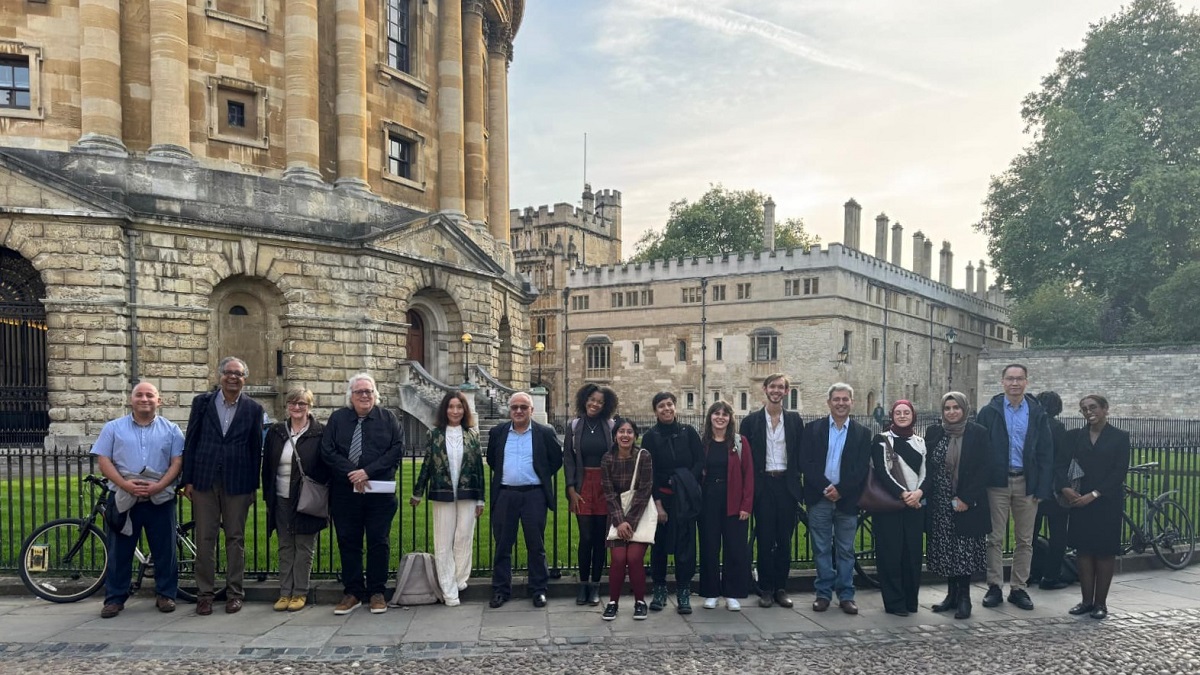
On 19th September, scholars, researchers and practitioners gathered in Mansfield College, Oxford, for a workshop on Intergenerational Dialogue for Well-Being Futures. This event was co-convened in partnership with the Journal of Dialogue Studies, which will publish a special issue (Vol. 14, 2025) on the same theme.

My motivation for guest-editing this issue arises from five years of work with the UNESCO Collective Healing Initiative. At the heart of Initiative are the Collective Healing Circles (CHCs), intergenerational spaces created in communities across Africa, the Americas, and Europe. In these circles, people of all ages come together to acknowledge historical mass atrocities, recognise continued wounds, reclaim ancestral wisdom and human dignity, transcend divisions, and co-imagine shared flourishing. They have shown me both the transformative potential and the challenges of intergenerational dialogue and inspired me to bring these questions into wider academic and policy exploration.

A workshop structured as a journey

Following an inspiring keynote from Youssef Mahmoud, former UN Under-Secretary-General, the academic workshop’s programme followed a deliberate arc:

  • Contexts – situating dialogue in linguistic, historical, ethical, grassroots, digital, and spiritual arenas.
  • Conceptualisations – examining how intergenerational dialogue is conceived epistemologically, ethically, and culturally, and how it can serve healing, and transformation.
  • Practices – exploring how dialogue is enacted and transmitted through arts, memory, and creative media.
  • Futures – considering how intergenerational dialogue might serve as a foundation for justice, solidarity, and flourishing societies.

This progression created space not only for rich scholarly exchange, but also for deep reflection on the ethical, methodological, and political dimensions of dialogue across generations.

Insights across the sessions

Several themes resonated across the day:

  • Transmission and transformation: Dialogue mediates the tension between preserving ancestral wisdom and inherited knowledge and transforming it for the future.
  • Agency and co-authorship: Who has the authority to decide what is remembered, transmitted, or reinterpreted? Intergenerational dialogue demands genuine co-authorship.
  • Dialogue as ethical practice: Listening, translation, ritual, and creativity are not just methods, but ethical commitments.
  • Challenges of reconciliation: Dialogues are often uncomfortable — grappling with guilt, silence, or denial — yet necessary for relational repair.
  • Futures through justice: Dialogue is not only about the past; it is a path to recognition, resilience, and flourishing futures.

One aspect that remains insufficiently addressed is the overwhelming domination of structural injustice, which continues to define the lived experience of the global majority. While academic research offers decolonial critique and systemic analysis, the challenge ahead lies in reimagining global governance that can respond to these realities.

Looking ahead

For me, one of the most moving aspects of the workshop was how much it echoed the spirit of the UNESCO Collective Healing Circles. We saw how dialogue is never neutral: it carries risks of stereotyping or tokenising, but also profound possibilities for recognition, resilience, and transformation. We saw how young people are not simply listeners or translators, but co-creators of meaning and futures. And we saw how elders are not only custodians of memory, but partners in reshaping change.

As we move forward, the next step is to revise and deepen the papers in light of the workshop conversations. Guided by the Journal of Dialogue Studies framework, the special issue will ensure that contributions are theoretically rich, methodologically and ethically strong, and — most importantly — relevant to the question at the heart of our gathering: how intergenerational dialogue can nurture well-being futures in contexts marked by structural injustice.

I am grateful to all who joined us in Oxford, for your generosity, insights, and presence. This is not the end, but part of a continuing journey to explore and enact intergenerational dialogue as a vital resource for our shared futures.

Collective Healing Initiative. Facilitators Learning Circle, September 2025

By Scherto R. Gill, Director, Global Humanity for Peace Institute

Every other month, on the second Tuesday, a constellation of facilitators gathers online — a learning circle stretching across 16 countries, 4 continents, and 4 languages: English, French, Spanish, and Portuguese. With the gentle help of AI translation, each voice is received in our own tongue, weaving a luminous tapestry of shared understanding.

On 16th September, 25 facilitators formed our circle. We came together to explore how the Collective Healing Circle (CHC) programme can be tailored to the diverse lived realities of our communities.

The gathering opened with drums from Richmond, Virginia, followed by a short poem carrying the breath from the Amazon — grounding us in rhythm, verses and spirit.

I offered the three inquiries that guide tailoring — investigative, appreciative, and evaluative. These aren’t academic theories. They’re invitations to listen into context before inviting people into the circle — to understand the particular music of each community before attempting to add harmony. Collective Healing practices can’t be copy-and-pasted. They must grow from the soil where they’re planted, shaped by the stories and metaphors already living in that place, responsive to the specific ways that community holds both pain and possibility.

To illustrate how these inquiries unfold in practice, our colleagues from Mexico shared how they wove Indigenous prophecies and ancestral wisdom into the CHC framework. Their presentation was colourful and inviting — words dancing with images, feelings moving through liminal spaces. Not as decoration, but as foundation. Not as addition, but as recognition of what was already there, waiting to be honored. Their approach was as much art as methodology: honouring both the common CHC framework and the particular practice of their land, letting each inform the other until something new is born and emerged.

From there, we dissolved into six small breakout rooms — in four different languages — where 2-4 facilitators gathered in intimate dialogue. These conversations deepened our reflections: What resonated? What requires more care? How might we all be co-creators of the circle? For thirty minutes, these questions evoked and breathed in eight different conversations. Connections spark across impossible distances. Challenges find company. Dormant ideas are awaken through the alchemy of shared reflection.

When the learning circle reforms, something has shifted. Insights pour back into the shared space—through voices and images, stories and the vibrant river of the chat feed. Each offering another thread in the tapestry they’re weaving together.

We closed with an ancestral African chant, together across the screen, a reminder of the deep wisdom carried through song requiring no translation.

The circle completes itself not by ending, but by beginning again. Each facilitator carries seeds of inspiration back to their local communities, back to the particular soil where the healing work takes root.

chc facilitator art

The Golden Patches: Embracing Intergenerational Wisdom

In Colombia, Cauca, south of Popayán, at the Estrella Roja Humanitarian Camp, established during the 2021 Social Outbreak, has emerged as an organizational experience sustained by community self-management and the leadership of women, youth, and diverse families who defend life, territory, and dignity.

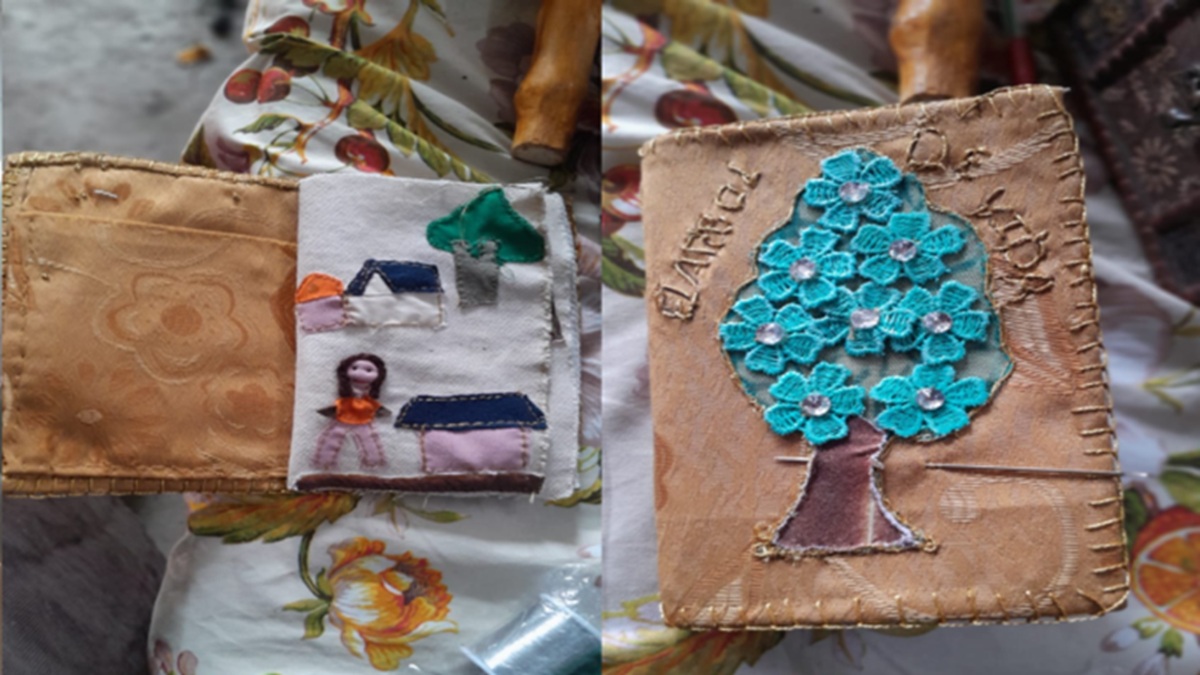
As part of the implementation of the Collective Healing Circles Program, an artistic project called “Golden Patches” has been developed, which constitutes a strategy of memory, expression, and collective care.

The activity brings together adult and older women, along with young women and girls, who, gathered in simple community spaces, work with needles, fabrics, and golden threads. Each participant uses a scrap of fabric from personal items that have accompanied their lives, on which they embroider simple and deeply meaningful symbols.  These embroideries express their resistance to displacement, gender violence, social exclusion, and urban precariousness, as well as the inner treasures cultivated amidst these experiences.

The images that result from this exercise—trees, roots, flowers, and hearts—reflect the community’s resilience and spiritual strength. Each golden stitch becomes an act of healing and a recognition of the inner strength that has allowed them to resist and transform pain.

The embroidered fragments will be compiled in a collective golden book, presented on community altars as a tribute to shared struggles, living memories, and the hope built collectively.

The Mendiendos Dorados process is more than a craft practice: it constitutes a living heritage, a way of narrating memory and affirming dignity through symbolic and spiritual languages that strengthen community bonds.

Prof Scherto Gill’s Keynote Lecture at SMN Annual Gathering 2025

On 29th June, Prof Scherto Gill provided a closing keynote lecture at the Scientific and Medical Network’s 2025 Annual Gathering, entitled: Love: Mediating the Earthly and the Heavenly, Integrating the Immanent and the Transcendent. Other speakers at this event were Prof Federico Faggin and Prof Sarah Stewart-Brown.

In her lecture, Scherto sets the challenge in an era defined by profound tensions, stark oppositions and fragmenting contradictions. While unprecedented technological and material abundance enriches the lives of a small minority, pervasive deprivation, both economic and environmental, continues to diminish the lives of the majority. Whereas monetary wealth is pursued as precious goods, nature’s beauty and goodness are being irreversibly destroyed. Claiming to seek growth beyond human constraint, modern life often ignores the value and wonder of grounded everyday experiences, such as the depth of friendship, the delight of gardening, the inspiration of the creating and appreciating arts, the awe of nature, and the joy of living in congenial political communities.

She then asks: what if the very tensions and paradoxes we face hold the key to a richer and more integrated life? How might we bridge these oppositions and restore a vital connection between our immediate, earthly living and transcendent aspirations?

In pursuit of answers, she turns to Diotima of Mantineia, whose teachings on love, as depicted in Plato’s Symposium, offer profound insights into harmonising these opposing realms. Most of us are familiar with Plato’s ladder of love, a vision of ascending from possessing physical beauty and attraction towards the seeking spiritual and eternal goodness or beauty itself. This is typically described as a transcendent vision. Yet Diotima’s insight goes further, inviting us not merely to ascend but to integrate, honouring every rung of experience as essential and sacred, in an infinite process of creative becoming.

The lecture delves deeper into Diotima’s teachings, particularly her conception of Erôs as a daimon, a powerful spirit neither wholly divine nor simply mortal, born of Poros, the god of abundance, and Penia, a mortal embodying poverty. This symbolic lineage endows Erôs with both creative potential and persistent need, perpetually dwelling in the vibrant tension between gratification and longing, contentment and aspiration.

Through engaging dialogue and reflective practices, her session further explores how embracing this daimonic tension can help mediate contemporary divides. Scherto asks the participants to consider how recognising and honouring the inherent goodness, beauty, and creative possibility within our everyday, our earthly lived experiences can bridge us towards transcendent ideals and values, enriching our personal, communal and political life in peace.

scientific and medical  network 2025

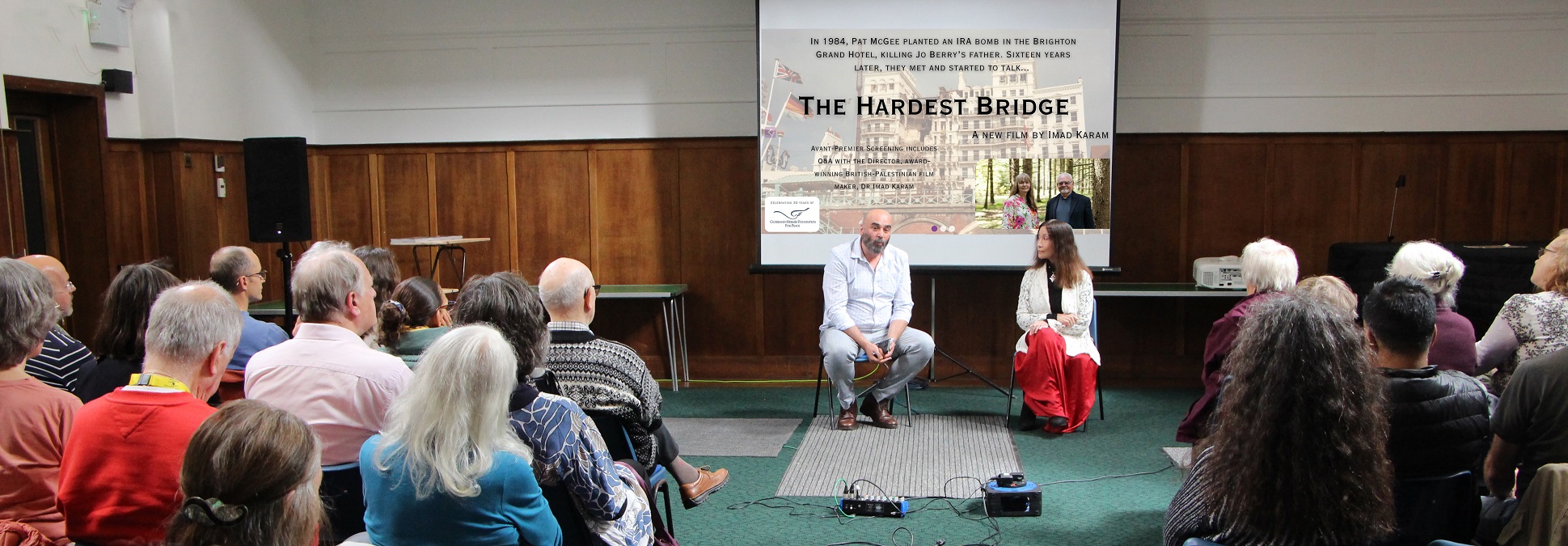
The Hardest Bridge. 30th May 2025 Screening.

40 years ago, when Sir Anthony Berry MP was killed in the IRA Brighton Bombing during the 1984 Tory Party Conference, his daughter Jo stepped into a world of conflict she barely knew. In November 2000 she met Patrick Magee, the former IRA activist responsible for her father’s death. This encounter has deepened her awareness that violence only begets violence. Only through building bridges, can people from all sides enter in spaces where dialogue about peace is possible.

On 30th May, in Brighton, the GHfP Institute co-hosted the screening of a film entitled “The Hardest Bridge” as part of Brighton Festival Fringe. Through recounting Jo and Patrick’s respective stories and shared journeys over last 25 years, this moving documentary explores the historical roots of violent conflict, the legacies of structural injustice, the choices each person is facing and our individual and collective responsibility for peace. More importantly, it captures the process of developing the least likely friendship between Jo Berry and Patrick Magee whose collaboration demonstrates the power of listening, dialogue and reconciliation.

Prof Scherto Gill facilitated the Q&A between the film’s director, Dr Imad Karam, an award-winning British Palestinian film director, and peace activist, and an enthusiastically engaged audience.

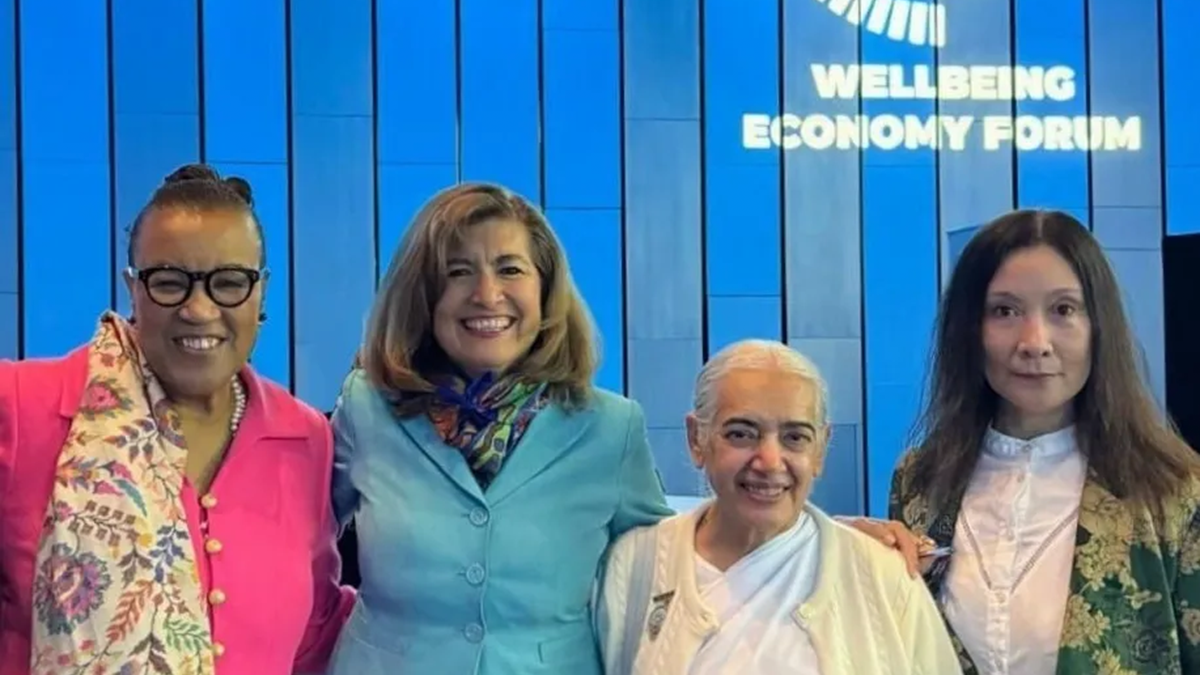
Meeting Baroness Patricia Scotland during 2025 Well-Being Economy Forum

Scherto Gill, Director, Global Humanity for Peace Institute

During 2025 Well-Being Economy Forum, held on 8-9 May in Reykjavik, Iceland, I had a unique opportunity to meet with Rt Hon. Baroness Patricia Scotland, KC, former Secretary-General of the Commonwealth Secretariat.

In our conversation, I have learned that Baroness Scotland’s leadership approach was particularly innovative and effective, especially three non-negotiable strategies for twenty-first-century multilateralism: build coalitions, seek prevention rather than mere reaction, and put new technology to work for the common good.

On building coalition for collaboration, she shared the example how she coordinated the signing of the Apia Commonwealth Ocean Declaration. Pulling together 49 coastal states, land-locked African members, green NGOs and the world’s second-largest shipping registry (Palau), Baroness Scotland secured the Commonwealth’s first-ever ocean treaty text, complete with 30 × 30 conservation goals and a guarantee that rising seas will not wash away maritime boundaries. The achievement was possible only because she had already nurtured ten country-led Blue Charter “action groups”, so the technical arguments were owned by ministers themselves before leaders arrived in Samoa.

That same owner-driven formula underpins the Connectivity Agenda. Instead of issuing top-down prescriptions, Scotland persuaded trade officials from five regional clusters—digital, physical, regulatory, supply-side and B2B—to write each other’s policy toolkits. The prize they chase together is a US $2 trillion intra-Commonwealth trade target by 2030.

Even inside the Secretariat she practised “co-create first, announce later”. The virtual Commonwealth Pro Bono Centre was co-designed by 14 least-developed members and six global law firms; on launch day Malawi’s Attorney-General called it “an invaluable resource that levels the negotiating table”.

Her focus on prevention rather than reaction was marked by her developing the flagship Climate Finance Access Hub. By embedding advisers directly inside ministries, the Hub helped small states raise US $384 million with another half-billion in the pipeline—money aimed at cyclone-resilient roads, mangrove buffers and drought-proof farms before the next cataclysm hits.

Prevention also animated Commonwealth Says NO MORE, the first pan-Commonwealth platform against gender-based violence. Instead of crisis hot-lines alone, the campaign arms local leaders with by-stander training, economic-cost calculators and a referral app designed to stop violence upstream.

Dedicated to the common good, Baroness Patricia developed a project aimed at “Strengthening the Adaptive Capacity of Coastal Communities of Fiji to Climate Change through Nature-Based Seawalls”. Traditionally, coastal-defence proposals from small islands can take 4 years to assemble and 2 years to approve. However, under the coordination of Baroness Scotland, this project took barely one year. Indeed, with the assistance of AI and scenario simulations, providing evidence pack, Fiji filed a full grant request to the Adaptation Fund in October 2023; by 19 April 2024 the Board had approved US $5.7 million for construction. The project will build the 4 km hybrid seawall, restore adjoining mangrove belts and train local youth as shoreline-monitoring rangers.

The Fiji seawall development process is a living case study of her preventative, tech-forward, common-good centred approach to multilateral governance.

Baroness Patricia Scotland stepped down as Commonwealth Secretary-General on 31 March 2025; Ghana’s Shirley Ayorkor Botchwey takes over on 1 April 2025.